
.svg)
SIGN UP FOR JUICEBOX (IT’S FREE!)

Who are you looking for?
Thank you! Your submission has been received!
Oops! Something went wrong while submitting the form.


Staring at a candidate pipeline filled with global talent can feel like both a massive opportunity and a compliance nightmare. Let's simplify it. A work permit is the official government key that allows a foreign national to legally take a job in your country. It's the "permission to work," not just permission to enter. Mastering this unlocks a global talent pool your competitors can't touch.
TL;DR: The Ultimate Work Permit PlaybookThis guide demystifies the work permit process for recruiters. You'll learn the critical difference between a visa and a work permit, how to compare sponsorship costs across tech hubs like the US and Canada, and strategic alternatives like Employers of Record (EORs). We also reveal how to use AI sourcing tools like PeopleGPT to find pre-vetted candidates with existing work authorization, turning a complex process into a competitive advantage.
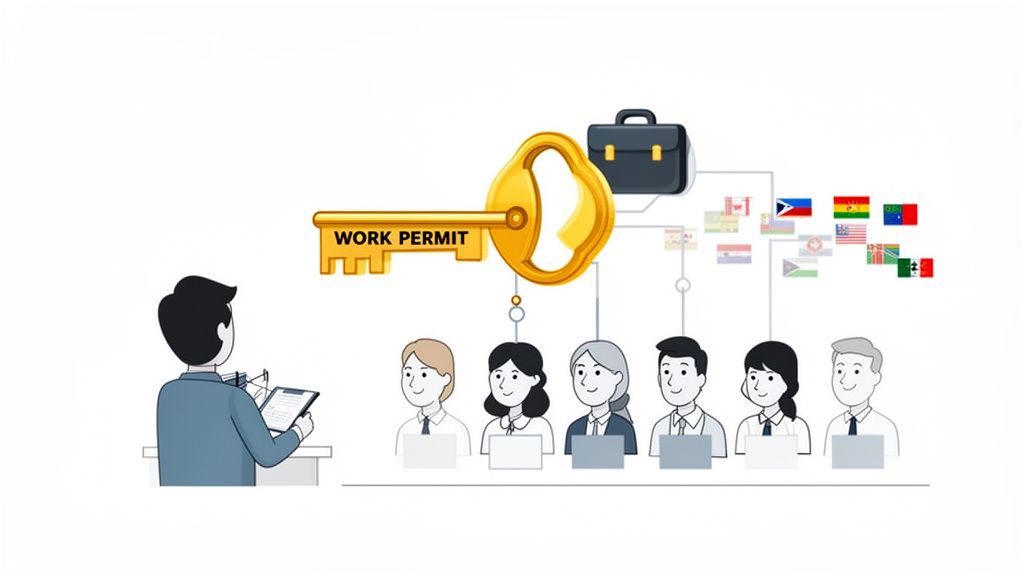
Getting this right is your first step to unlocking a vast, untapped talent pool. But there's a problem most tools ignore: just knowing the definition isn't enough. The real challenge for recruiters is navigating a fragmented global system where timelines, costs, and requirements change constantly. This guide breaks down those complexities into a practical playbook, helping you build a global hiring strategy. The first internal link to a page-2 booster can go right here.
The global talent market is more fluid than it's ever been, which means understanding the work permit landscape is no longer optional—it’s critical. Just look at the United States, where applications for employment authorization have skyrocketed. A staggering 4.8 million applications were filed in FY 2024, a massive jump from 2.3 million just two years prior, according to a 2024 Brookings Institution analysis.
What’s the bottom line? This surge signals a huge expansion of the U.S. labor supply, creating a much larger pool of authorized international talent.
You might think navigating this is only for multinational corporations with huge legal teams. But the opposite is often true. For a growing company, securing one pivotal hire through sponsorship can unlock product milestones worth millions, making the investment highly strategic. Adopting top-tier recruitment best practices means viewing work authorization as a strategic advantage.
Most believe a visa and a work permit are the same. The opposite is true. Mixing them up leads to costly mistakes and frustrated candidates.
To put it simply, a visa is a travel document, while a work permit is an employment document. Think of it like this: a visa gets you through the airport gate, but a work permit gets you through the office door on your first day. A clear understanding is essential when exploring options like freelance recruiter arrangements.
Here's a quick breakdown to keep them straight
| Attribute | Work Permit | Visa |
|---|---|---|
| Primary Purpose | Legal authorization to be employed | Permission to enter a country |
| Grants… | The right to work for a specific employer or in a specific role | The right to cross the border and stay for a set period |
| Typical Issuer | Labor or immigration departments | Consulate or embassy in the applicant’s home country |
| Analogy | Your employee ID badge | Your plane ticket |
Mastering this distinction is crucial for setting realistic timelines and managing expectations with both candidates and hiring managers.
Let's be honest, the alphabet soup of work permit categories can make any recruiter's head spin. The one you’ll probably run into most often is the Employer-Sponsored Work Permit. Think of the H-1B visa in the United States. Your company sponsors a specific person for a specific job, requiring a significant investment to prove their unique qualifications.
Are you chasing the wrong candidates?
Focusing only on sponsoring new permits is a slow, expensive game. What if you could tap into a hidden pool of candidates who already have work authorization? This shift in strategy can cut your time-to-hire by months and save thousands in legal fees. Keep reading to learn how.
Then you have the holy grail for recruiters: the Open Work Permit, common in countries like Canada. This permit allows someone to work for almost any employer without needing fresh sponsorship. They're essentially a "free agent," and hiring them is usually as straightforward as hiring a local citizen. For more on sourcing strategies, check out these best sourcing tools for recruiters.
Getting the hang of these nuances helps you instantly size up a candidate's hiring timeline. Suddenly, that confusing acronym on a resume becomes a clear, actionable data point.
Here are the main categories you'll bump into:
As you get deeper, you'll also encounter country-specific documents. A perfect example is the UAE Labour Card, which is an absolute must-have for any expatriate working in the United Arab Emirates.
But here's the catch: the rules and validity periods are always changing. For example, some U.S. work permits (EADs) have seen their valid periods slashed from five years down to just one year due to shifting policies. This makes it critical to verify not just that a permit exists, but also its expiration date.
Sponsoring a foreign worker is a strategic investment. A lot of recruiters assume the process is too complex and expensive, but that's a myth. Securing that one pivotal hire can unlock product milestones worth millions, making the initial investment a no-brainer.
You might think the legal paperwork is the biggest hurdle. It's not. The real bottleneck is almost always unpredictable processing times that can derail project timelines. A delay of just a few months can mean missing a critical product launch.
When you decide to sponsor a work permit, you’re signing up for three pillars of sponsorship: proving you need the person, covering the costs, and staying compliant.
Here’s what that looks like in practice:
The real challenge isn’t just paying the fees; it’s accurately forecasting the total cost. A simple H-1B sponsorship in the U.S. can range from $5,000 to over $15,000 when you factor in legal support and other costs. A leading tech firm, for instance, reduced their average cost-per-hire by 15% in one year by creating a standardized sponsorship playbook.
Failing to budget properly can bring the whole process to a screeching halt. That’s why you need a clear financial plan before making an offer.
Compliance isn't a "one and done" task; it's an ongoing commitment. A solid compliance checklist is your best defense. A resource like this complete guide on how to get a work permit in Dubai can be a lifesaver.
It should cover:
This strategic shift turns the work permit process from a chore into a powerful way to build a world-class team.
Recruiting doesn't happen in a vacuum. A brilliant engineer in Berlin faces different hurdles than one in Toronto, and knowing the difference is your competitive advantage.
The global demand for talent is immense. Across OECD countries, governments issued approximately 2.3 million work permits to foreign workers in 2024, a clear signal that countries are competing for top professionals. You can dig into more of these migration trends over on OECD.
For most tech recruiters, hiring in the U.S. means staring down the H-1B visa lottery. It's a high-risk, high-reward proposition. Even if your candidate is a perfect fit, there’s no guarantee they’ll be selected. This is why many look for Indeed alternatives.
Right next door, Canada has positioned itself as a more predictable alternative. Its flagship Express Entry system is a points-based program that ranks candidates on merit, not luck.
Here’s a quick look at how it works:
This predictability is a game-changer for employers, taking much of the risk out of international recruitment.
Germany’s EU Blue Card offers a streamlined path for highly skilled non-EU citizens. For example, some leading German tech firms have seen a 40% reduction in time-to-hire for key engineering roles in just 18 months by leaning into this program.
Over in the UK, the Skilled Worker visa operates on a points-based system similar to Canada's, requiring a job offer from a licensed sponsor.

As you can see, government filing fees are often just the starting point.
| Country | Average Processing Time (Skilled Worker) | Typical Employer Cost | Key Program or Visa |
|---|---|---|---|
| United States | 6–12+ months (lottery-dependent) | $5,000 – $15,000+ | H-1B Visa |
| Canada | 4–6 months | $3,000 – $8,000 | Express Entry System |
| United Kingdom | 3–8 weeks | £4,000 – £10,000+ | Skilled Worker Visa |
| Germany | 2–4 months | €2,000 – €5,000 | EU Blue Card |
Getting a handle on these regional differences allows you to have more strategic conversations. You can advise them on where to source talent most effectively—whether that means exploring markets with specific skills-based programs like hiring software engineers in Singapore.
What happens when sponsoring a work permit just isn't in the cards? Sponsorship isn't the only way to tap into the global talent market.
One path is to hire international talent as independent contractors. This offers incredible flexibility, but you must navigate it carefully to avoid the single biggest risk: employee misclassification. If you treat a contractor like an employee, you can face hefty fines. We dive deeper into managing this in our guide to contract-to-hire arrangements.
To keep things above board, the relationship must meet the legal standard of a contractor in their home country. This usually boils down to a few key factors:
Is there a better way?
While contractors can be a quick fix, they’re not a perfect stand-in for a dedicated team member. What if you could get all the benefits of a full-time employee without the massive undertaking of setting up a legal entity in another country? That's where an Employer of Record comes in.
A much more solid and compliant solution is to work with an Employer of Record (EOR). Think of an EOR as your expert HR partner on the ground. They become the legal employer for your hire, shouldering all the administrative weight.
This means the EOR takes care of everything:
But there’s a problem most EOR platforms don't address. They solve the employment part, but not the sourcing part. That’s where you can bridge the gap by using advanced AI recruiting tools to pinpoint candidates in specific countries.
Okay, let's get practical. You can forget about spending hours trying to reverse-engineer a candidate's work permit status. Modern AI tools are changing the game, turning a guessing game into a smart workflow.
Imagine telling a platform: "Find me senior software engineers in the US who have an active H-1B or are recent grads on OPT from a top 20 CS program." This is how the sharpest recruiters are working right now.
This is the core of modern AI sourcing—where speed and precision meet. AI-powered platforms instantly parse your prompt, search millions of profiles, and hand you back a ranked list of qualified people in seconds.
So what’s happening behind the scenes? The AI is breaking down your query into its core components:
This simple shift turns a multi-hour sourcing slog into a 60-second task, allowing you to spend more time talking to candidates.
The real magic happens when you start layering advanced filters on top of your initial search. Once you have a solid list of candidates with the right work permit status, you can start narrowing it down with criteria your hiring managers really care about. For example, comparing the cost of tools like in this LinkedIn Recruiter pricing guide can inform your budget.
Think about adding filters like:
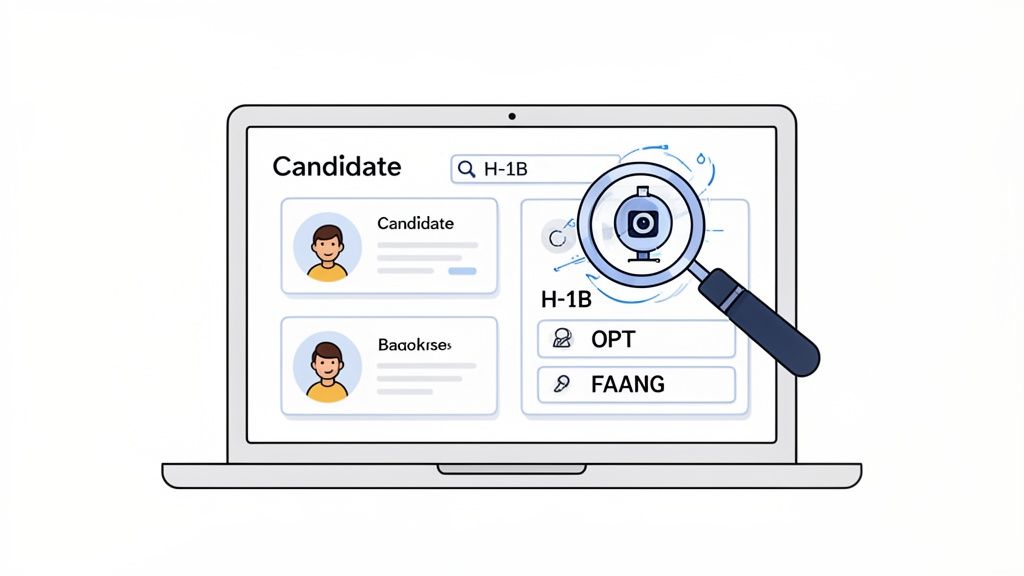
This is a fundamental shift from keyword-based searching to intent-based discovery. But there's another challenge recruiters face.
For example, global immigration policies are constantly changing. Canada processed over 251,000 work permit applications between August 2024 and March 2025 alone, proving that demand is sky-high despite new rules. These complexities make AI-driven verification a non-negotiable.
People think AI just automates what we already do. That's where they miss the point. The real value is in creating entirely new workflows that were impossible before—like being able to verify a candidate's likely work authorization before you even send the first outreach email.
Ultimately, this all connects back to the core challenge: finding and hiring the world's best talent faster.
Can AI guarantee a candidate's work permit is valid?
It’s a powerful signal, not a legal check. AI flags candidates based on public data, but you should always confirm their official status during screening.
Is using AI for sourcing compliant with privacy laws?
Yes. Reputable platforms like Juicebox only use publicly available data and are fully compliant with privacy regulations like GDPR and CCPA.
How long does a work permit take to get in 2026?
It varies wildly, from two weeks in Canada's Global Skills Strategy to over a year for the US H-1B lottery. Always check official government websites.
Who pays the fees for a sponsored work permit?
The employer, almost always. Mandatory government and legal fees are a business expense. In the U.S., it's illegal for H-1B applicants to pay them.
Can I find candidates who already have a work permit?
Absolutely. Modern AI recruiting tools can filter for candidates with existing open permits, like Canada’s PGWP, saving you sponsorship headaches.
What’s the difference between a visa and a work permit?
A visa lets you enter a country. A work permit lets you legally be employed there. They are two separate legal documents, though often linked.
Mastering the work permit process is your ticket to hiring the best person for the job, period. It transforms a bureaucratic hurdle into a powerful competitive advantage.
This knowledge unlocks a world of skilled candidates who were previously out of reach, allowing you to build a truly global team faster and smarter than your competitors.
Try PeopleGPT (it's free) and unlock a global talent pool of 800M+ profiles across 60+ diverse data sources to find top talent, faster.
{{large_cta}}
Run your first search for free. Find and engage top talent across 800M+ profiles. Trusted by 5,000+ customers.



.png)
![The Complete Guide to Employee Reimbursement [2026]](https://cdn.prod.website-files.com/68c2f83ae8165ab45cf529f8/698c5c3c6f51cb7da4cc4641_reimbursement-finance.jpeg)