.svg)
SIGN UP FOR JUICEBOX (IT’S FREE!)

Who are you looking for?
Thank you! Your submission has been received!
Oops! Something went wrong while submitting the form.

Recruitment marketing is a complete mindset shift. It's about moving from passively waiting for applications to roll in, to proactively attracting and engaging top talent long before they even think about applying. The goal of what is recruitment marketing is to build a talent magnet that constantly pulls in qualified, interested candidates, rather than just casting a net every time a new job opens up.
Our approach at Juicebox is different. We don't just see this as a funnel; we see it as building a community of talent that trusts your brand, long before they need a job.
Recruitment marketing is the strategic practice of using marketing tactics to attract, engage, and nurture top candidates. Instead of waiting for applicants, it proactively builds a pipeline of talent through employer branding, content creation, and data-driven outreach. The core benefit is shifting from reactive hiring to proactive talent attraction, resulting in faster, higher-quality hires.
Let's be honest: the old "post and pray" model is dead. The best candidates aren't just scrolling through job boards anymore. They’re researching companies, evaluating employers, and forming opinions months—sometimes years—before they hit "apply."
This is where understanding what is recruitment marketing gives you an unbeatable edge. It's the art and science of borrowing proven marketing tactics to build awareness, spark interest, and nurture relationships with the people you want to hire.
But there's a problem most tools ignore.
They focus on broadcasting your message, not on building genuine relationships. This is where modern recruitment marketing, powered by AI, changes the game by enabling personalized, scalable engagement. A great first step is learning how to streamline your recruitment process.
Think of yourself less like a traditional HR person and more like a modern marketer. Instead of selling a product, you’re selling a career opportunity and a company culture people want to be a part of. This proactive approach is what drives modern talent acquisition. For a deeper look at the tactics involved, it's worth understanding what is HR sourcing and how it fits into this puzzle.
To really grasp the difference, let's break down the old way versus the new way. The table below highlights the fundamental shift in mindset, timing, and tactics.
AspectTraditional RecruitingRecruitment MarketingTimingReactive (starts when a job is open)Proactive (always-on function)GoalFill an immediate open positionBuild a sustainable talent pipelineAudienceActive job seekersActive and passive candidatesApproachTransactional (fill the role, move on)Relational (build long-term connections)Mindset"Post and pray""Attract and engage"MeasurementTime-to-fill, cost-per-hireCandidate engagement, brand awareness, pipeline quality
This isn't just a small tweak; it's a completely different way of operating. Traditional recruiting is a sprint to the finish line for one role. Recruitment marketing is a marathon designed to make every future sprint easier.
When most people hear "recruitment marketing," they immediately think of running flashy ads on social media. That's a tiny piece of the puzzle, but it's not the whole picture.
Here's the deal.
A real recruitment marketing strategy is a complete system that includes:
This integrated approach means you’re not just scrambling to fill today’s roles—you’re building a deep bench of talent for tomorrow’s.
The market is already voting with its dollars. The global recruitment marketing space was valued at US$1.2 billion in 2024 and is expected to climb to US$1.7 billion by 2030. This growth is all about the demand for smarter tools that leave outdated methods behind. (Read the full research on this growing market).
A powerful recruitment marketing strategy isn’t magic. It’s a well-oiled machine built on four core pillars. Getting these right is the first step in shifting from reactive hiring to proactive talent attraction. They all work together, creating a system that consistently pulls in high-quality candidates—even when you’re not actively hiring for a specific role.
Think of these pillars as the engine that drives modern talent acquisition. If one pillar is weak, the entire system sputters. But when all four are firing in sync, you build a sustainable pipeline that makes every single hire faster, easier, and more aligned with where your company is headed. For an in-depth look at automation, explore these top 10 AI recruiting tools for 2026.
Your employer brand is simply your reputation. It’s what people say about working at your company when you’re not in the room. This isn't about flashy perks or buzzwords; it's about defining and sharing your authentic Employee Value Proposition (EVP).
So, what makes your company a great place to work?
Your employer brand is the common thread that runs through every candidate touchpoint, from a quick social media post to the final offer letter. A strong brand acts as a filter, attracting candidates who click with your values while naturally deterring those who wouldn’t be a good fit. Netflix, for example, famously uses its culture deck to set crystal-clear expectations, drawing in talent that thrives on freedom and responsibility.
Content is how you actually bring your employer brand to life. This pillar is all about creating and sharing valuable, relevant, and consistent material to attract the right people. It’s about showing, not just telling.
Let's be honest: a boring job description just doesn't cut it anymore. Top talent expects more.
Effective content marketing in recruitment answers a candidate’s questions before they even have a chance to ask them. It builds trust and showcases your expertise, turning passive curiosity into an active application.
Think about using formats like these:
This is where most companies drop the ball. You’ve attracted some great people and built a solid brand, but what happens to the talented folks who aren't quite ready to apply right now? That’s where candidate nurturing comes in.
Candidate nurturing is simply the process of building and maintaining relationships with potential hires over time. It typically involves using automated emails, talent communities, and personalized outreach to keep your company top-of-mind.
But here's the problem with most nurturing tools: they treat it like a one-way street, blasting out generic newsletters and job alerts. This approach fails because it's completely impersonal. Real nurturing means understanding a candidate's skills and career goals, then delivering information that actually helps them—even if they never end up applying. This is a non-negotiable part of any successful long-term talent strategy.
Finally, you have to prove that all this effort is actually working. The analytics pillar is about moving beyond vanity metrics like page views and follower counts. It’s about tracking the KPIs that show real business impact and a clear return on investment.
You need to be able to answer questions like:
Success in the real world is driven by data. For instance, Zapier discovered through their analytics that candidates who watched an employee testimonial video were 50% more likely to finish an application. That single insight allowed them to shift their budget from generic ads to high-impact video content, which dramatically improved their pipeline quality in just one quarter.
Tracking these metrics proves the value of what is recruitment marketing to leadership and gives you the hard data you need to continuously fine-tune your strategy for even better results. If you're a solo practitioner, understanding how a freelance recruiter leverages data is key.
Your employer brand is your reputation. Most people believe it’s about having cool office perks. The opposite is true. It’s the real story—the one that gets told long after the Zoom interview ends.
Building an authentic brand isn’t about buzzwords or flashy perks. It’s about nailing down the tangible value you offer employees—your Employee Value Proposition (EVP)—and weaving that story into every single interaction a candidate has with your company.
Think of your EVP as a consistent thread running through your careers page, employee testimonials, and behind-the-scenes social content. It’s the “talent magnet” that pulls the best people toward you, making your company their first choice.
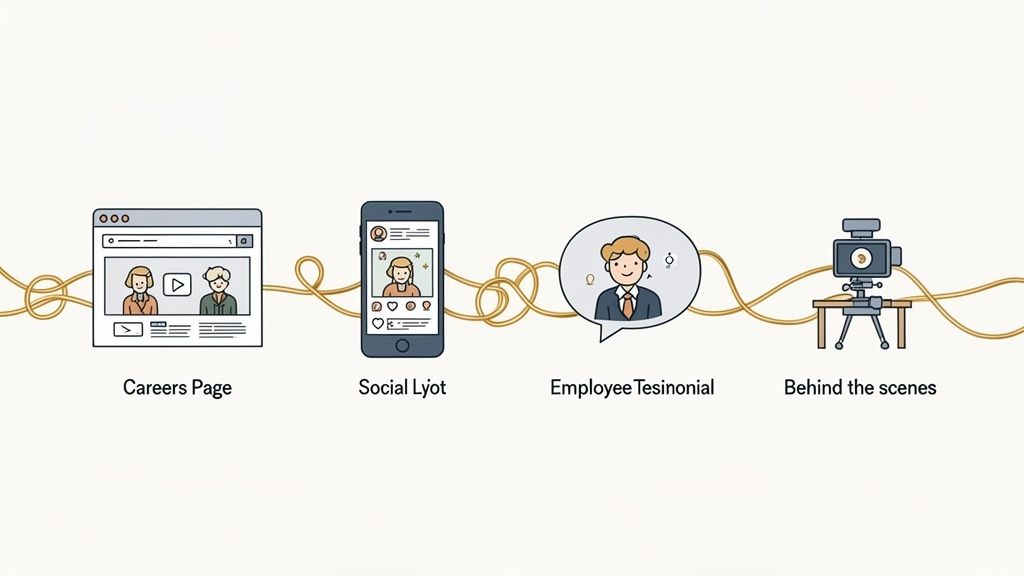
Getting this right pays off, big time. According to a 2022 LinkedIn Global Trends Report, companies with strong employer brands see a 28% lower turnover rate.
It’s no surprise, then, that 59% of recruitment leaders boosted their investment in employer branding in 2023. This is absolutely critical in a world where 68% of Millennials are scoping out potential employers on social media before they'll even consider a conversation.
Your EVP is the heart of your employer brand. It’s your answer to the one question every top candidate is asking: “Why should I work for you?”
To get this right, you have to go way beyond generic statements like "we have a great culture." Dig deeper. What truly makes your company a compelling place to build a career?
Once you’ve defined your EVP, it becomes the messaging playbook for every single piece of content you create. To see how the best in the business do it, check out these powerful employer branding examples that turn culture into a serious competitive advantage.
With a crystal-clear EVP, the next step is to turn it into assets that actually attract and engage candidates. This is where your brand comes to life.
Here’s the bottom line: you need to create a portfolio of content that proves you walk the talk.
Cognition, one of our customers, used this exact playbook. They showcased their innovative culture through authentic engineer testimonials. The result? A 40% increase in qualified inbound applicants in just three months—all by turning their employer brand into a living, breathing asset. It just goes to show the power of consistent, authentic storytelling.
Stop throwing your recruiting budget into a black hole. The secret to effective what is recruitment marketing isn’t about being everywhere at once—it’s about showing up in the right places at the right times. It’s about swapping guesswork for a data-driven plan that maps your channels directly to your ideal candidate personas.
This isn't an "either/or" situation between paid ads and organic content. The real question is when to drop a targeted ad on a niche platform versus when to build authority with a deep-dive article on your company's career blog. Each channel has a job to do, and each one speaks to a different audience.
You might think you need a huge budget for this kind of precision. But that's not the whole story.
Why? Because the real magic is knowing where your ideal candidates spend their time online. Most people assume this means hours of manual digging, but that’s an old-school approach. Modern AI sourcing tools can do the heavy lifting, giving you a clear map of your talent landscape. They analyze millions of data points to show you exactly where your target personas are most active, so every dollar you spend makes an impact. Exploring different sources for recruitment becomes a strategic move, not just a shot in the dark.
A one-size-fits-all channel strategy is the fastest way to burn through your ad spend. A senior software engineer isn't scrolling through the same feeds as an entry-level SDR.
Start by creating a simple channel map for each key role you hire for. This just means figuring out the main platforms where your ideal candidates learn, network, and share ideas.
Once you know where your candidates are, you have to decide how you'll reach them. This brings us to the classic organic versus paid debate, but the truth is, the best strategies use both in harmony.
Organic channels build trust over the long haul. Paid channels grab immediate attention. You need both to create a talent pipeline that actually lasts.
If you can’t measure your recruitment marketing, you can’t prove its value. Period. It's time to move past vanity metrics like social media likes and impressions because, let's be honest, they don't keep the lights on.
The real focus has to be on business outcomes—the key performance indicators (KPIs) that draw a straight line from your efforts to the company's bottom line. Winning strategies are built on data, not guesswork. By tracking the right numbers, you can see what’s working, cut the dead weight from your budget, and finally show leadership the tangible ROI of your talent attraction engine.
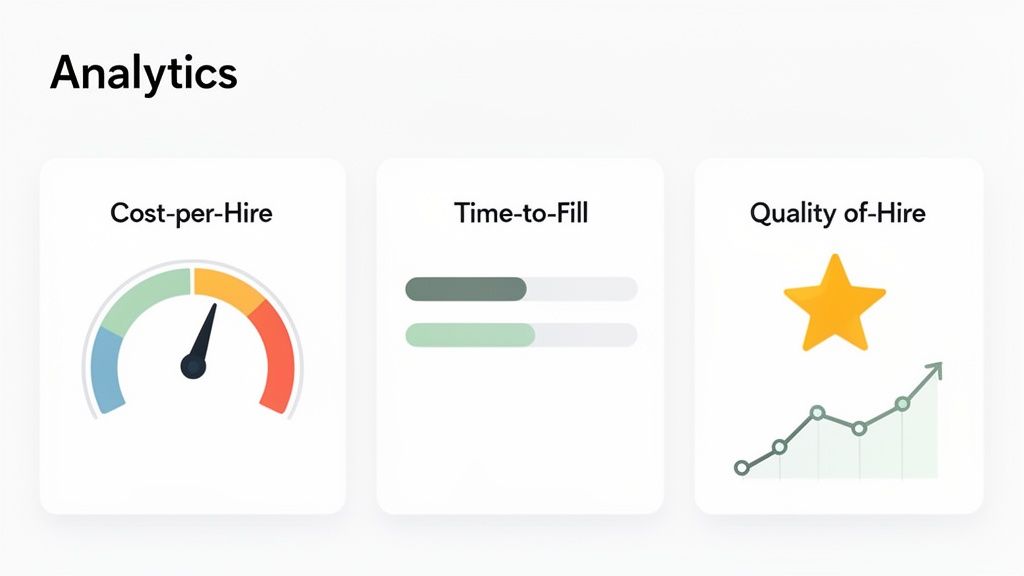
To get a clear picture of your campaign’s health and impact, you need to track the metrics that truly move the needle. Here’s a quick-reference table of the essentials.
KPIWhat It MeasuresWhy It MattersCost-per-Hire (CPH)The total cost of recruiting efforts divided by the total number of hires.This is the ultimate efficiency metric—it tells you exactly how much you’re spending to bring each new person through the door.Time-to-FillThe number of days between opening a job requisition and getting an offer accepted.A lower number means you're minimizing productivity loss from open roles and have a strong, responsive talent pipeline.Source of HireTracks where your successful candidates are coming from (e.g., career page, social media, referrals).This data is gold. It shows you which channels deliver quality talent, so you can double down on what works and stop wasting money elsewhere.Quality of HireThe value a new hire adds, often measured by performance reviews, retention, and manager satisfaction.This is the gold standard. It proves you aren't just filling seats—you're attracting top performers who drive real business growth.
Tracking these KPIs is non-negotiable for building a case for your recruitment marketing budget and strategy.
While metrics like CPH and Time-to-Fill are crucial for measuring efficiency, the most strategic KPIs focus on the long-term business impact of your hires.
Quality of Hire is the single most important metric you can track. It’s the ultimate proof that your strategy is working. A high Quality of Hire shows that you're not just filling seats—you're attracting top performers who move the business forward.
When you can connect your marketing activities to bringing in people who excel and stay, you have an undeniable story of success. This is how you shift the conversation from cost-center to value-driver. To do this, it’s essential to know how to calculate marketing ROI in a way that resonates with leadership.
For a deeper dive into building a framework for this, our guide on how to measure Quality of Hire is the perfect starting point.
But there’s a catch. How do you track all this without getting buried in spreadsheets? This is where integrated platforms become indispensable. A single source of truth connects your marketing spend directly to hiring outcomes, turning messy data into clear, actionable insights that prove the value of your work.
Knowing the theory is one thing, but actually putting it into practice is a completely different ballgame. The good news? You don’t need a huge budget or a dedicated marketing team to get started. You just need a solid plan.
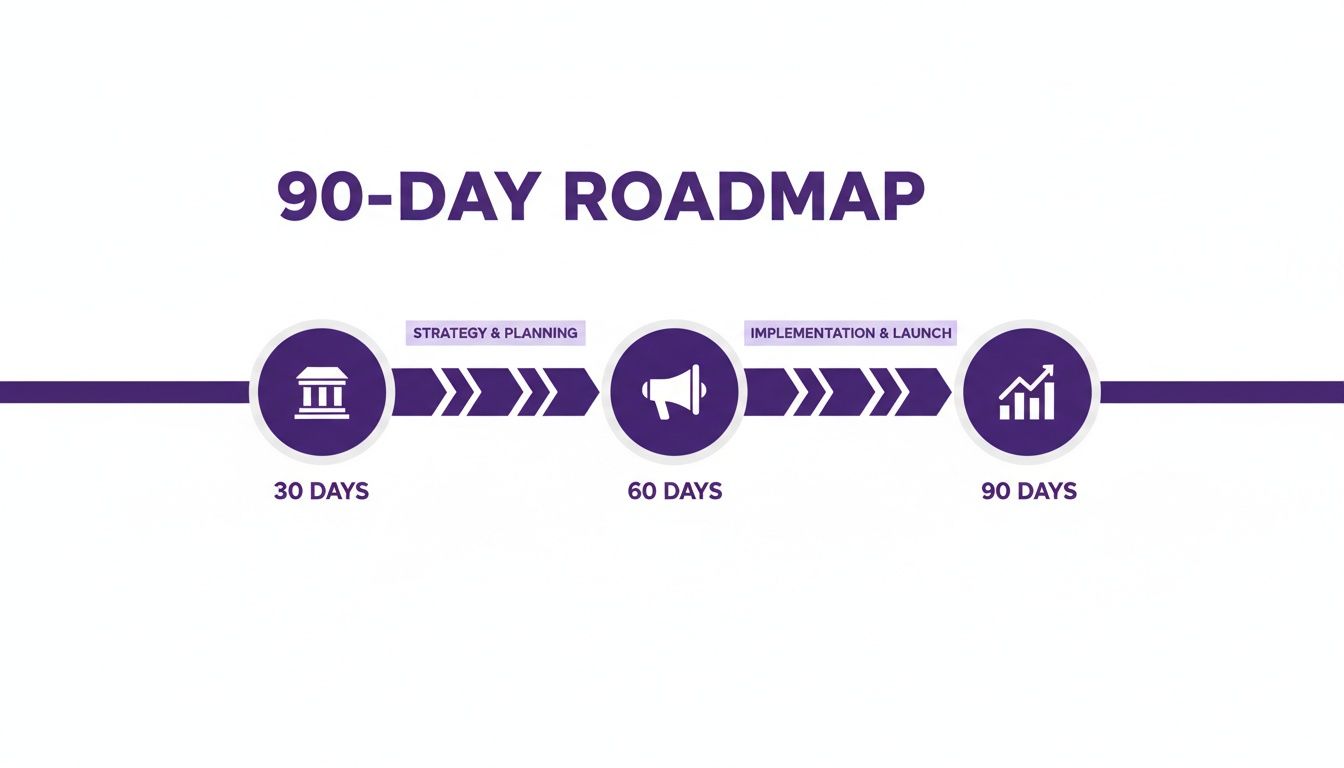
This 90-day roadmap breaks the whole thing down into manageable chunks. It’s designed specifically for a solo recruiter or a small TA team to build a strong foundation, get some key channels working, and see real results within a single quarter.
Your first month is all about getting your strategy and foundation right. Before you write a single job ad or post on social media, you have to know who you’re talking to and what you want to say. Nail this, and everything that follows becomes ten times easier.
Here are your core objectives for this phase:
You don't need a perfect, 20-page document for this. A simple one-pager that outlines their goals, challenges, and how they like to communicate is more than enough to get the ball rolling.
Alright, you’ve got your messaging and you know who you’re targeting. Now it's time to get things moving. This phase is all about building your core assets and starting the conversation on one key channel. The trick is to focus your efforts—don’t try to be everywhere at once.
Your primary goals are:
Consistency is so much more important than volume. A focused, consistent presence on one channel will beat sporadic posts across five channels every single time. For tips on making this manageable, check out our guide on how to streamline your recruitment process.
The last month is all about tweaking what you've built and proving that it actually works. You’ve built the engine; now it’s time to fine-tune it.
Your focus should be on:
This phased approach takes recruitment marketing from a daunting concept and turns it into a series of clear, actionable steps. Follow it, and you’ll build a sustainable talent pipeline that pays off for a long time to come.
Employer brand is your reputation; recruitment marketing is the action you take to promote it. Branding is the 'what'; marketing is the 'how'.
Focus on one channel where your ideal candidates are. Create authentic content, like employee testimonials, that showcases your unique company culture.
Quality of Hire. It proves your marketing attracts top performers who drive real business growth, not just fill seats.
AI sourcing, like PeopleGPT, automates the "attract" phase. It identifies ideal candidates across 30+ sources, giving you the insights to personalize your marketing.
Ultimately, recruitment marketing is about shifting from a transactional hiring process to building a strategic asset.
This unlocks a powerful, sustainable advantage: a pipeline of engaged, top-tier candidates who want to work with you before a job is even posted. This turns hiring from a reactive scramble into a predictable, proactive engine for growth.
{{large_cta}}
Run your first search for free. Find and engage top talent across 800M+ profiles. Trusted by 5,000+ customers.