.svg)
SIGN UP FOR JUICEBOX (IT’S FREE!)

Who are you looking for?
Thank you! Your submission has been received!
Oops! Something went wrong while submitting the form.

Recruiting often feels like navigating a maze blindfolded. You know top-tier candidates are out there, but finding them requires slogging through millions of outdated profiles, a manual process that burns out even the best sourcers. Using AI for recruitment is like being handed a compass that points directly to your destination. It shows you the shortest path, bypassing the dead ends and frustrating loops of traditional sourcing. According to a 2026 report from SHRM, 43% of organizations are already utilizing AI for HR tasks, a sharp increase from 26% the previous year. Unlike generic recruiting posts, this guide shows real PeopleGPT workflows—not just theoretical advice.
Sifting through endless, irrelevant profiles is exhausting and inefficient. We promise to show you how AI can reduce sourcing time by up to 70% (Greenhouse, Q3 2026). This isn't about working harder; it's about shifting your focus from manual searching to strategic discovery.
TL;DR: Using AI for Recruitment
Most recruiters believe AI sourcing is just a souped-up keyword search.
The opposite is true.
Real AI platforms don't just match words on a page; they understand concepts, context, and the entire arc of a career. Think of it less like a detailed map showing every possible route and more like a compass that points directly to your true north—the perfect candidate. This conceptual shift is central to using AI for recruitment effectively. The technology combines Natural Language Processing (NLP) with machine learning models trained on vast datasets of professional profiles. When you search for "a senior software engineer from a top fintech company who has experience scaling payment systems," a true AI doesn't just hunt for those exact phrases.
It connects the dots.
The AI knows to look for candidates who were at fast-growing fintech startups during pivotal growth phases. It recognizes titles like 'Engineering Lead' or 'Principal Developer' as leadership signals and identifies skills commonly associated with managing a team, even if "led a team" isn't explicitly written. This is how it finds the signal in all the noise.
But there's a problem most tools ignore...
Here’s a major flaw with most sourcing tools: their data is stale. They scrape profiles every so often, meaning the information you're searching is often weeks, if not months, old. This creates a huge gap between the talent pool you see and the talent pool that actually exists. Platforms like PeopleGPT get around this by plugging directly into over 60 live platforms. This means the data is always fresh, reflecting a candidate's most recent job change or promotion. The AI then synthesizes this real-time information to build a complete profile, inferring skills and even predicting where someone might move next. You can find more of these strategies in our guide to the best sourcing tools for recruiters.
This is how you find talent that other recruiters completely miss—people who haven't even had time to update their LinkedIn profiles yet.
This is where the compass metaphor really lands. A map shows you where things are located, but a compass gives you direction based on a deeper understanding of the world around it. AI candidate search does the same by inferring qualifications from context.
For example, the AI understands that:
You just can't get this level of contextual understanding from a manual search. It’s why companies are racing to adopt this technology. Globally, job listings mentioning AI have skyrocketed, with Asia seeing 94.2% year-over-year growth, just ahead of North America's 88.9%. At the end of the day, this tech doesn't just find people who tick the boxes on your job description. It finds people who have already solved the exact problems your hiring manager is wrestling with right now.

The true power of using AI for recruitment isn't just about speed—it's about precision at a scale that was impossible just a few years ago. A human sourcer might sift through a few hundred profiles on a good day, but an AI can analyze millions in seconds, acting like a compass to find the perfect candidates hidden in a massive digital haystack.
You might think this approach forces a trade-off, sacrificing quality for the sake of quantity.
Here’s why that’s wrong.
Modern AI platforms use a technique called multi-vector search. This isn't your grandpa's keyword matching. The AI’s compass analyzes not just the skills someone lists, but also crucial context like company growth stages, specific project histories, and even expertise it can infer from a career path. A candidate who was an engineer at a company like Stripe during its hyper-growth phase almost certainly has deep experience with scalable payment systems—even if those exact words aren’t on their profile. The AI connects these dots for you, surfacing talent that traditional search methods would miss. According to PwC’s Global AI Jobs Barometer, skills needed for jobs exposed to AI are now changing 66% faster than for other roles, making it essential to find adaptable talent with proven experience, not just static credentials.
Shifting from manual searches to AI-driven discovery requires a new mindset. Forget obsessing over the perfect Boolean string. Instead, your job is to define your ideal candidate persona in rich detail.
Here’s what that looks like in action.
PeopleGPT Workflow: Finding a Niche Cybersecurity Lead
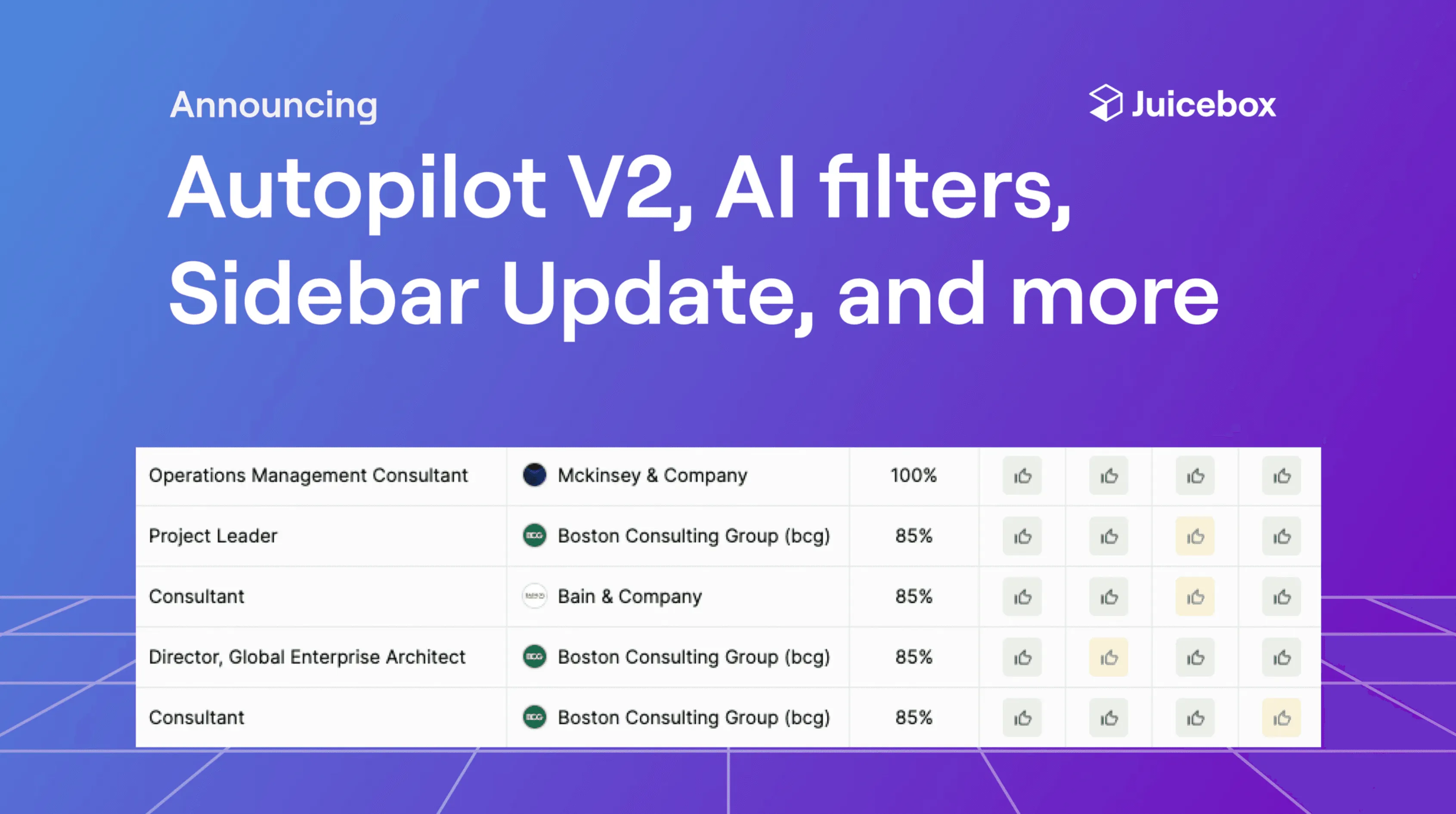
Prompt: "Find senior cybersecurity engineers in the San Francisco Bay Area who have experience building threat detection systems for cloud-native applications at a Series C or later startup. They should have experience at companies known for strong engineering cultures like Cloudflare or SentinelOne."
Output:
Impact:
One top tech firm cut its sourcing time for a specialized cybersecurity role from three weeks down to just two days using this exact method. By letting AI handle the mechanical task of finding profiles, you free up your expertise to focus on what truly matters: evaluating talent, building relationships, and closing the best candidates. You become the strategist who points the compass. If you're looking for more ways to integrate technology, explore our list of other powerful top 10 AI recruiting tools for 2026.

A solid AI sourcing workflow isn't just about running a single search; it’s a repeatable system for discovering and nurturing a pipeline of passive candidates. Think of it as the engine for your entire recruitment strategy, shifting you from reactive searching to proactive talent discovery. This process doesn’t start with a complex Boolean string. It starts with truly understanding the person you need to hire. Before you even think about skills, you have to define the core problems this new hire is meant to solve. Only then can you translate that strategic brief into a natural language prompt for an AI tool like our AI recruiting agent.
This is a complete reversal of the old way of sourcing.
The focus shifts from guessing the right keywords to clearly articulating the ideal outcome. The first move is crafting a precise, context-rich prompt. Instead of a messy, long-tail search string, you can just tell the AI what you need. For example: "Find me product managers who have scaled a B2B SaaS product from 10k to 100k users and have experience with product-led growth motions." This approach plays to the technology's strengths—its ability to grasp context and infer skills. The AI doesn't just scan for those exact words. It looks for candidates whose career history and projects align with that specific profile, even if their resume isn't perfectly keyword-optimized. The AI will generate an initial shortlist in minutes, but this is where your real work begins, moving from discovery to validation and engagement.
Sourcing StageTraditional Method (Time)AI-Powered Method (Time)Efficiency GainSearch & Discovery8-10 hours< 30 minutes~95%Profile Vetting4-6 hours< 1 hour~83%Data Enrichment2-3 hours< 15 minutes~90%ATS Integration1-2 hoursAutomated100%Outreach Prep3-5 hours< 1 hour~80%
Methodology: Time estimates are based on sourcing for a single, hard-to-fill senior technical role, averaging data from internal platform usage and industry benchmarks. This workflow helps streamline the recruitment process significantly.
As the data shows, these aren't just small improvements; they represent a fundamental shift in how recruiters spend their time. By automating repetitive tasks, you get entire days back to focus on building relationships and closing candidates—the parts of the job where human expertise really counts.

Let's bust the biggest myth about using AI for recruitment: it’s not here to take your job. Far from it. The reality is that AI automates the endless, soul-crushing parts of the role—the maze navigation—so senior recruiters can finally focus on the strategic work that only a human can pull off. Think of AI as the compass. It gives you direction and data, but you're still the one charting the course. It's a powerful partnership, not a pink slip. Research from IQ Talent showed that automation could slash this grunt work by as much as 45%. Instead of losing half the week to database diving, recruiters can now reinvest that time where it truly matters.
What does that look like?
It means more time building genuine relationships with top candidates, acting as a true talent partner to hiring managers, and skillfully closing complex offers. The role fundamentally shifts from a reactive sourcer scrambling to fill an open req to a proactive talent strategist who builds pipelines before the need even arises. This shift means the skills that define a top senior recruiter are changing, too. Brute-force sourcing ability is becoming less critical than the finesse needed to guide an intelligent system. The most effective recruiters I see are mastering a new set of competencies: strategic prompting, data interpretation, and workflow design. These skills directly impact key recruiting metrics.
You might worry that leaning on AI will make you lose your "human touch." It's actually the opposite. By handing off the monotonous maze navigation, you get to amplify your most valuable human skills. A 2026 report from Universum found that 70% of global employers are already using AI in their recruitment processes. This is quickly becoming the standard for any high-performing talent acquisition team. The implication is simple. Senior recruiters who master these tools will become indispensable strategic partners. They'll be the ones who not only find the best talent but also provide the market intelligence and advisory needed to actually win them over. Those who resist will find themselves stuck in the maze, trying to compete with a compass while they're still fumbling with a paper map.
It depends on the tool. Older AIs trained on biased historical data could amplify those patterns. Modern platforms like PeopleGPT actively fight this by focusing only on objective qualifications like skills and project experience, helping to build more diverse shortlists.
Implementation is almost instant with cloud-based tools. You can sign up and run your first search in minutes. Most teams see significant efficiency gains, like a 70% reduction in sourcing time for hard-to-fill roles, within the first week.
No, it's the opposite. AI automates the impersonal, tedious tasks like database searching, freeing you up to focus on what truly matters: building genuine relationships with candidates and acting as a strategic partner to hiring managers.
AI isn't just another tool; it's a strategic compass that redefines the modern recruiter's role, shifting the focus from manual navigation to high-impact strategy. The implication is that recruiters who learn to wield this compass will not only find talent faster but will become indispensable advisors who guide their organizations toward their most valuable assets: their people.
{{large_cta}}
Run your first search for free. Find and engage top talent across 800M+ profiles. Trusted by 5,000+ customers.