.svg)
SIGN UP FOR JUICEBOX (IT’S FREE!)

Who are you looking for?
Thank you! Your submission has been received!
Oops! Something went wrong while submitting the form.


Recruiting has hit a breaking point. Relying solely on LinkedIn Recruiter is no longer enough to find top-tier candidates; it’s slow, increasingly expensive, and forces you to compete over the same overworked talent pool as everyone else.
The best teams are now using a strategic mix of the top recruiting apps to find, engage, and hire talent up to 5x faster. This isn’t about adding more complexity to your day. It’s about consolidating your workflow into a single, AI-powered engine that saves you thousands and surfaces hidden-gem candidates your competitors will never find.
In this guide, we'll break down the 12 essential recruiting apps that form a modern, efficient recruiting machine. We'll move from powerful AI sourcing tools to next-generation Applicant Tracking Systems (ATSs), providing a clear roadmap for your team.
For each tool, you'll get a no-fluff analysis of its key features, pricing, ideal use cases, and honest pros and cons. We will also compare each app directly against Juicebox across four critical dimensions: speed, data breadth, pricing, and automation. Each review includes annotated screenshots and direct links to help you make the best decision for your needs.
Let's dive in:
TL;DR: The Top 12 Recruiting Apps for 2026
Juicebox stands out as a formidable, AI-first talent sourcing platform, making it one of the top recruiting apps for teams that prioritize speed and data breadth. It’s engineered to consolidate the entire top-of-funnel workflow, moving recruiters from search to outreach in a single, streamlined interface.
The core feature PeopleGPT, is an AI search engine that allows sourcers to use plain-English instead of complex Boolean strings to find qualified candidates across a database of over 800+ million profiles.
For instance, you can simply ask for “find software engineers in SF with 5-7 years of experience in Python and a background at a Series B fintech company” and receive a ranked shortlist in about 60 seconds:
{{small_cta}}
This combination of simplicity and power makes it an exceptional choice for fast-moving tech startups and recruiting agencies.
But does it actually work?
The platform’s effectiveness is validated by customers like Merge and Speechify, who report closing roles up to 5× faster. The company Merge used Juicebox to cut their time-to-hire by 50% for senior engineering roles.
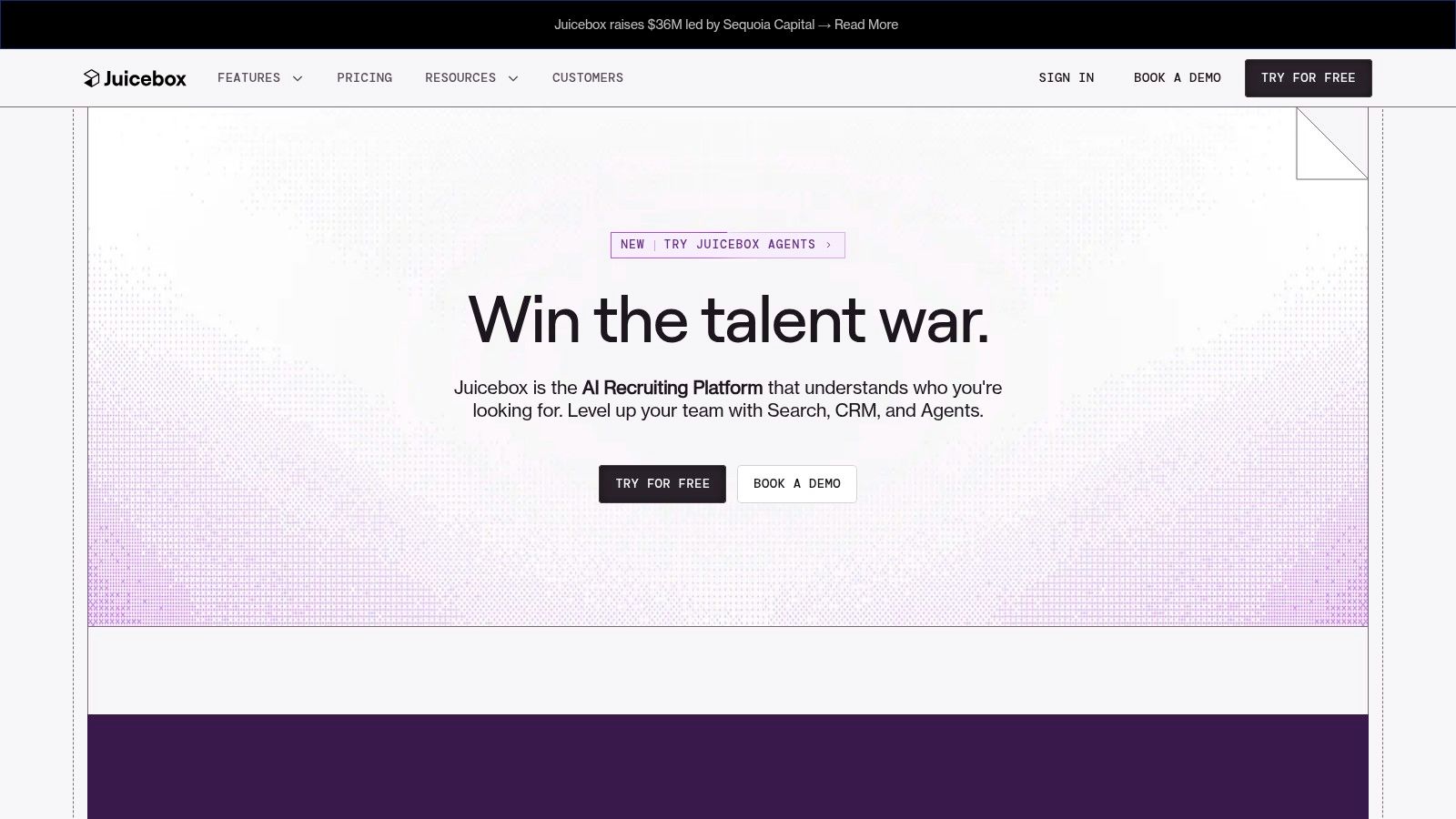
Juicebox is built around an all-in-one workflow designed to replace multiple disparate tools. Its features are particularly effective for tech recruiters who need to source specialized talent outside of LinkedIn. For those exploring other AI recruiting tools, Juicebox provides a comprehensive solution.
Juicebox uses a transparent, product-led growth model. You can try the platform for free with limited searches.
This pricing structure offers up to an 80% cost saving compared to LinkedIn Recruiter, making enterprise-grade sourcing accessible to startups and mid-market companies. For a deeper dive into how AI is changing the landscape, you can explore some of the top 10 AI recruiting tools for 2026.
Pros:
Cons:
Website: https://juicebox.ai
{{large_cta}}
LinkedIn Recruiter is the undisputed titan of sourcing platforms, offering unparalleled access to the world’s largest professional network. It’s the default tool for teams whose talent pools live primarily on LinkedIn and who require robust, integrated tools for collaboration. This platform transforms the standard LinkedIn experience into a powerful sourcing engine, making it a cornerstone among top recruiting apps.
The platform is split into two main tiers: Recruiter Lite for individuals and small teams, and Recruiter Corporate for larger organizations needing advanced features and ATS integration.
What's the catch?
You might think that paying for LinkedIn Recruiter gives you access to the entire network. But in reality, you're competing with millions of other recruiters for the same over-messaged candidates, leading to lower response rates and higher costs. This is why multi-channel sourcing is no longer optional.
Recommended Reading: LinkedIn Recruiter Pricing in 2026 (What You'll Pay).
| Features | Pros | Cons |
|---|---|---|
|
Advanced Search 40+ filters (skills, tenure, and more) |
Unmatched reach into LinkedIn’s 1B+ member network | Expensive, especially the Corporate tier |
|
InMail Allocations 30 (Lite) to 150 (Corporate) messages monthly |
High response rates due to brand familiarity | Data is limited exclusively to LinkedIn profiles |
|
Team Collaboration Shared projects, notes, and activity tracking |
Mature ATS integrations via Recruiter System Connect | InMail overages can drive up costs unexpectedly |
|
Candidate Recommendations AI-powered “Spotlights” and suggestions |
Excellent for building and managing talent pipelines | Search functionality can feel less intuitive |
While LinkedIn Recruiter offers immense depth within its own ecosystem, Juicebox’s PeopleGPT provides breadth across the entire public web. PeopleGPT finds candidates on LinkedIn, GitHub, academic sites, and personal portfolios, enriching profiles with data from multiple sources. This provides a more holistic candidate view than LinkedIn’s self-reported data alone.
PeopleGPT’s AI-powered natural language search is often faster for complex, multi-layered searches compared to Recruiter’s filter-based system. Automation is another key differentiator; Juicebox automates multi-channel outreach sequences, a feature not native to LinkedIn Recruiter.
(For the full comparison, read our guide on why Juicebox is a better LinkedIn Recruiter alternative).
Website: https://www.linkedin.com/talent/
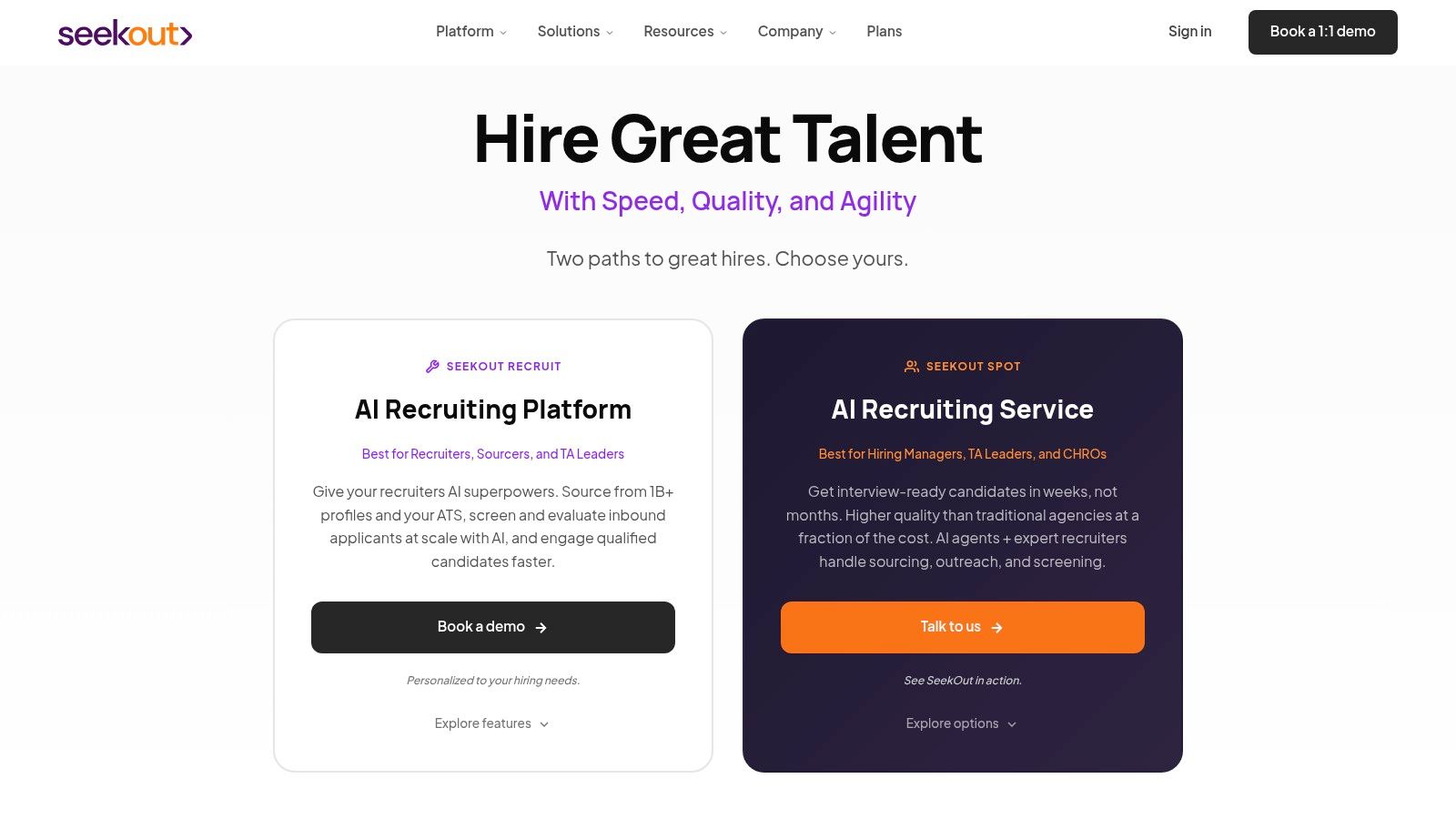
SeekOut positions itself as an AI-powered talent intelligence platform, extending beyond a simple sourcing tool. It aggregates data from hundreds of sources, including public profiles, papers, and patents, to create rich candidate profiles. This makes it one of the top recruiting apps for teams needing deep technical and diversity sourcing capabilities alongside powerful market analytics.
The platform is designed to give recruiters a competitive edge by not only finding candidates but also understanding talent markets and rediscovering past applicants in their ATS.
| Features | Pros | Cons |
|---|---|---|
|
Cross-Channel Search Searches public data and integrates with your ATS/CRM |
Strong data breadth beyond just LinkedIn profiles | Pricing is opaque with a high entry point |
|
Talent Market Insights Analytics on talent supply, diversity, and location |
Excellent data visualization for strategic planning | Can have a learning curve to fully leverage features |
|
Guided AI Workflows AI assistance from job description to candidate shortlists |
Best-in-class advanced diversity filters | User interface can feel dense at times |
|
SeekOut Spot Service Agentic AI recruiting service delivering qualified candidates |
Managed service option for overloaded teams | Less control compared to the self-serve platform |
SeekOut provides impressive data aggregation and market insights, but PeopleGPT from Juicebox focuses on a different value proposition: speed and AI-native workflow. While SeekOut uses AI to guide users through a structured process, PeopleGPT’s natural language search allows recruiters to find candidates in seconds by simply describing their ideal hire.
PeopleGPT also provides a more holistic, real-time view by sourcing across the entire public web, whereas SeekOut relies on its pre-aggregated database. For teams that prioritize rapid, conversational sourcing and automated multi-channel outreach over deep market analytics dashboards, Juicebox presents a more agile and intuitive alternative.
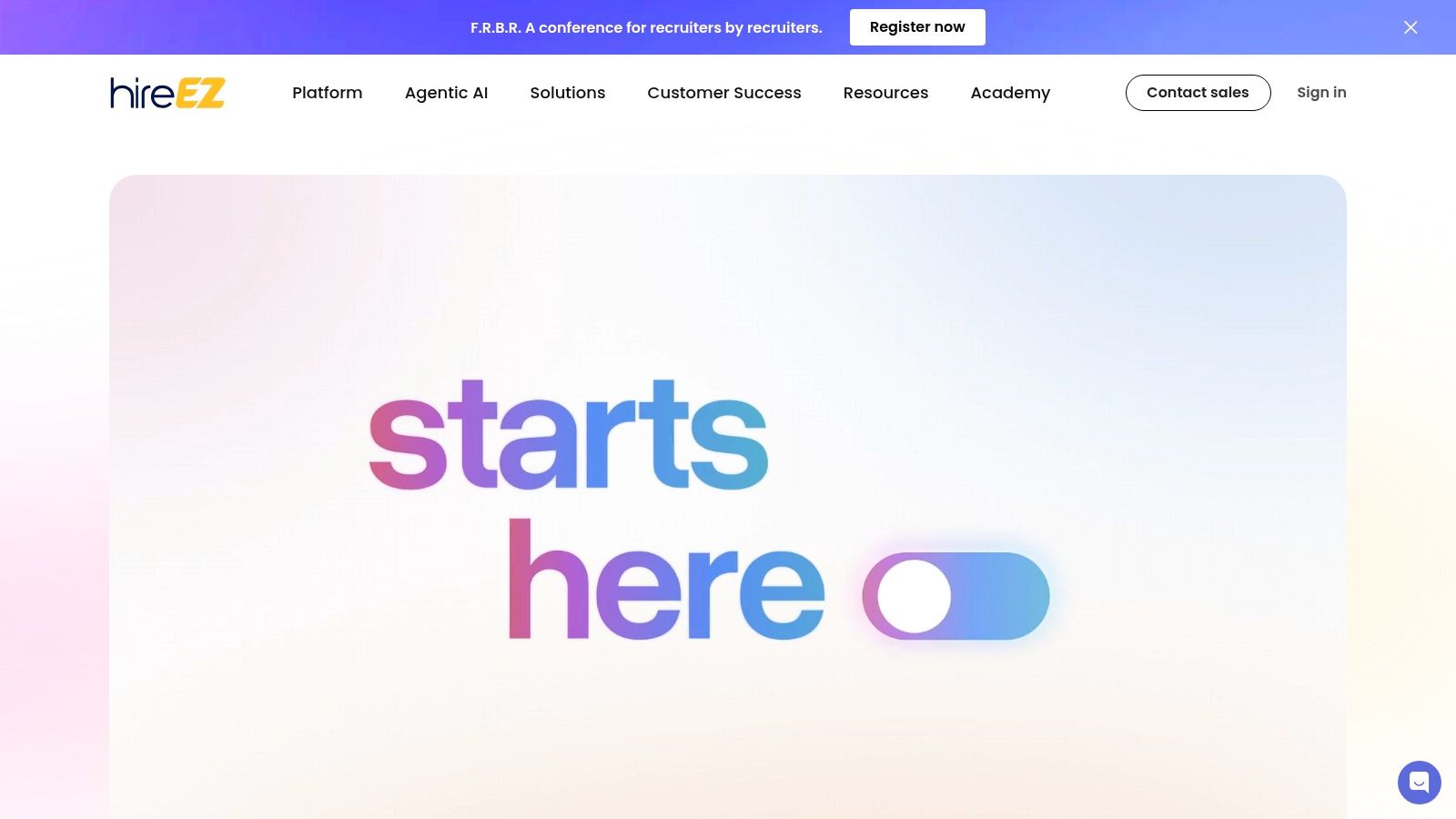
hireEZ (formerly Hiretual), positions itself as an agentic AI recruiting suite designed to automate the hiring lifecycle from application to interview. It moves beyond simple sourcing, offering tools for inbound screening, fraud detection, and AI-powered scheduling and phone screens. This makes it a strong contender among top recruiting apps for teams needing to manage high-volume pipelines and improve operational efficiency.
The platform is built to handle the entire top-of-funnel process, from identifying talent to engaging them and moving them toward the interview stage. It aims to reduce the manual work associated with resume review and initial candidate communication.
| Features | Pros | Cons |
|---|---|---|
|
AI Resume Screening Automated review with built-in fraud detection |
Broad automation coverage from application through interview stages | Pricing is largely custom and can be expensive |
|
AI Interview Tools Automated phone screens and interview scheduling |
Useful market insights and performance reporting | No public, consistent price cards available |
|
Market Insights Reporting on talent pools and industry benchmarks |
Marketplace availability and cloud procurement options | Can feel complex for teams needing simple sourcing |
|
ATS & CRM Integrations Data sync and candidate enrichment |
Strong fit for roles with high application volume | Requires significant setup to maximize value |
hireEZ excels at automating a structured, high-volume hiring process, focusing on screening, scheduling, and pipeline management. In contrast, Juicebox’s PeopleGPT is engineered for precision sourcing and outreach at speed.
While hireEZ automates administrative tasks like scheduling, PeopleGPT automates the creative and strategic work of finding and engaging top-tier, often passive, candidates across the entire web.
PeopleGPT’s natural language search provides a more intuitive and flexible way to identify niche talent compared to hireEZ’s filter-based sourcing. For teams prioritizing finding the right person over just managing a large volume of applicants, PeopleGPT's deep-web sourcing and multi-channel outreach automation offer a more direct path to qualified hires.
You can find more details on how it stacks up against other best sourcing tools for recruiters in our comprehensive guide.
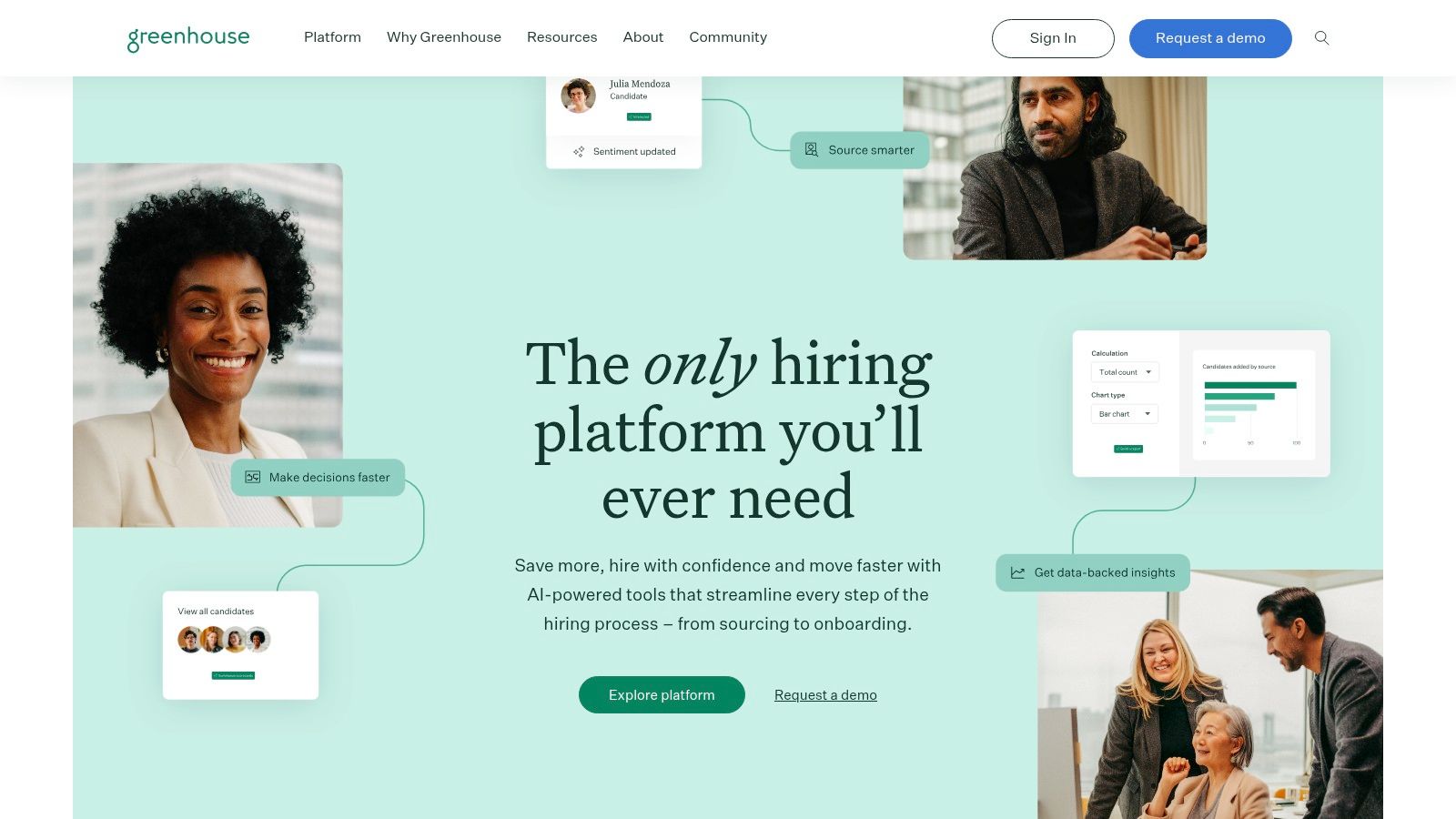
Greenhouse is a leading US-centric applicant tracking system (ATS) that champions a structured and consistent hiring process. It's renowned for features like interview kits and scorecards that standardize evaluation, making it a powerhouse for organizations focused on collaboration, governance, and reducing bias. Its robust platform is a top choice for teams aiming to build scalable and repeatable hiring workflows.
The system is designed to be the central hub for talent acquisition, offering deep customization and a vast integration ecosystem. For many mid-market and enterprise companies, Greenhouse is not just a tool but the operational backbone of their entire recruiting function, distinguishing it among other top recruiting apps.
| Features | Pros | Cons |
|---|---|---|
|
Structured Interview Kits Standardized questions and scorecards |
Excellent governance and analytics for data-driven hiring | No public pricing; quotes can be opaque and expensive |
|
Large Integration Ecosystem 500+ partners and public APIs |
Strong brand adoption and familiarity in the US market | Total cost of ownership increases with required add-ons |
|
CRM & Sourcing Tools CRM Essentials and Job Ad Marketplace |
Deep partner marketplace extends platform functionality | Can feel less agile or overly complex for smaller startups |
|
Security & Compliance Controls Advanced admin, permissioning, and security features |
Promotes fair, structured, and collaborative hiring | Primarily focused on post-application workflows, not sourcing |
Greenhouse excels as a system of record for managing active applicants, while Juicebox’s PeopleGPT is a system of action for finding passive talent. PeopleGPT is a top-of-funnel sourcing tool that discovers and enriches candidate profiles from across the web, then automates outreach to build a pipeline before candidates ever apply to a Greenhouse job post.
While Greenhouse's CRM helps manage existing talent pools, PeopleGPT's AI search and automation capabilities are designed to create new ones from scratch. Teams often use both: PeopleGPT to source and engage high-quality candidates, and Greenhouse to manage them through the structured interview and hiring process once they're interested.
Website: https://www.greenhouse.com
Lever stands out by merging a traditional Applicant Tracking System (ATS) with a powerful, native Candidate Relationship Management (CRM) platform called LeverTRM. This integrated approach allows talent teams to proactively build and nurture candidate pipelines long before a specific role opens. It’s a favorite among mid-market US companies that prioritize a unified workflow, relationship-driven recruiting, and scalable analytics, making it a strong contender among the top recruiting apps.
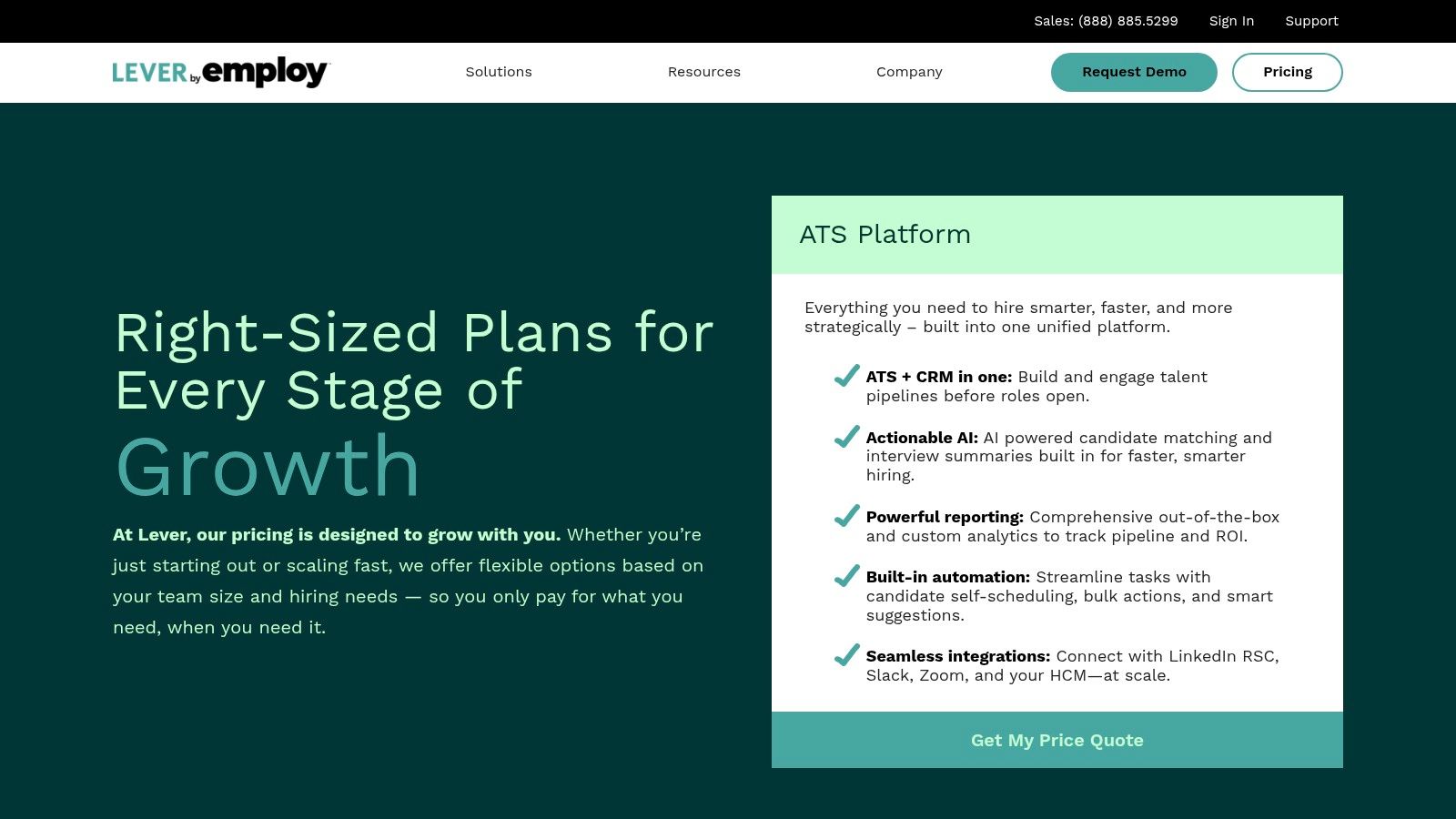
The platform is designed to be a central source of truth, offering robust features for sourcing, nurturing, interviewing, and reporting within a single ecosystem. It's often chosen by teams looking to move beyond reactive hiring.
So, where does it fall short?
| Features | Pros | Cons |
|---|---|---|
|
Unified ATS + CRM Nurture campaigns and pipeline management |
Proactively builds and engages long-term talent pipelines | Pricing is opaque and requires sales negotiation |
|
Advanced Analytics Custom dashboards and DEI metrics |
Actionable insights that scale with company growth | Add-ons can significantly increase total cost |
|
Robust Integrations LinkedIn RSC, Slack, HRIS connections |
Strong ecosystem connectivity for streamlined workflows | Annual contracts are standard, limiting flexibility |
|
Automation AI matching, interview scheduling, and feedback |
Automates repetitive tasks to improve team efficiency | Can be overly complex for very small teams |
Lever provides a comprehensive, closed-system platform for managing the entire hiring lifecycle, but its sourcing capabilities are limited to its internal database and direct integrations. Juicebox’s PeopleGPT complements an ATS like Lever by acting as a powerful external sourcing engine. PeopleGPT scours the entire public web, finding candidates that would never be in Lever’s database and enriching their profiles with multi-source data.
While Lever has automation for internal workflows, Juicebox automates the top-of-funnel outreach across multiple channels like email and LinkedIn. A common workflow is using PeopleGPT to discover and engage top talent, then seamlessly exporting qualified, interested candidates directly into Lever to manage the interview process.
Website: https://www.lever.co/pricing//
Ashby is a modern, all-in-one recruiting platform that combines an Applicant Tracking System (ATS), sourcing, scheduling, and powerful analytics into a single, cohesive system. It has gained significant traction among tech startups and scaling mid-market companies for its user-friendly interface and transparent pricing for smaller teams, making it a strong contender among the top recruiting apps.
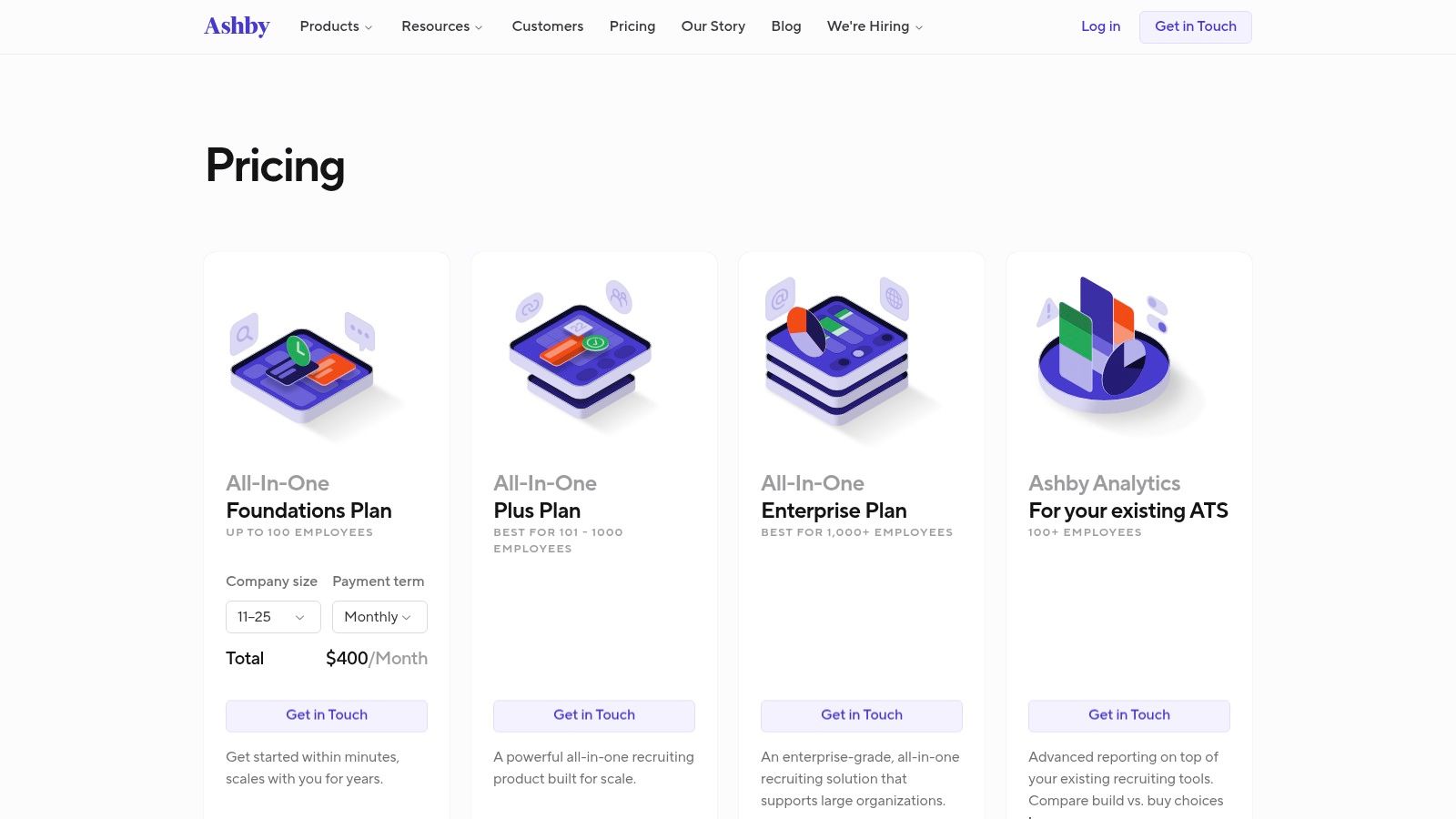
The platform is designed to unify the entire hiring lifecycle, from initial outreach to final reporting. Ashby stands out by offering a “Foundations” plan with published pricing for companies under 100 employees, removing the guesswork often associated with enterprise software procurement.
| Features | Pros | Cons |
|---|---|---|
|
All-in-One Platform ATS, CRM, and analytics in a single system |
Strong reporting and goal-tracking capabilities | Higher tiers rely on sales-quoted pricing |
|
Automated Scheduling Advanced interview coordination tools |
Fast setup with predictable entry pricing for small teams | Some advanced features locked behind higher plans |
|
Deep Analytics Customizable dashboards and reports |
Scales effectively to meet enterprise needs | Can feel complex for teams needing only a basic ATS |
|
Sourcing & Outreach Built-in candidate engagement tools |
Modern, intuitive user interface | Fewer native integrations than long-established ATSs |
Ashby excels as a comprehensive system of record for the entire recruiting process. PeopleGPT, however, focuses on the top of the funnel: finding and engaging talent across the open web. While Ashby’s sourcing tools are robust, PeopleGPT’s AI-powered natural language search provides greater breadth, discovering candidates on platforms beyond just LinkedIn, like GitHub and personal portfolios.
The core difference is purpose. Ashby is the central hub for managing applicants, while Juicebox is the specialized engine for sourcing passive talent. Teams often use them together: sourcing candidates with PeopleGPT's deep web search and then managing the interview process within Ashby's structured ATS environment.
Website: https://www.ashbyhq.com/pricing
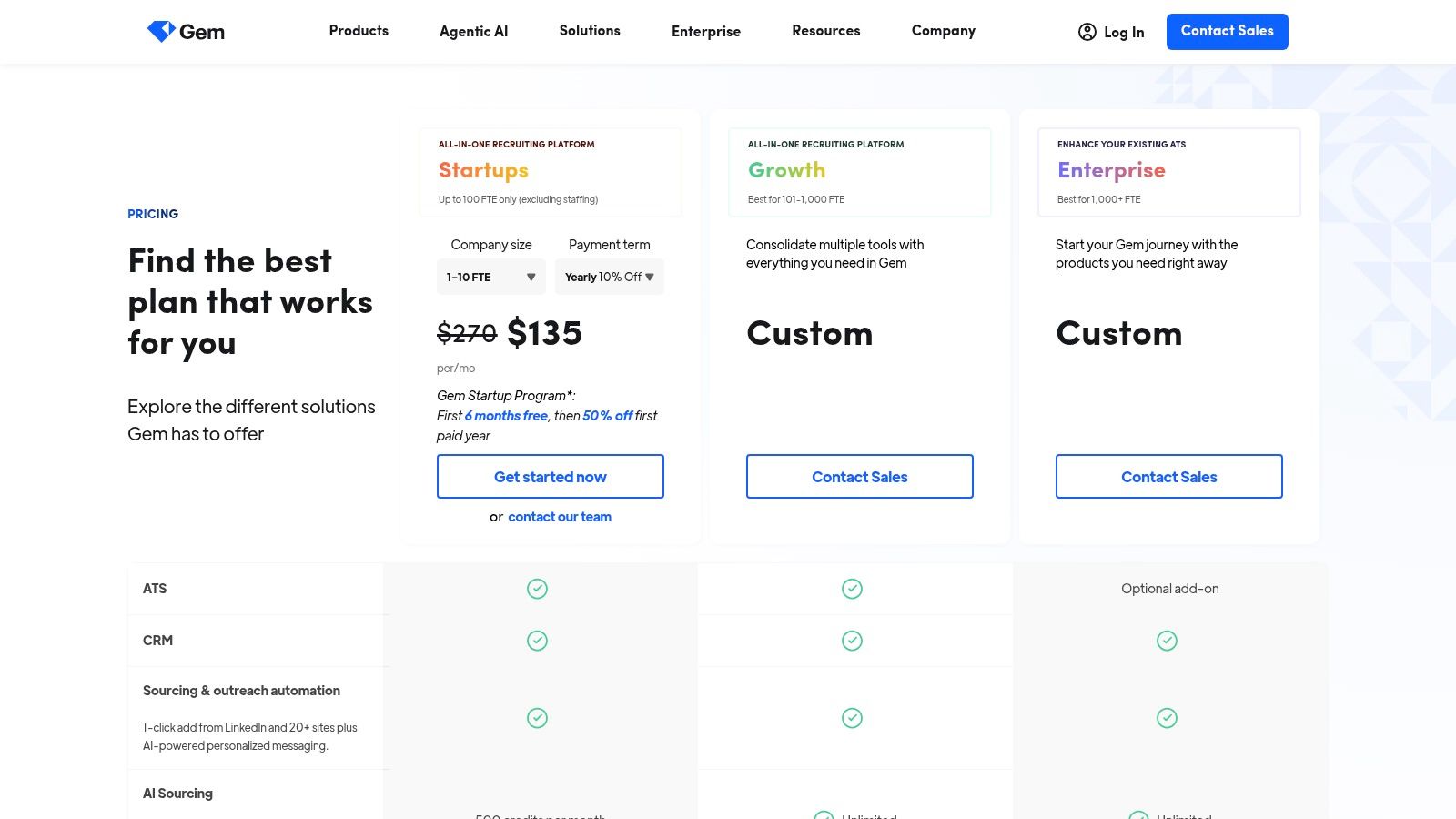
Gem is a comprehensive talent engagement platform and CRM designed for modern recruiting teams that prioritize building and nurturing passive candidate pipelines. It excels at sourcing, outreach automation, and analytics, providing a centralized hub to manage every stage of the candidate relationship before they even become an applicant. As one of the more mature top recruiting apps, it integrates deeply into existing workflows.
The platform allows sourcers to capture candidate profiles from LinkedIn and over 30 other sites with a single click, then enroll them in personalized, multi-stage outreach sequences. Its recent addition of AI sourcing capabilities and more accessible pricing tiers has broadened its appeal.
| Features | Pros | Cons |
|---|---|---|
|
Talent CRM Centralized database for all candidate interactions |
Strong foundation for building and engaging passive talent pipelines | Enterprise packages are quote-based and can be expensive |
|
Automated Sequences Personalized multi-channel outreach campaigns |
Mature analytics paired with robust CRM functionality | Many key features (e.g., AI sourcing) are gated by plan tier |
|
AI Sourcing AI-powered candidate discovery within the platform |
Deep native integrations with Greenhouse, Workday, and Lever | Can present a significant learning curve for new users |
|
Talent Pipeline Analytics Outreach, diversity, and funnel performance tracking |
Recent pricing changes improved accessibility for some teams | Core value is tightly coupled to outbound sourcing workflows |
Gem and Juicebox both excel at building talent pipelines, but they approach the task differently. Gem is a CRM-first platform focused on managing relationships and automating outreach once a candidate is identified. Its strength lies in engagement analytics and team collaboration features within its walled garden.
PeopleGPT, on the other hand, is a sourcing-first AI engine. It uses natural language to find candidates across the entire open web, not just a curated list of sites, providing broader data from sources like GitHub, academic papers, and personal portfolios. While Gem automates outreach, Juicebox automates the sourcing itself, using AI to build and enrich entire candidate lists based on complex requirements, making the initial discovery phase significantly faster.
Website: https://www.gem.com/?i=1
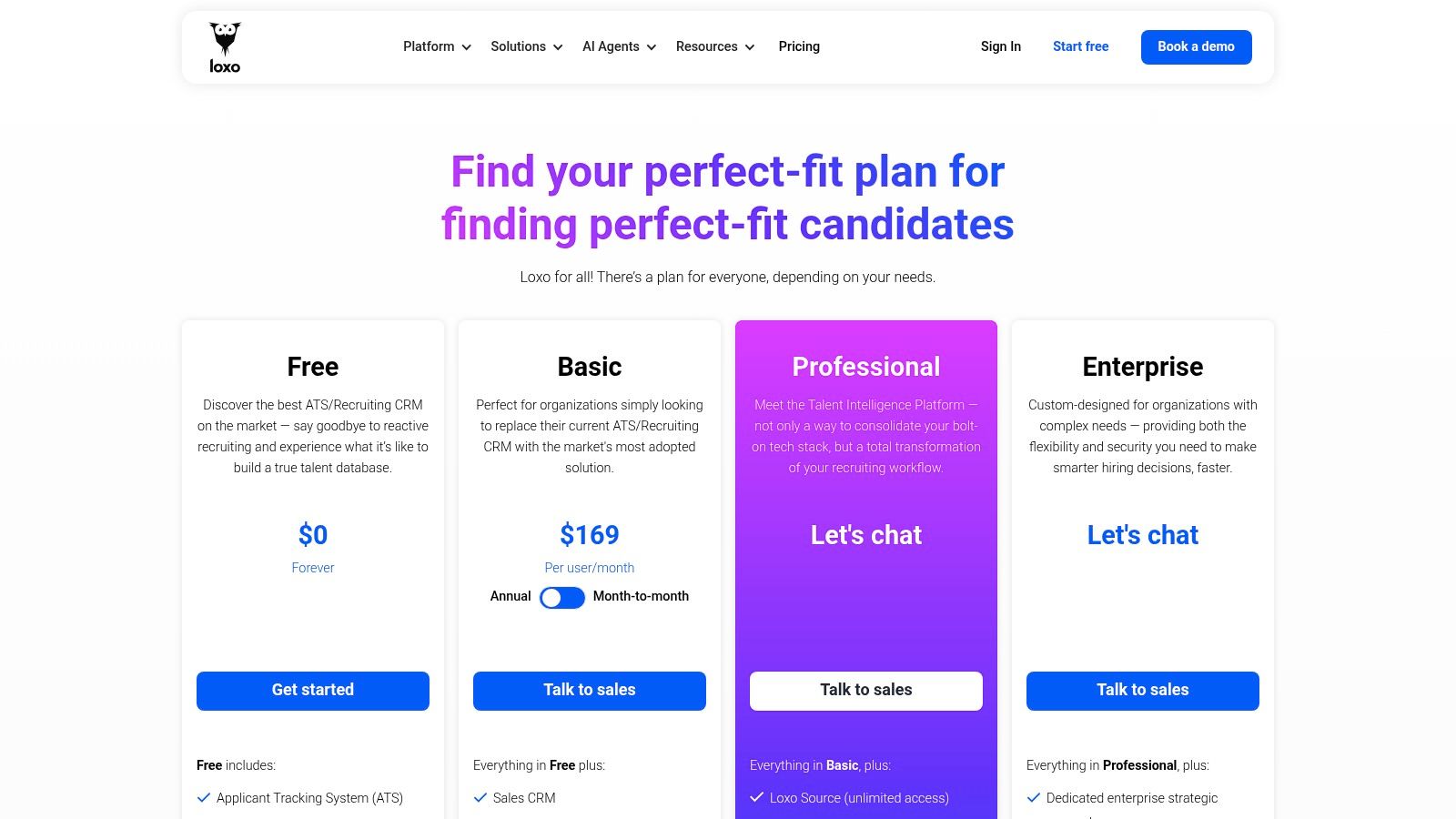
Loxo aims to be an all-in-one recruiting command center, consolidating an ATS, CRM, sourcing, and outreach automation into a single stack. Its biggest draw is a truly free ATS/CRM tier, making it an incredibly accessible entry point for new agencies or small businesses looking to professionalize their hiring process without an initial investment. This makes it one of the most practical top recruiting apps for teams on a tight budget.
As teams scale, Loxo offers paid plans that unlock a proprietary database, contact credits, and multi-channel outreach capabilities. This tiered approach allows the platform to grow alongside a company’s needs, from a simple candidate management system to a full-fledged talent acquisition engine.
| Features | Pros | Cons |
|---|---|---|
|
Free ATS/CRM Tier Unlimited jobs, candidates, and projects (1 user) |
True free entry point removes barrier to adoption | Contact data credits can introduce variable costs |
|
All-in-One Platform ATS, sourcing, and outreach combined |
Consolidates the tech stack and reduces tool fatigue | Advanced AI features are locked behind higher tiers |
|
Outreach Automation Drip campaigns via email, text, and social |
Simplifies multi-touch candidate engagement | UI can feel less modern than newer competitors |
|
Loxo Source™ Proprietary candidate database with contact info |
Provides an alternative sourcing channel beyond LinkedIn | Database quality and coverage can be inconsistent |
Loxo’s strength is its consolidation of ATS, CRM, and outreach functions, particularly its free entry tier. However, Juicebox’s PeopleGPT focuses purely on being the best-in-class sourcing and intelligence engine. While Loxo has its own database, PeopleGPT aggregates data from the entire open web, providing richer, more comprehensive candidate profiles that are updated in real-time.
PeopleGPT’s natural language search and AI-driven insights offer a more powerful and intuitive way to identify top talent compared to traditional filter-based sourcing. For teams whose primary bottleneck is finding, not just managing, qualified candidates, PeopleGPT provides superior data depth and search precision, which can then be fed into any ATS, including Loxo’s.
Website: https://www.loxo.co/pricing
Indeed is the world's largest job marketplace, functioning as a primary destination for high-volume hiring and mainstream roles. It allows employers to post jobs for free, though sponsored listings are necessary for visibility. Its simple, pay-per-performance model makes it an accessible and scalable tool for companies needing a rapid influx of applicants, solidifying its place among top recruiting apps.
The platform's strength lies in its sheer scale and user familiarity. Job seekers flock to Indeed, ensuring a steady stream of candidates for most open positions, from entry-level to professional. The key is to find Indeed alternatives for specialized roles.
| Features | Pros | Cons |
|---|---|---|
|
Sponsored Jobs Pay-per-performance model for premium visibility |
Massive reach and extremely fast applicant flow | Free posts get buried quickly with limited visibility |
|
Integrated Tools Built-in screening questions and messaging |
Fine-grained budget control with no long-term contracts | Applicant quality can be inconsistent and require heavy screening |
|
Indeed Resume Searchable database of active job-seeker resumes |
Simple interface that hiring managers can use easily | Cost-per-application can rise quickly for competitive roles |
|
Employer Dashboard Candidate management, spend tracking, and analytics |
Strong brand recognition among active job seekers | Less effective for highly specialized or passive candidates |
Indeed is an inbound recruiting channel designed to attract active job seekers. In contrast, PeopleGPT is an outbound sourcing tool for finding and engaging passive talent across the entire web. While Indeed provides a high volume of applicants who have raised their hand, PeopleGPT allows you to build a curated pipeline of top-tier talent who may not even be looking.
PeopleGPT’s AI search uncovers candidates from diverse sources like GitHub and personal websites, providing a richer profile than an Indeed resume. Furthermore, Juicebox automates multi-channel outreach, a critical function for engaging passive candidates that is completely absent from Indeed's inbound-focused platform.
Website: https://www.indeed.com/hire/cs/pricing
ZipRecruiter simplifies job posting by acting as a powerful distribution engine, pushing a single job description to over 100 job boards and sites with one click. It’s built for speed and reach, offering a straightforward alternative to the pay-per-click models dominant in the industry. This approach makes it one of the top recruiting apps for teams that need predictable costs and broad, immediate candidate exposure.
The platform's core value is its flat-fee pricing structure, allowing employers to pay a set daily or monthly rate per job posting. This model, combined with a 4-day free trial, lets teams test its effectiveness without initial financial commitment.
Think of it this way.
| Features | Pros | Cons |
|---|---|---|
|
One-Click Job Distribution Posts to 100+ job boards simultaneously |
Transparent, predictable per-job pricing | Candidate quality and volume vary widely by role |
|
Candidate Matching Engine AI scans resumes to surface qualified talent |
Extremely fast setup with massive distribution reach | Published prices can fluctuate by region and demand |
|
Screening Questions Custom pre-qualification filters |
Free trial available to validate fit quickly | Less effective for highly specialized or senior roles |
|
Resume Database Access Searchable resume pool on higher tiers |
Strong 24/7 employer support for setup and issues | Lacks deep proactive sourcing and outreach features |
ZipRecruiter is a job distribution tool for attracting active candidates, while PeopleGPT is a sourcing engine for finding and engaging passive talent. Where ZipRecruiter broadcasts a job and waits for applicants, PeopleGPT proactively searches the entire web to build a pipeline of ideal candidates who may not even be looking. You can learn more about how it stacks up against other job boards in our ZipRecruiter vs. Indeed comparison.
PeopleGPT provides rich, multi-source profiles and automates outreach, offering a targeted approach that contrasts with ZipRecruiter’s broad-net casting. For roles requiring specific skills or experience, PeopleGPT's precision and automation deliver a higher quality pipeline.
Website: https://www.ziprecruiter.com/employers
While not a direct recruiting app, G2 is an essential research platform for any team evaluating their tech stack. It’s a B2B software marketplace that aggregates verified user reviews, allowing sourcers and TA leaders to compare the top recruiting apps, from Applicant Tracking Systems to AI sourcing platforms. Its grid reports provide a clear visual benchmark of market leaders and niche innovators.
G2 helps teams move beyond marketing claims by providing direct feedback from real-world users. By filtering reviews based on company size and industry, recruiters can build a highly relevant shortlist of tools that solve problems similar to their own, making it a critical first step in any software evaluation process.
| Features | Pros | Cons |
|---|---|---|
|
Verified User Reviews Feedback from real, authenticated software users |
Strong signal for unbiased vendor comparison and shortlisting | Rankings can be influenced by vendor marketing activity |
|
Comparison Grids Visual leader vs. contender matrices by category |
Fast market overview and identification of top players | Pricing details are often missing or require vendor contact |
|
Detailed Category Filters Sort by features, company size, industry, and use case |
Efficiently narrows large markets to relevant solutions | Vendor claims should still be validated via demos or trials |
|
Alternative Suggestions Surfaces direct competitors for any platform |
Useful for discovering newer or lesser-known recruiting tools | Review depth and quality can vary across listings |
G2 is a platform for finding software, whereas PeopleGPT is the software you use for finding candidates. A recruiter would use G2 to read reviews and conduct a comprehensive recruiting software comparison before ultimately choosing a tool like Juicebox.
While G2 provides qualitative data on user satisfaction with different platforms, PeopleGPT provides quantitative data on candidates across the entire web.
You use G2 to validate your choice of sourcing tool, then use PeopleGPT to execute your sourcing strategy with AI-powered search and automated, multi-channel outreach. They are complementary tools serving different stages of the procurement and recruiting lifecycle.
Website: https://www.g2.com/categories/recruiting
What is the most effective recruiting app?
The most effective app depends on your goal. For finding passive talent fast, an AI-native sourcing platform like Juicebox is best. For managing applicants, an ATS like Greenhouse or Lever is key.
How do I choose the right recruiting software?
Define your primary bottleneck (sourcing, managing, etc.), set a budget, and prioritize tools that consolidate workflows instead of adding more steps. Use G2 to compare user reviews.
Are free recruiting apps worth it?
Free tiers, like Loxo's ATS, are great for new agencies or small businesses. However, they often lack the powerful sourcing and automation features needed to scale hiring effectively.
Navigating the landscape of the top recruiting apps can feel like an overwhelming task. We’ve dissected everything from enterprise-level Applicant Tracking Systems like Greenhouse to powerful sourcing platforms like LinkedIn Recruiter. Each tool promises to solve a piece of the hiring puzzle, yet many recruiters find themselves stitched into a patchwork of expensive, siloed systems that create more work than they eliminate.
The core takeaway is this: the best recruiting stack isn't the one with the most logos; it's the one that creates the most direct path from intent to hire.
For years, the industry standard has been a multi-step, manual process. You build a Boolean string, run it on a database, export a list, find contact data, and upload it to a sequencer. This fragmented workflow is the single biggest bottleneck to hiring velocity.
Most people believe that to get better hiring results, you need more tools. The opposite is true. You need fewer, more powerful tools that consolidate the most time-consuming steps. The real evolution in recruiting technology isn't just about better data. It’s about a fundamental shift from a "search" model to an "answer" model.
But there’s a problem most tools ignore…
They automate a single step, like outreach, but force you to handle sourcing and data enrichment manually. This is like putting a jet engine on a horse-drawn cart. True transformation requires a single, unified workflow from job description to candidate conversation.
What this unlocks is the ability to move from a reactive, administrative function to a strategic talent partner. It's not just about filling roles faster; it's about giving your company a sustainable competitive advantage by hiring better people than your rivals, consistently.
Ramp, one of the fastest growing companies, used Juicebox to hire over 200 engineers in 18 months, a feat that would be impossible with traditional, fragmented tools.
As you consider which of these top recruiting apps is right for you, don’t just compare feature lists. Ask yourself three simple questions:
Ultimately, choosing the right recruiting technology is a strategic decision that reverberates across the entire organization. By moving from a fragmented collection of manual tools to a unified, AI-native platform, you stop the endless cycle of sourcing and data entry. You reclaim your time, elevate your role, and start doing what you were meant to do: build relationships and hire the best people.
{{large_cta}}
Run your first search for free. Find and engage top talent across 800M+ profiles. Trusted by 5,000+ customers.
.png)