.svg)
SIGN UP FOR JUICEBOX (IT’S FREE!)

Who are you looking for?
Thank you! Your submission has been received!
Oops! Something went wrong while submitting the form.

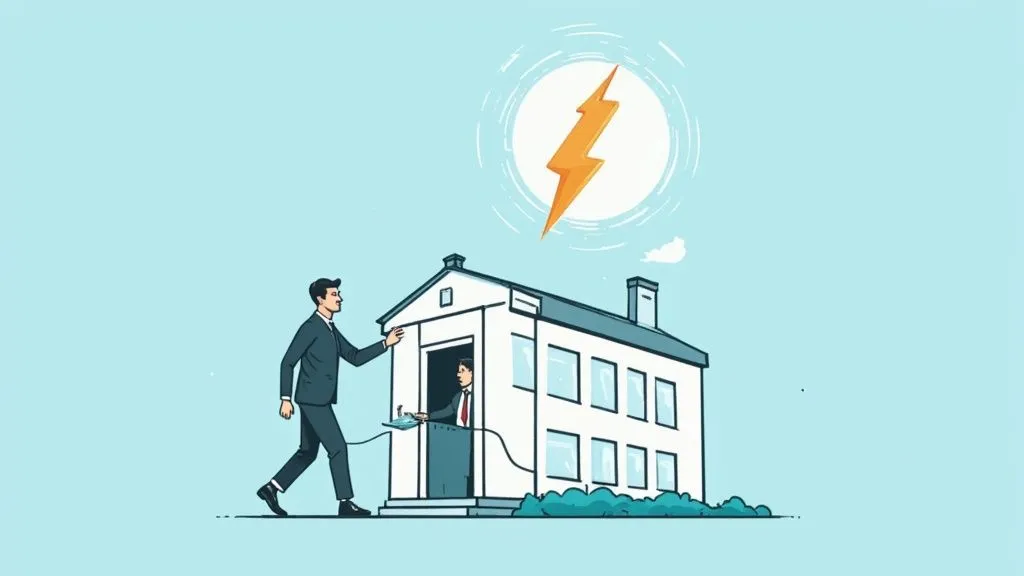
Facing rising employee turnover can feel like trying to navigate a ship with a slow leak—you're constantly bailing water instead of sailing forward. A well-designed sabbatical leave program isn't just a perk; it's the strategic tool that patches the hull, stopping burnout and attrition at the source.
Think of sabbatical leave as building a dedicated recharge station for your most valuable talent. This guide moves beyond generic advice to give you a recruiter-centric blueprint for designing, launching, and measuring a program that drives retention and sharpens your competitive edge. Unlike other guides, this post integrates real-world HR workflows and data-backed strategies to prove the ROI of rest.
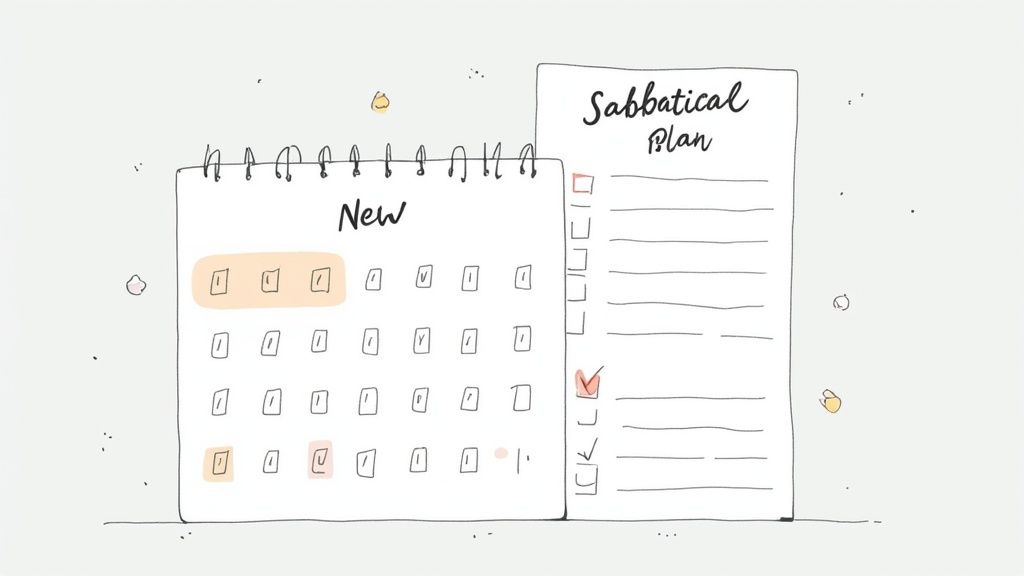
In today's talent market, keeping your best people requires more than competitive pay; it demands a genuine investment in their long-term well-being. A sabbatical leave program acts as that crucial recharge station. It’s a structured opportunity for high-performing employees to step away, prevent burnout, and pursue personal or professional growth, all while their career remains securely on track.
This isn't just a long vacation; it's a strategic intervention. Even the most powerful engine needs maintenance to avoid a breakdown. A sabbatical provides that essential pause, ensuring your top talent returns with renewed energy and commitment, ready to drive the business forward instead of looking for the nearest exit.
The ripple effects extend far beyond employee satisfaction. Investing in a recharge station delivers tangible returns across the business:
To unlock its full potential, we must see sabbatical leave as more than an extended holiday. It’s a strategic pause, fundamentally different from standard PTO or legally mandated FMLA. Think of it as an intentional timeout for rest, personal development, or professional upskilling, with the full guarantee of job security upon return.
The growing demand for this benefit is a direct response to post-pandemic shifts in work culture, where employees prioritize well-being. The "recharge station" metaphor resonates because it directly addresses burnout, a key driver of the Great Resignation and ongoing talent churn. Differentiating it from other leave types is crucial for building a solid policy and a compelling business case.
Nailing this distinction is the first step toward building a powerful talent strategy that leverages sabbaticals effectively. More and more professionals are seeking these opportunities; between January 2019 and January 2024, the percentage of employees taking a sabbatical nearly doubled from 3.3% to 6.7%. This reflects a broader shift toward the modern workplace flexibility trends that employees now expect.
Getting leadership buy-in requires a data-driven business case that frames sabbatical leave as a strategic investment, not a cost. Your task is to build a bridge from employee wellness to bottom-line results. Focus on three pillars: reducing turnover costs, gaining a recruitment edge, and fostering innovation.
This approach shifts the conversation from expense to ROI, proving that a temporary, planned absence can create permanent, positive gains.

Losing a key employee is incredibly expensive, costing anywhere from one-half to two times their annual salary in recruitment, onboarding, and lost productivity. Start by calculating the attrition cost for your most critical roles. Frame the sabbatical program as an insurance policy against that loss—a way to retain priceless institutional knowledge and avoid huge replacement expenses.
By offering a planned "recharge station," you're not just preventing burnout. You're safeguarding your company's most valuable assets—its people—and protecting the bottom line from the high cost of churn.
In a competitive talent market, a sabbatical program is a powerful differentiator. It signals to top candidates that you invest in your people for the long haul. Frame this as a unique selling proposition in your business case. Feature it in job descriptions and employer branding to attract high-caliber professionals who are seeking a career, not just a job. This benefit can easily be more compelling than a small salary bump, especially when building a smart compensation intelligence strategy.
Employees don't just return rested; they return with fresh perspectives and new ideas. This infusion of energy can challenge stale processes and spark company-wide innovation. Think of it as an "innovation dividend." This is why sabbatical adoption is rising. A study by the Chartered Management Institute found that by the early 2020s, 53% of UK companies offered sabbaticals, driven by desires to enhance well-being (40%), foster flexibility (36%), and boost retention (31%).
A great sabbatical program is built on a clear, fair, and well-structured policy. This is your blueprint, turning the abstract idea of a break into a defined, manageable benefit. A strong framework gives everyone clarity and confidence, setting expectations from application to return and mitigating risks of inconsistent approvals or legal challenges.
The impact of a structured break is tangible. Companies that invest in such programs see measurable improvements in engagement, productivity, and loyalty.

To build a robust policy, you must define its core components, especially compensation. A 2022 WTW survey found that among companies offering sabbaticals, 30% offered full pay, 17% partial pay, and 54% were unpaid. This highlights the flexibility you have to design a program that fits your budget. You can explore more trends at WorldatWork.
Use this table to weigh the trade-offs of different policy decisions and craft a program that aligns with your company's culture and resources.
Policy ElementOption A (Broad & Simple)Option B (Targeted & Tiered)Key ConsiderationsEligibility5 years of service, all levels7 years of service, senior roles onlyBroader eligibility boosts company-wide morale; a targeted approach rewards top leadership.Duration4 weeks, fixed4-8 weeks, tiered by tenureA fixed duration is simpler to manage; tiered options offer a greater reward for long-term loyalty.CompensationFully Paid50% PaidFull pay is a powerful retention tool; partial pay makes the program more financially accessible.Return Agreement1-year commitment post-sabbaticalNo commitment requiredA return agreement helps ensure the company sees the ROI from its investment in the employee's leave.Application Window6 months in advance3 months in advanceA longer window allows for better planning; a shorter one offers more flexibility for employees.FrequencyOnce every 5 yearsOnce per employeeLimiting frequency manages costs; allowing it once makes it a capstone reward.
Remember, a sabbatical policy should complement your other leave programs, like those detailed in our guide on bereavement leave, to create a holistic approach to employee well-being.
A well-designed policy is just the starting point. A successful launch requires a strategic plan for communication, workload management, and reintegration. This is the moment your "recharge station" becomes a reality. A smooth rollout prevents chaos and ensures the program delivers on its promise of rejuvenation and renewed energy.
Your communication goal is to build genuine excitement while providing crystal-clear details. Announce the program at an all-hands meeting, with leadership front and center, to signal its importance. Create a central hub on your intranet with the full policy, FAQs, and application instructions. Finally, train managers to be frontline advocates who can confidently guide their teams.
A rock-solid handover plan is non-negotiable. Begin planning at least 60-90 days before the leave starts. The departing employee should create a detailed document mapping out all key responsibilities, project statuses, and critical contacts. This allows you to distribute the workload thoughtfully, whether by reassigning tasks to the team, hiring a temporary contractor, or creating a developmental opportunity for an internal employee.
The journey isn't over when the sabbatical ends. A structured reintegration process is crucial for capturing the employee's renewed energy and fresh ideas. Treat their return like a mini-relaunch. Schedule a debrief session within their first week back to hear about their experiences and discuss how their refreshed perspective can benefit the team. Applying onboarding best practices makes a world of difference here.
When a manager takes a sabbatical, you need to find a temporary replacement fast. PeopleGPT can source qualified interim leaders in minutes, ensuring seamless team management.
Prompt:"Find me fractional leaders with 5+ years of experience managing engineering teams in the SaaS industry, based in the US, and available for a 3-month contract starting next month."
Output:A curated list of 50+ qualified candidates with verified experience, contact information, and availability, ready for immediate outreach.
Impact:Fill critical leadership gaps in hours, not weeks. Ensure team productivity remains high during a sabbatical, turning a potential disruption into a smooth transition.
A successful sabbatical leave program is a living part of your culture that requires continuous measurement and refinement. To maintain leadership buy-in, you must connect the program to tangible business outcomes and create a feedback loop that ensures your "recharge station" evolves with your company's needs.
Focus on hard data that demonstrates its value in retention, engagement, and growth. Tracking the right recruiting metrics will build a powerful, ongoing business case.
Key KPIs to monitor include:
Numbers tell you what is happening, but direct feedback tells you why. Establish a feedback loop through pre-sabbatical interviews, post-sabbatical debriefs, and anonymous annual surveys to gather qualitative insights. This combination of data and stories builds an undeniable case that your program is a strategic investment that recharges talent and drives real business results.
Here are straightforward answers to common questions about implementing a sabbatical leave program.
Strategic planning is key. Begin 2-3 months in advance by creating a detailed handover document with the departing employee. This roadmap should outline all key responsibilities, project statuses, and contacts. The workload can then be managed through a combination of distributing tasks among team members, hiring a temporary contractor, or creating a stretch role for an emerging internal leader.
Not at all. While large corporations may offer fully paid leave, smaller businesses can offer high-impact, low-cost alternatives. An unpaid sabbatical with guaranteed job security is a powerful loyalty-builder. SMEs can also offer shorter sabbaticals (e.g., one month after three years). The goal is to design a program that fits your culture and budget, not to mirror a Fortune 500 company. For more ideas on attracting talent, explore the latest AI recruiting software.
Consistency. The biggest legal risk is applying the policy unevenly, which can lead to discrimination claims. Your eligibility criteria, such as tenure and performance standards, must be clearly documented and applied uniformly to all employees. Ensure the policy explicitly states what happens to benefits, pay, and seniority during the leave. Always have your legal counsel review the final policy to ensure full compliance.
Implementing a sabbatical leave program is more than a modern HR trend; it's a strategic decision to build a more resilient, engaged, and loyal workforce. By creating a dedicated recharge station for your employees, you actively combat burnout, foster innovation, and create a powerful recruitment advantage. The key is to move from concept to execution with a clear, consistent, and well-managed framework.
This isn't just about giving people time off. It's about investing in their longevity with your company, ensuring your top performers return re-energized and ready to lead your business into the future.
{{large_cta}}
Run your first search for free. Find and engage top talent across 800M+ profiles. Trusted by 5,000+ customers.