.svg)
SIGN UP FOR JUICEBOX (IT’S FREE!)

Who are you looking for?
Thank you! Your submission has been received!
Oops! Something went wrong while submitting the form.

Building a world-class distributed team requires more than just a Zoom account. The default remote hiring stack, often a patchwork of legacy systems and expensive, siloed platforms, is slow, inefficient, and blinds you to 80% of the available talent pool. Your current process is likely leaking top candidates and budget without you even realizing it. The first step to fixing this is using the right remote hiring tools.
Most people believe scaling remote hiring means spending more on tools like LinkedIn Recruiter. The opposite is often true. The key isn't adding more tools; it's consolidating on an intelligent, AI-native core that eliminates manual work and expands your talent universe beyond a single, saturated network. Unlike generic platforms, Juicebox leverages AI to scan over 800 million profiles, finding candidates traditional tools miss. This is where modern tools for hiring remotely come in, designed to streamline every step from sourcing to onboarding.
This guide breaks down the essential remote hiring tools for 2026. We move beyond generic lists to provide a practical framework for building a faster, more cost-effective recruiting engine. You'll get a detailed look at the critical software categories, from AI sourcing platforms that replace Boolean with plain English, to the Applicant Tracking Systems (ATS) and global payroll systems that form the backbone of your distributed team. Each option includes a quick analysis, pros, cons, and direct links to help you make the right choice.
We’ll show you how to build a lean, powerful stack that helps you close roles significantly faster. The goal is simple: to help you find the best platforms for your specific needs, enabling you to hire top talent from anywhere, without the friction and exorbitant costs of a traditional setup.
Juicebox stands out as a formidable AI-native talent sourcing platform, engineered to streamline and accelerate the entire remote hiring process. By replacing cumbersome Boolean search strings with a conversational PeopleGPT interface, it allows recruiters to find, verify, and contact top-tier candidates in minutes, not hours. Teams simply input their hiring needs in plain English, and Juicebox scans over 800 million profiles from 30+ sources to deliver an AI-ranked shortlist instantly. This approach significantly broadens the talent pool beyond the usual confines of LinkedIn, with Juicebox reporting that 80% of hires made through its platform originate from other sources (Juicebox internal data, 2024).
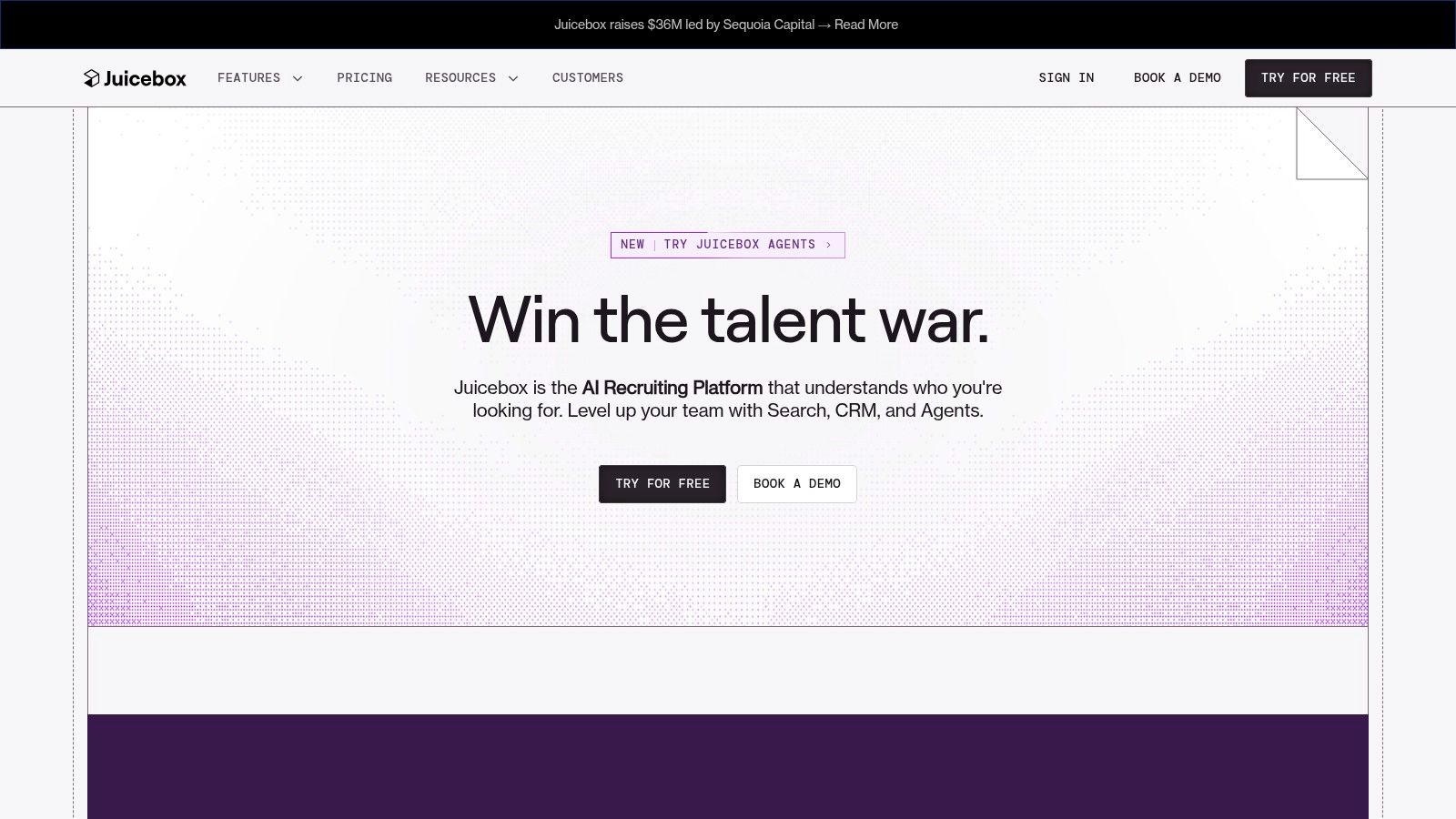
Its core strength lies in unifying disparate hiring functions into a single, cohesive workflow. The platform includes built-in email verification and a multi-step outreach sequencer, which can triple reply rates and eliminate manual follow-ups. For teams looking to scale, the optional Juicebox Agents add-on provides autonomous, 24/7 sourcing that learns from user feedback. Backed by deep integrations with 41 ATS and 21 CRM systems, Juicebox ensures that candidate data flows seamlessly into existing hiring pipelines, making it one of the most efficient remote hiring tools available for sourcing talent. For teams struggling with old-school Boolean, tools like an xray search generator can be a helpful bridge.
Pros:
Cons:
Website: https://juicebox.ai
As the dominant force in professional networking, LinkedIn Recruiter is the undisputed heavyweight champion of talent sourcing platforms. It provides unparalleled access to a global pool of over one billion professionals, making it an indispensable tool for outbound sourcing, especially for specialized or hard-to-fill remote roles. Recruiters can leverage its powerful search functionality, which includes more than 40 advanced filters, to pinpoint candidates with precision.

The platform's deep integration into existing recruiter workflows, including connections with many Applicant Tracking Systems (ATS) via Recruiter System Connect (RSC), streamlines the hiring process significantly. However, its premium power comes at a premium price, which is not publicly listed and often requires a substantial budget. Maximizing its potential also demands a high level of skill in Boolean search and crafting compelling outreach messages. Exploring LinkedIn Recruiter pricing can help teams budget effectively.
For a broader overview of tools that can enhance your LinkedIn Recruiter experience and optimize your outreach, consider exploring a comprehensive resource like The Definite LinkedIn AI Tools Directory.
Workable positions itself as an all-in-one recruiting and HR suite, making it a strong contender among remote hiring tools for small to mid-sized businesses. It combines a user-friendly Applicant Tracking System (ATS) with broad job board distribution and sourcing capabilities. The platform's main appeal lies in its transparent, self-serve pricing and a quick setup process, allowing distributed teams to get operational without lengthy implementation cycles.
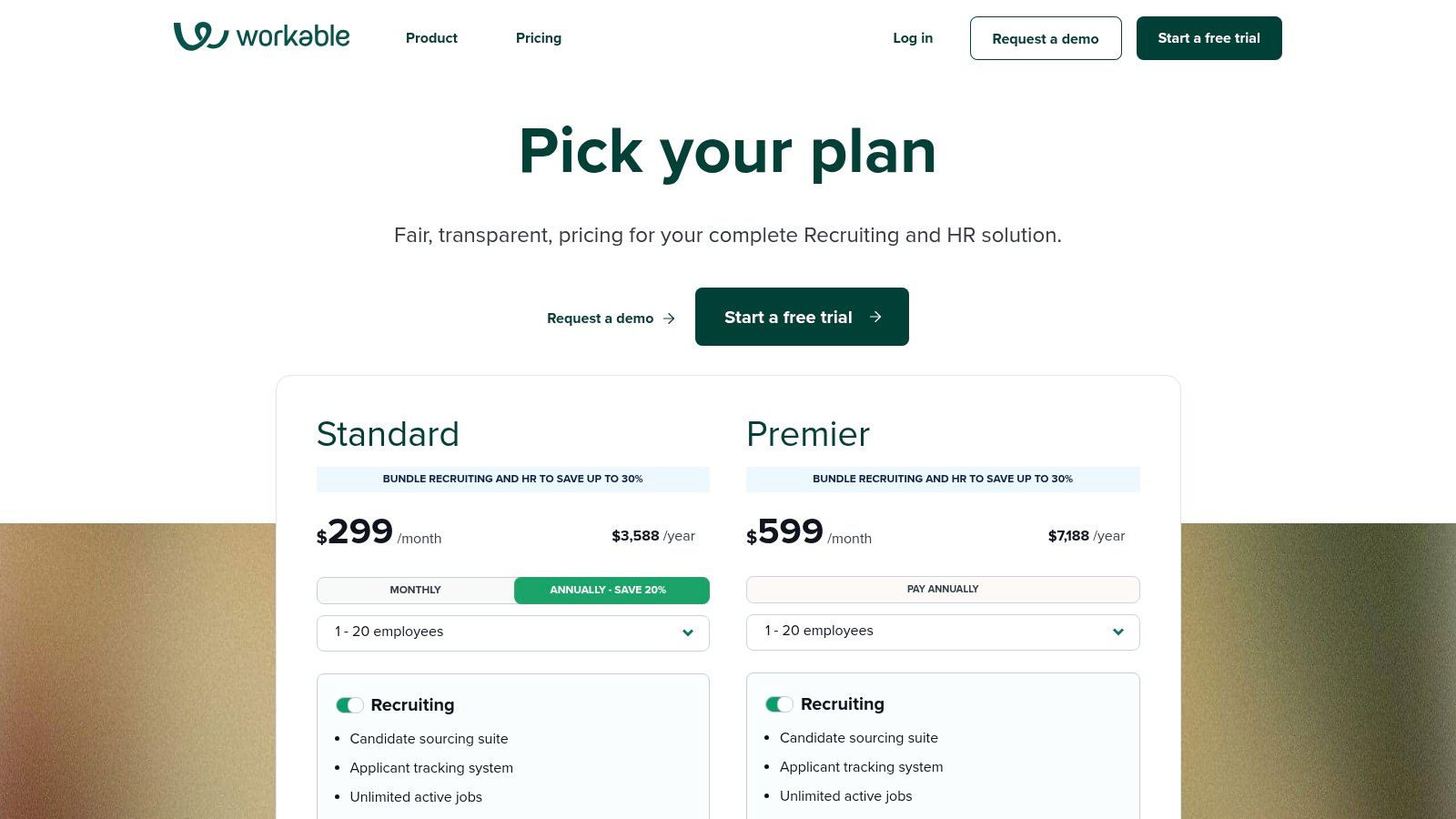
Here's the bottom line: Workable’s core functionality includes posting to over 200 job boards, an AI screening assistant to surface qualified candidates, and structured interview kits to standardize evaluations. While powerful for its target market, its price scales directly with company size, and key features like video interviewing and assessments are premium add-ons. This modular approach offers flexibility but can increase the total cost. If you're looking for a deeper understanding of how systems like this function, you can learn more about what an ATS is and how it streamlines recruitment.
As a market-leading Applicant Tracking System (ATS), Greenhouse has become a cornerstone for many organizations scaling their hiring operations. Its platform is built around the concept of structured hiring, providing a consistent and data-driven framework that is particularly valuable for distributed teams. Greenhouse enforces a standardized process from application to offer, ensuring every candidate is evaluated against the same criteria using scorecards and pre-defined interview plans. This structure is a major advantage when using remote hiring tools to coordinate across different time zones and locations.
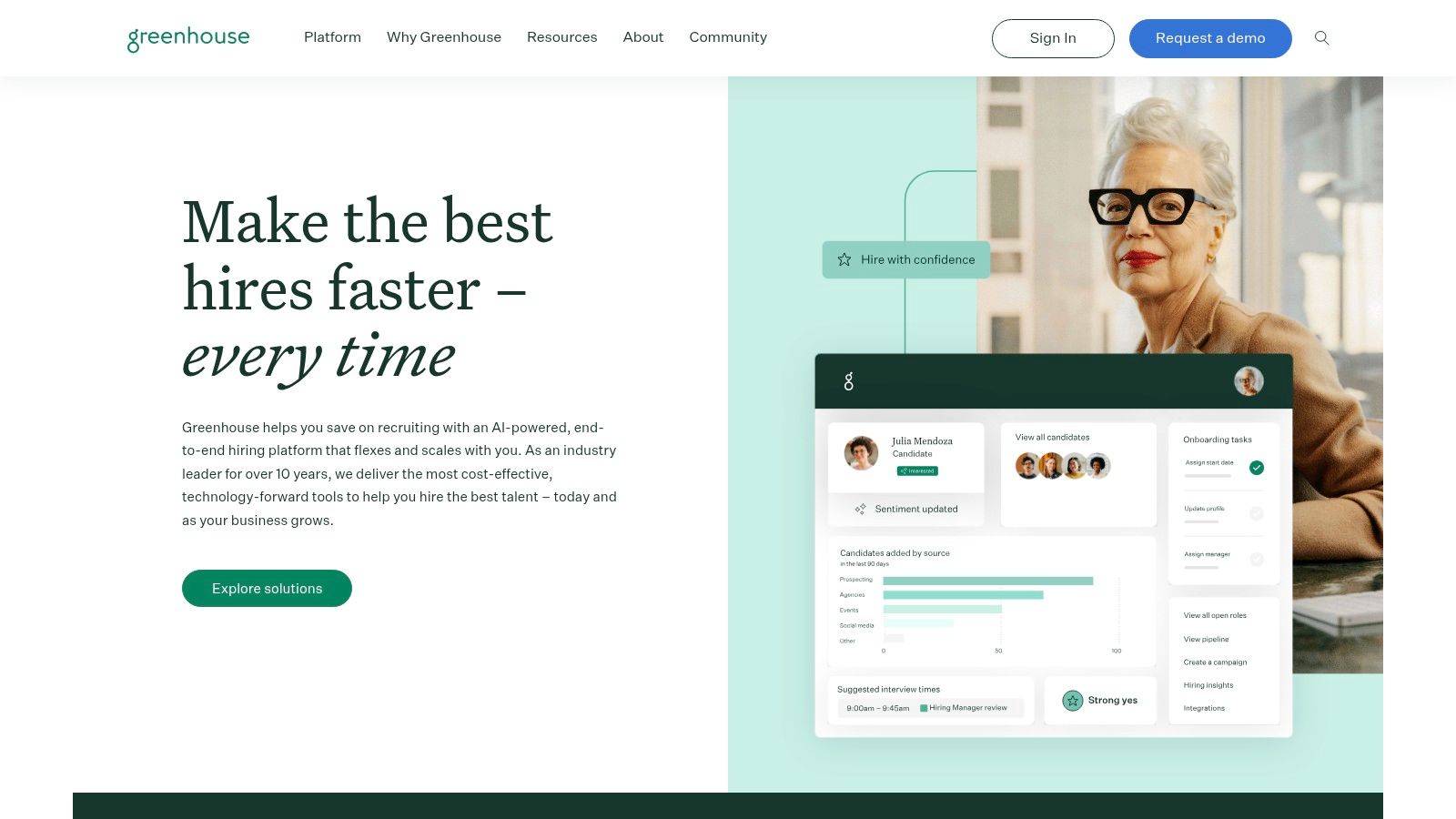
The platform’s power lies in its extensive ecosystem, boasting over 500 pre-built integrations with other HR tools, from sourcing platforms to background check services (Greenhouse Partner Hub, 2024). This allows companies to build a customized, best-in-class recruiting tech stack. While this depth is a significant strength, it also means implementation can be more complex and time-consuming compared to lighter alternatives. The pricing, which is quote-based, positions Greenhouse in the mid-to-upper tier, making it a better fit for established businesses than for early-stage startups on a tight budget. For those considering other options, there are several powerful Indeed alternatives to explore.
Lever stands out in the crowded ATS market by tightly integrating its Applicant Tracking System with robust Candidate Relationship Management (CRM) functionalities. This unified approach makes it one of the more powerful remote hiring tools for teams focused on proactive talent acquisition. Instead of just tracking active applicants, Lever empowers recruiters to build and nurture talent pipelines long before a specific role opens, which is a strategic advantage when hiring for competitive remote positions.
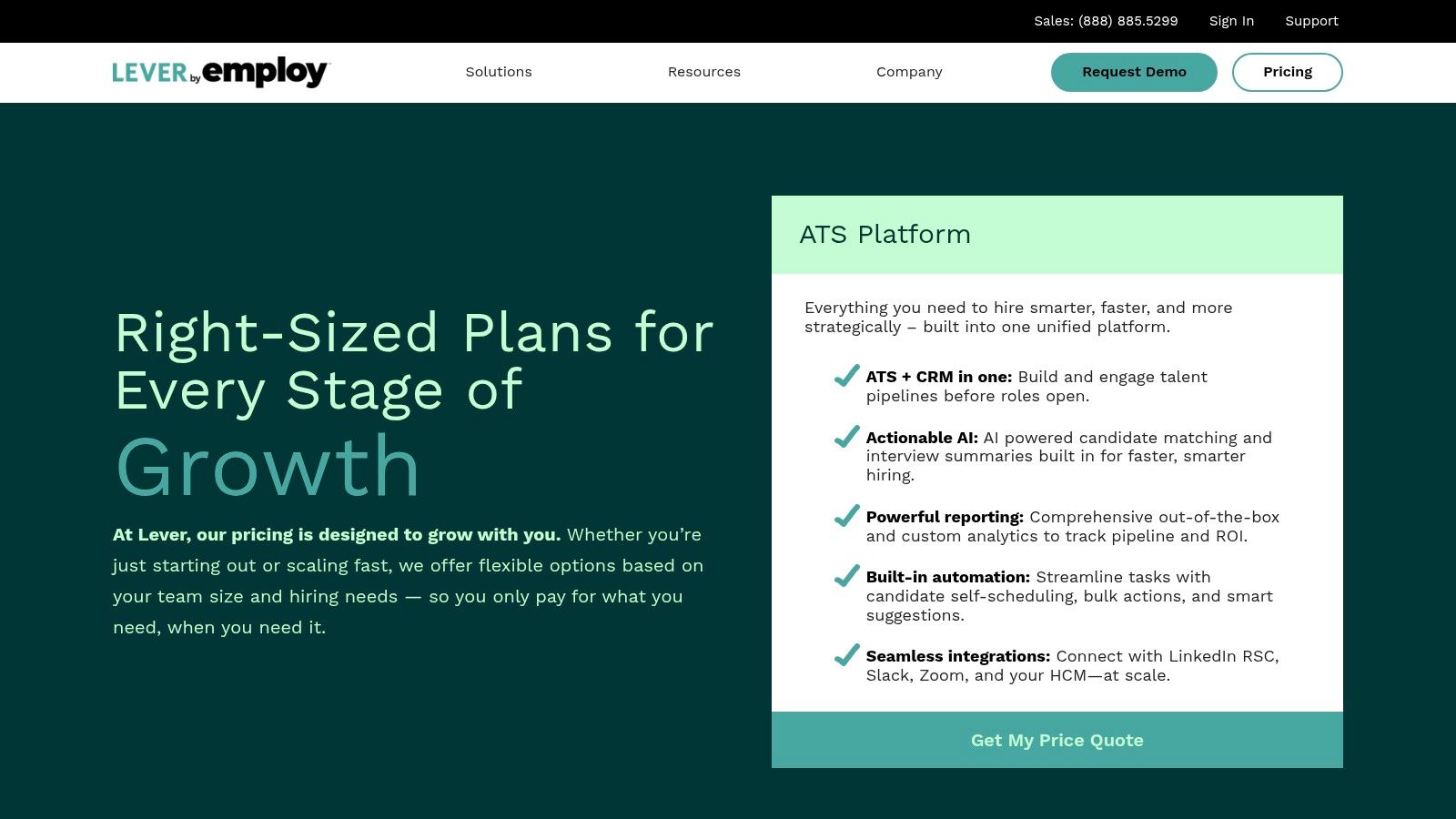
The platform boasts a modern, intuitive user interface that simplifies complex workflows like candidate self-scheduling and bulk email campaigns. Its AI-powered features for candidate matching and interview summaries further streamline the process for distributed teams. While its strong CRM capabilities and scalability are significant pros, the quote-based pricing often places it in a premium category, and accessing some of its most advanced analytics and automation features requires moving up to higher-cost tiers. Understanding your key recruiting metrics is crucial before investing.
Once you’ve found your ideal remote candidate, the next challenge is legally hiring and paying them, especially if they’re in another country. Deel solves this complex problem by acting as a global Employer of Record (EOR) and payroll platform. It removes the need for companies to establish local legal entities, handling everything from compliant contracts and benefits to international payroll and tax documentation across more than 150 countries. This makes it an indispensable tool for companies committed to building a truly global workforce.
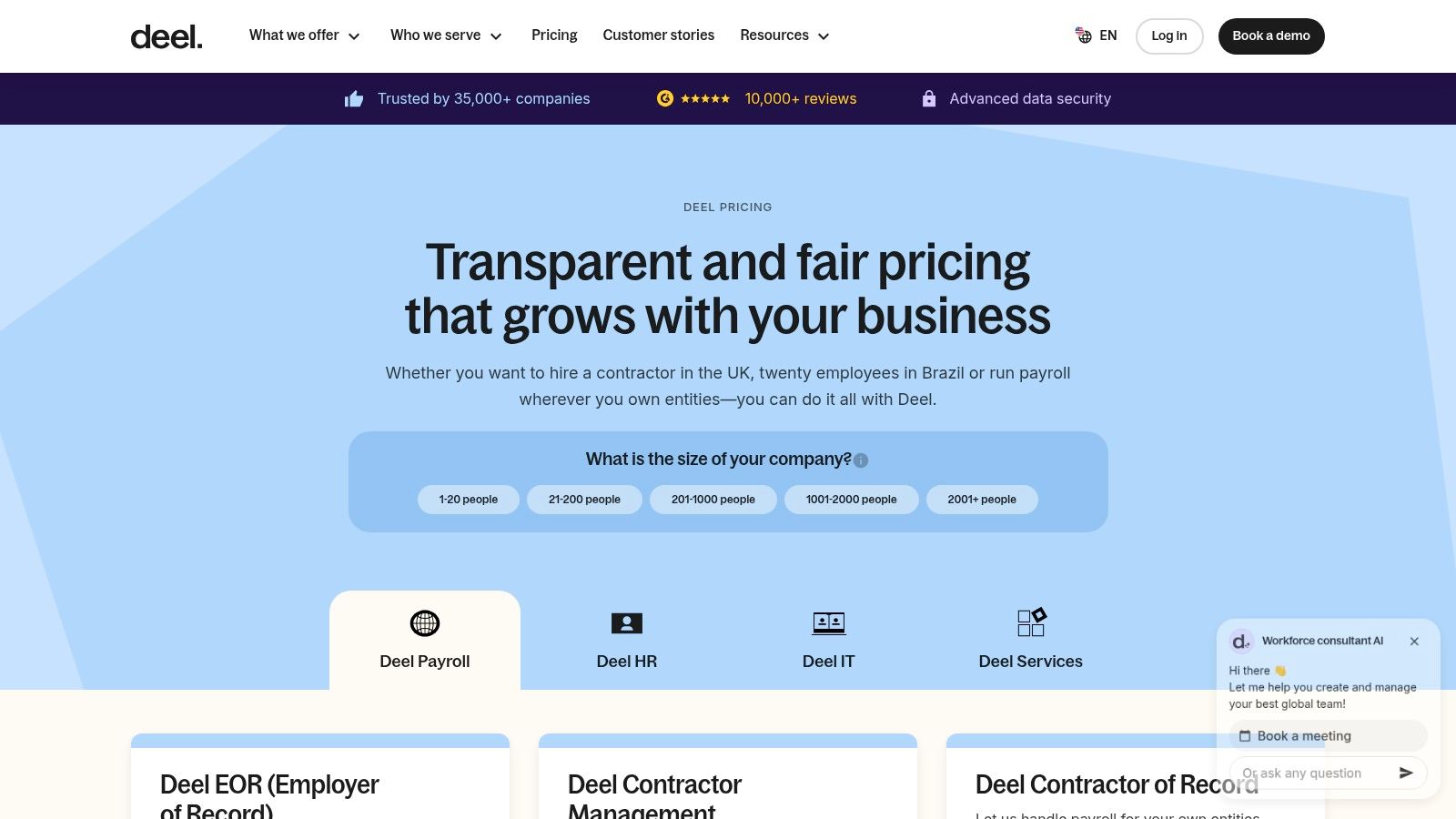
But what does this mean in practice? Deel's strength lies in its speed and transparent pricing structure, allowing businesses to onboard international employees or contractors in days, not months. The platform simplifies the entire lifecycle of global employment, from generating locally-compliant contracts to processing payments in over 150 currencies. However, while starting prices are clear, costs can escalate with add-ons and country-specific requirements. As your remote team grows, the per-employee EOR fees can become a significant operational expense, making it crucial to factor in long-term scaling costs. For a deeper dive into the legal and logistical steps involved, our guide on how to hire remote employees provides a comprehensive overview.
Once you've sourced a global candidate, the next hurdle is legally hiring and paying them. Remote simplifies this complex process by acting as an Employer of Record (EOR), allowing companies to compliantly hire talent in countries where they don't have a legal entity. It handles everything from contracts and benefits to payroll and local tax compliance, making it an essential part of the remote hiring tools stack for any business expanding its international footprint.
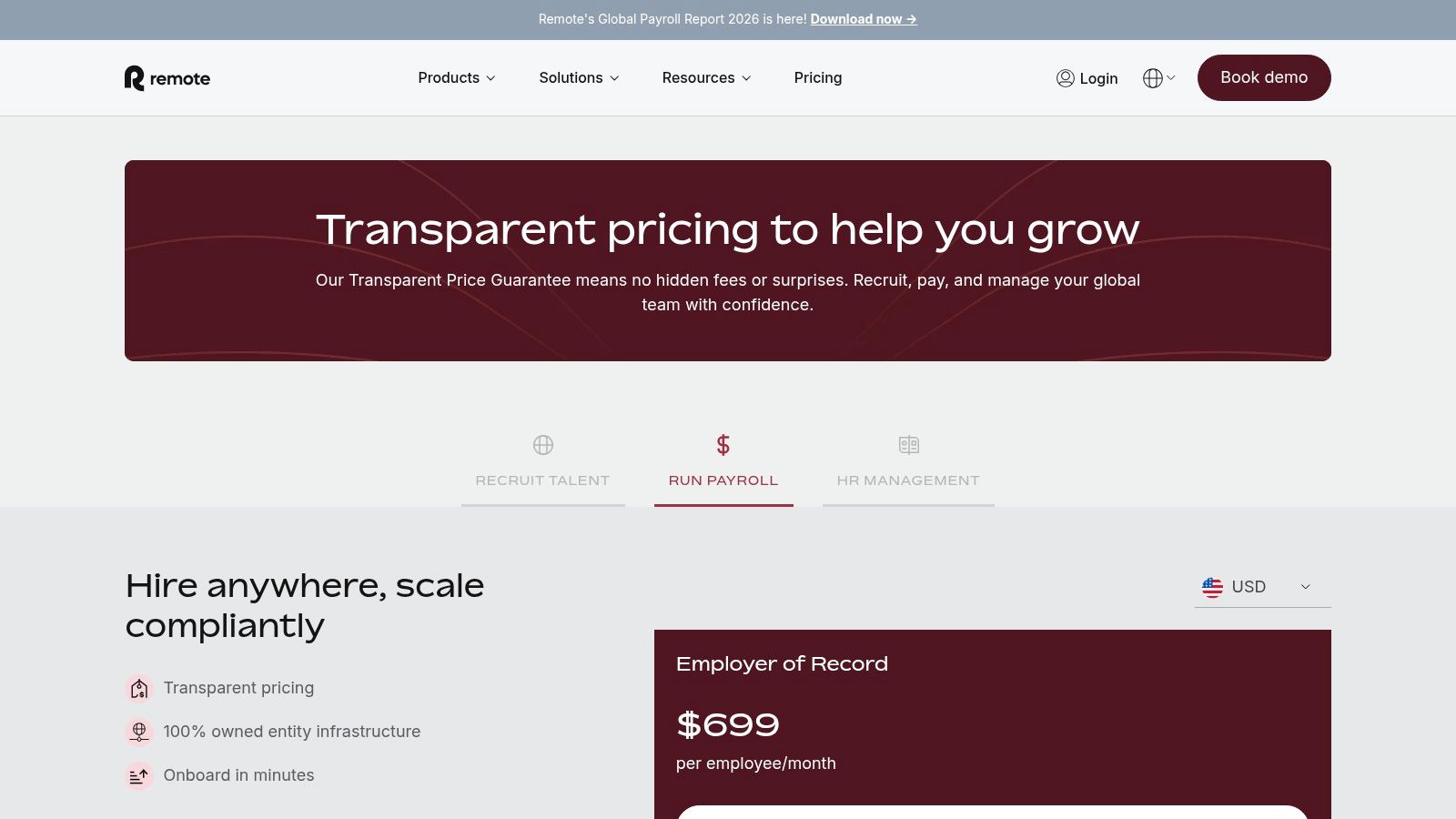
What sets Remote apart is its commitment to transparency and its infrastructure. Unlike many competitors that rely on a network of third-party partners, Remote operates its own legal entities in over 70 countries, providing greater reliability and data security. The platform's self-serve orientation and straightforward pricing, which often includes no platform or setup fees for its core EOR and contractor services, is particularly appealing to startups and scale-ups. For those evaluating global employment platforms, it's worth exploring the nuances between different providers, as detailed in this comparison of Deel alternatives.
HireVue is an enterprise-grade video interviewing and assessment platform designed to streamline high-volume screening for distributed teams. It moves beyond simple video calls by integrating a suite of pre-hire assessments, including game-based challenges, coding tests, and structured interview guides. This allows global companies to standardize their initial screening process, ensuring every remote candidate receives a consistent and fair evaluation, which is a critical component of modern remote hiring tools.
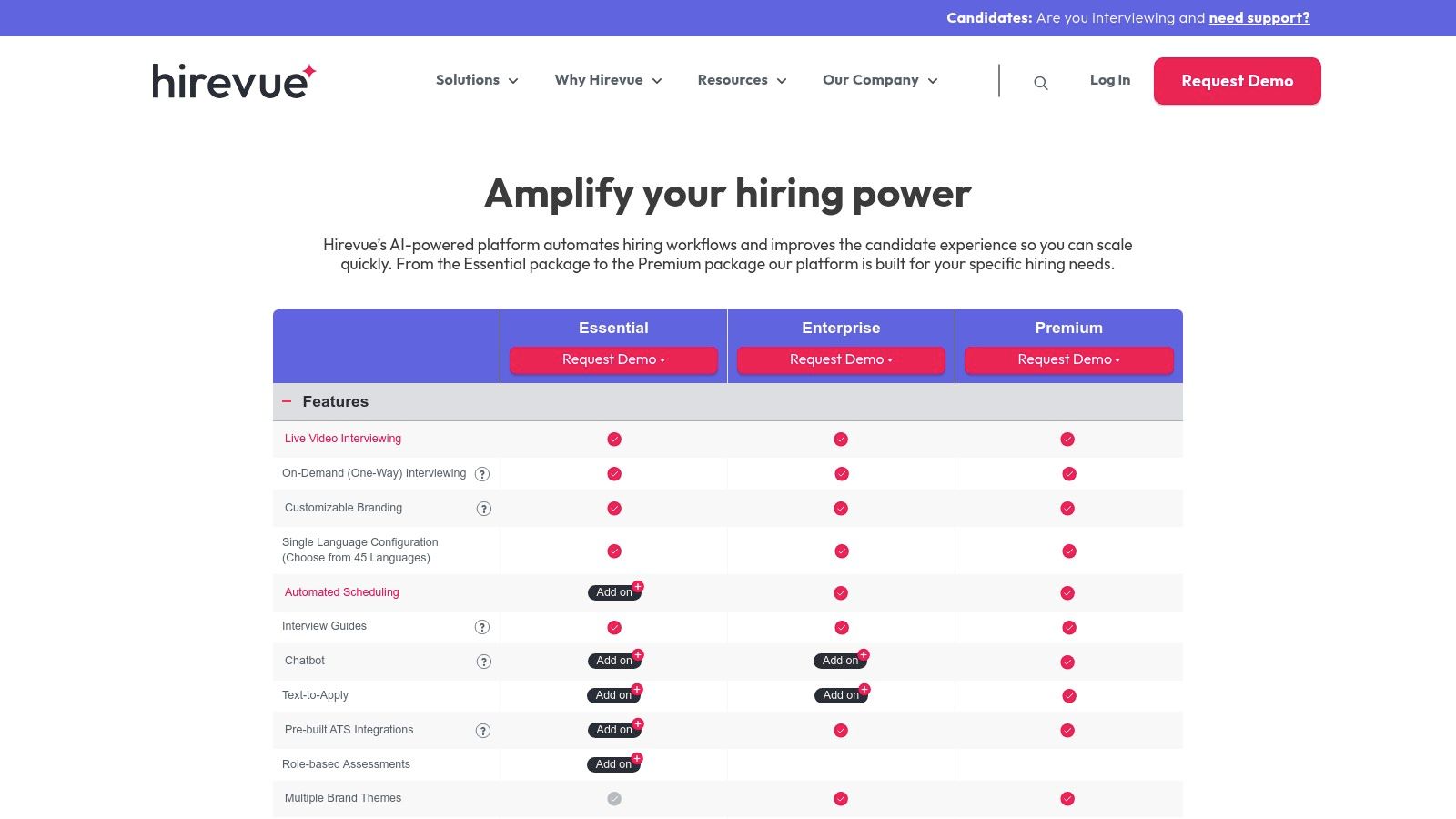
The platform excels at scale, offering both live and on-demand (one-way) video interviews that candidates can complete on their own schedule, a significant advantage when hiring across multiple time zones. Its strong compliance and security posture, including a FedRAMP option, makes it a trusted choice for large organizations. However, its comprehensive feature set comes at an enterprise price point that is not publicly available, and it may be more robust than what a small startup or company with low hiring volume requires. Understanding the details of HireEZ pricing can offer a comparative perspective.
Spark Hire is a leading video interviewing platform designed to streamline the screening process for distributed teams. It excels at helping companies evaluate candidates more efficiently by replacing time-consuming initial phone screens with one-way video interviews. This asynchronous approach allows hiring managers to review submissions on their own schedule, dramatically accelerating the top-of-funnel evaluation and making it a powerful asset in the arsenal of modern remote hiring tools.
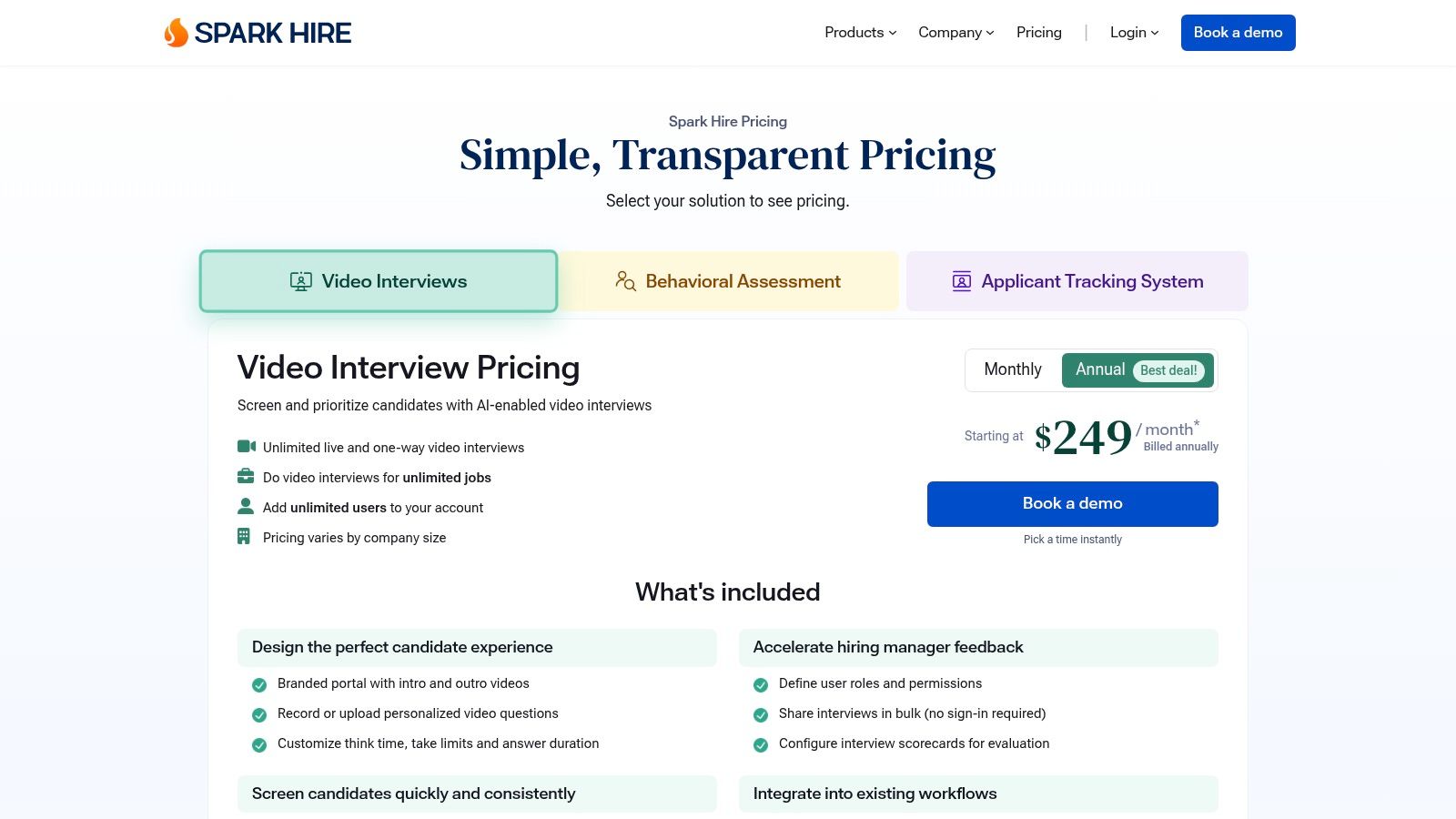
The platform stands out with its transparent and straightforward pricing, which allows for unlimited one-way and live interviews depending on the plan. This makes it a highly scalable and cost-effective solution for companies that need to screen candidates at volume without worrying about per-interview costs. With features like AI-powered summaries, branded candidate portals, and over 40 ATS integrations, it offers a robust toolkit for improving collaboration and decision-making. However, key features like unlimited jobs, unlimited users, and advanced integrations are often reserved for annual plans or require paid add-ons.
When it comes to assessing technical talent remotely, CoderPad has established itself as a go-to platform for conducting effective coding interviews and challenges. It provides a shared, live integrated development environment (IDE) where interviewers and candidates can write, run, and debug code together in real-time, closely simulating a pair-programming session. This makes it an invaluable tool for evaluating practical engineering skills beyond what a resume can show, which is critical when vetting candidates for remote hiring tools and technical teams.
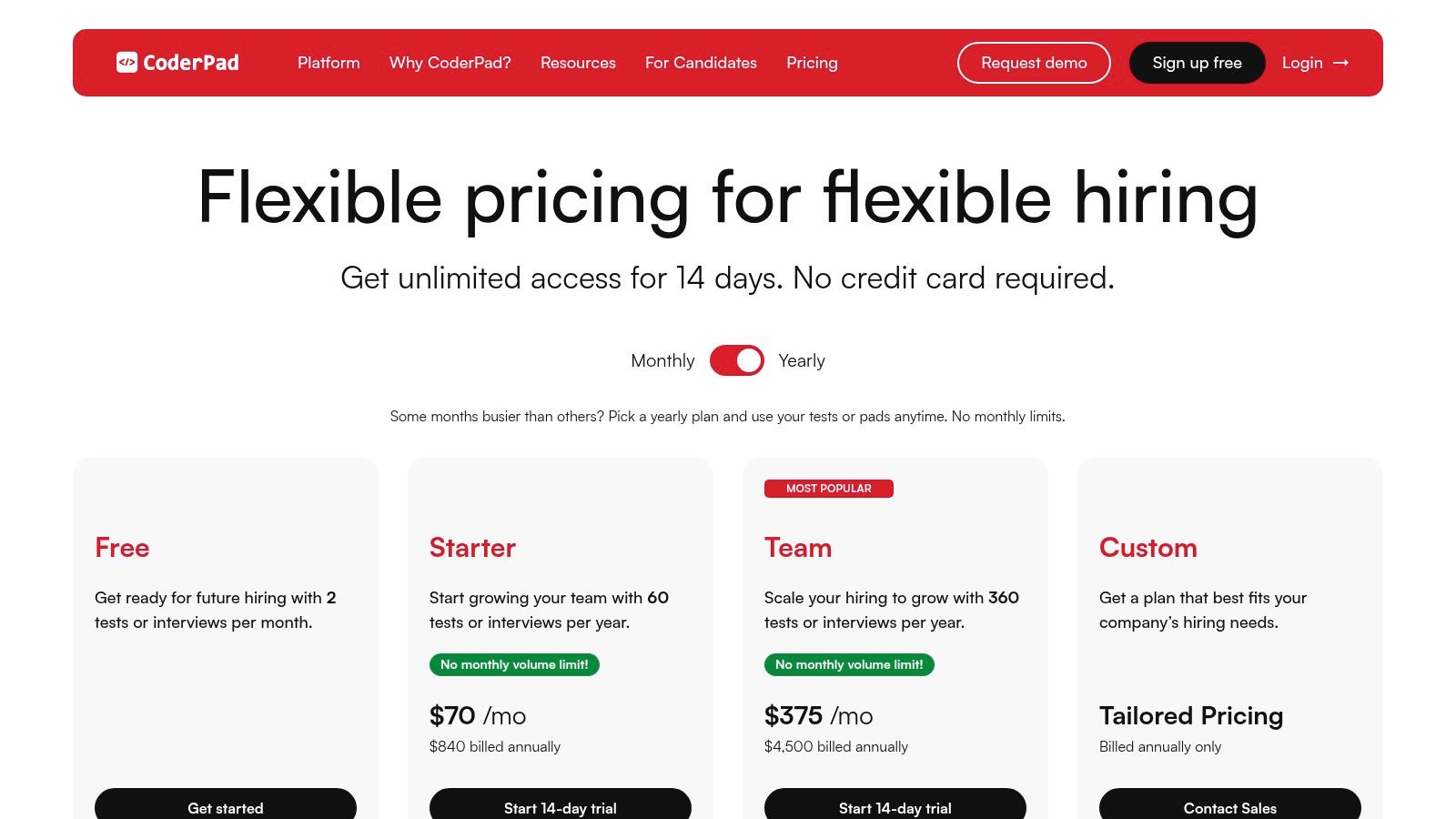
The platform supports over 30 programming languages and includes features like integrated video, a virtual whiteboard, and code playback to review a candidate's thought process post-interview. One of CoderPad’s key advantages is its transparent pricing and unlimited user model, allowing entire hiring teams to participate without per-seat licensing fees. However, its most advanced security features like SSO are reserved for custom enterprise plans, and usage beyond the purchased interview and test quota will incur overage charges.
Few tools have become as synonymous with modern scheduling as Calendly, which has cemented its place as a go-to remote hiring tool for eliminating the back-and-forth of interview coordination. By allowing candidates to self-schedule based on the interviewer's real-time availability, it dramatically reduces the administrative burden on recruiting teams. This simple yet powerful function accelerates the hiring funnel and improves the candidate experience from the very first interaction.
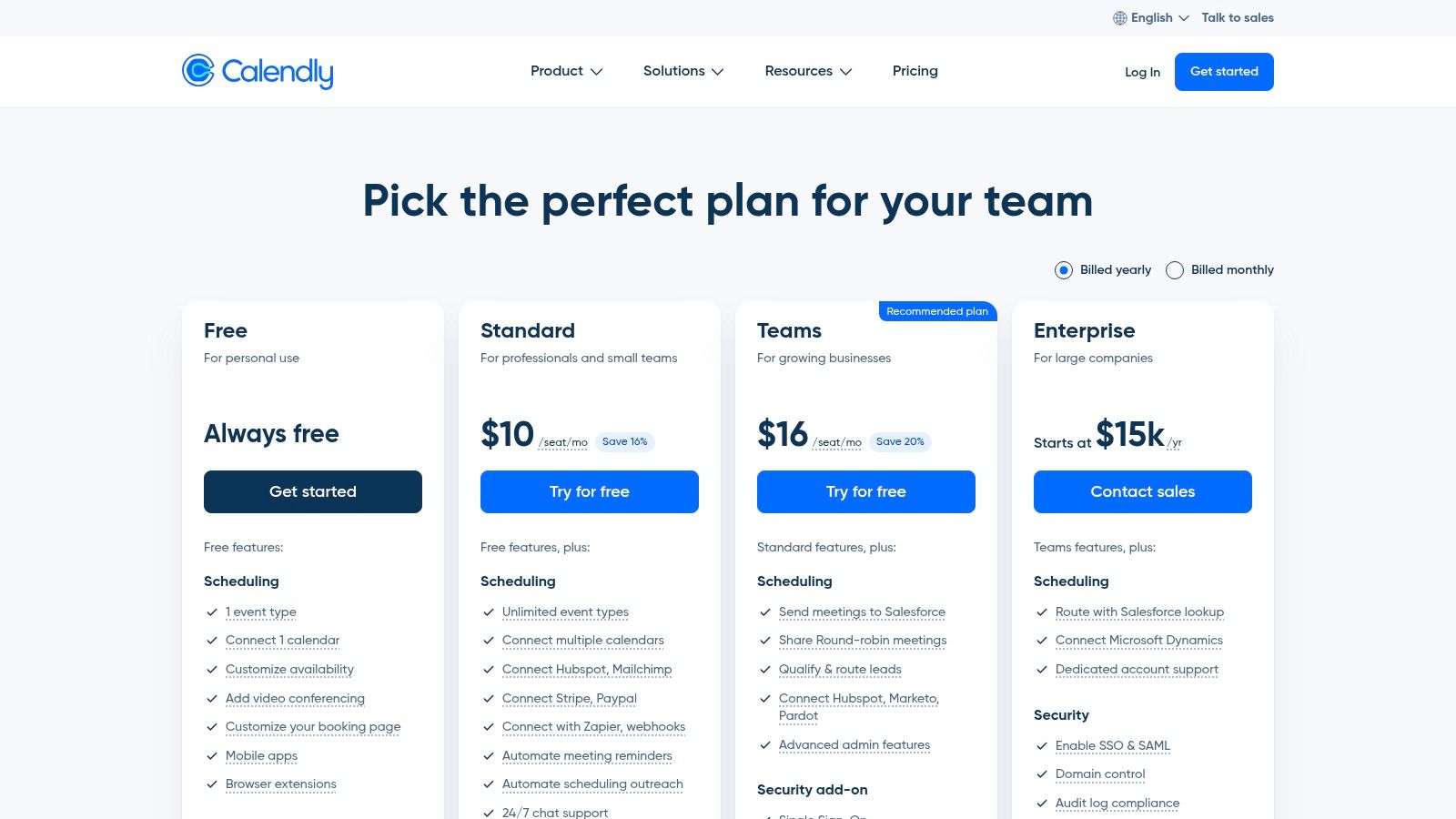
So, what's the catch? Calendly's strength lies in its maturity and robust integration ecosystem, connecting seamlessly with calendars, video conferencing apps like Zoom and Google Meet, and various CRMs. Features like automated reminders, buffers between meetings, and round-robin event types make it highly adaptable for complex panel interviews or high-volume scheduling scenarios. While its core functionality is straightforward, unlocking advanced controls like SAML SSO and routing forms requires a subscription to its higher-tier Teams or Enterprise plans. For a deeper dive into optimizing your interview workflow, explore our guide to automate interview scheduling.
Background checks are a non-negotiable step in the hiring process, but they can become a significant bottleneck, especially when hiring across different states and countries. Checkr modernizes this critical function with a technology-first approach, offering an API-driven platform that automates and accelerates background screening. Its comprehensive suite of checks, from criminal records to employment and education verification, is specifically designed to integrate seamlessly into existing remote hiring tools and workflows.
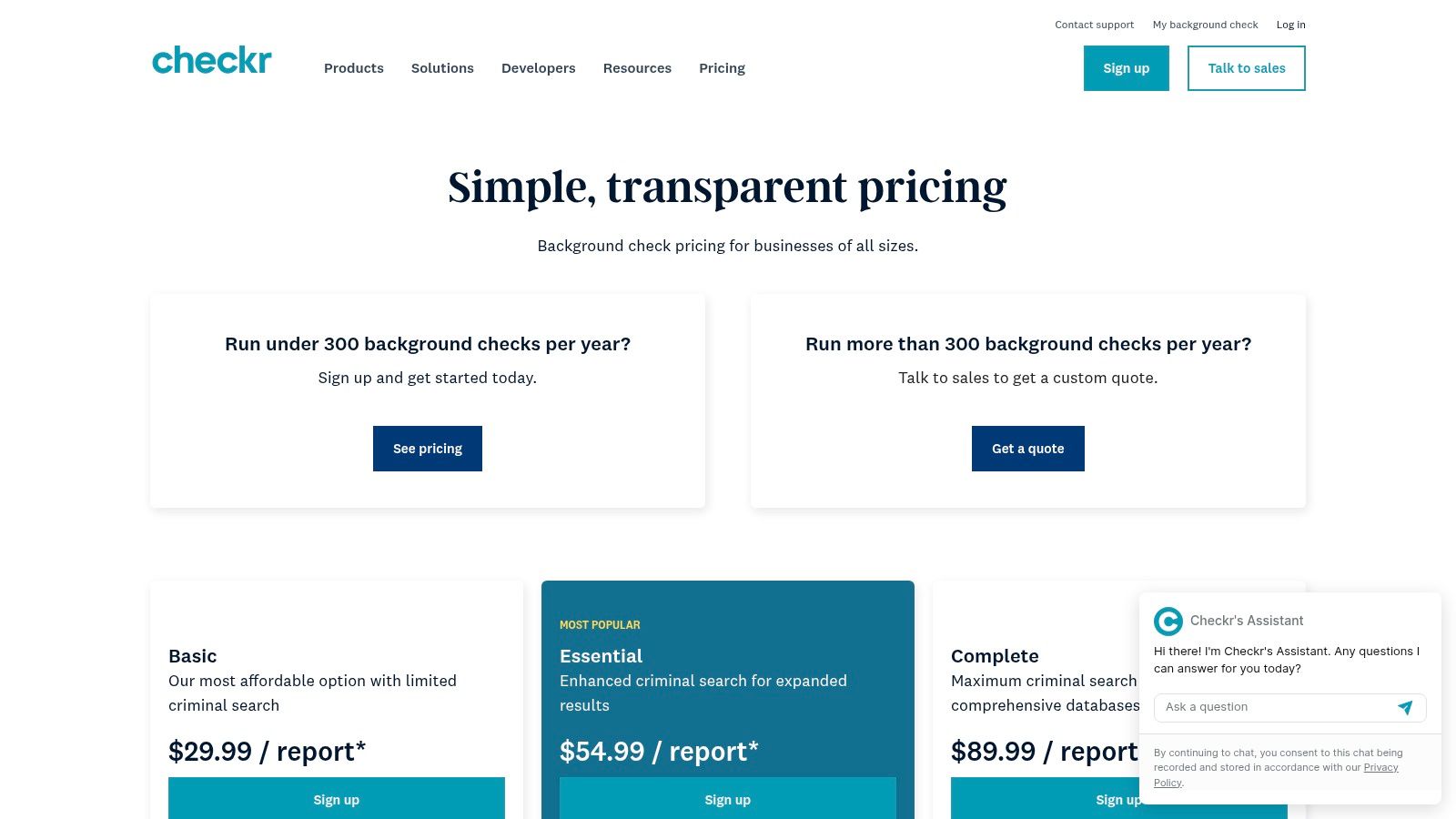
What sets Checkr apart is its focus on candidate experience and compliance. The platform provides a mobile-friendly interface for candidates to submit their information and track progress, reducing friction and drop-off. For employers, its built-in adjudication tools help streamline review processes and maintain fairness. With over 100 ATS integrations and global capabilities, Checkr is built to scale, whether you're a startup hiring your first remote employee or an enterprise managing high-volume global recruitment. While base pricing is transparent, be mindful that third-party pass-through fees can affect the final cost per check.
| Product | Core Features | ✨ UX / Quality | 💰 Value & Pricing | 👥 Target Users |
|---|---|---|---|---|
| Juicebox (PeopleGPT) | Plain-English AI search; 800M+ profiles (30+ sources); Juicebox Agents; email verification + multi-step sequencer; Talent Insights |
★★★★★ AI-ranked shortlists in ~60s; ~3× reply lift; strong traction ($10M+ ARR, 2.5k+ customers) |
Free tier · Starter $99–$119/mo · Growth $129/mo · Agents $300/mo add-on · ~80% cheaper vs LinkedIn | In-house startup & mid-market recruiters, TA leaders, agency sourcers, founder-hirers |
| LinkedIn Recruiter | Massive member graph; AI search with 40+ filters; InMails; team analytics |
★★★★ Unmatched reach; strong enterprise trust |
Premium / quote-based (≈ $10,800+/year reported) |
Enterprise recruiters, high-volume sourcers |
| Workable | All-in-one ATS; job posting & distribution; AI screening |
★★★ Self-serve; quick setup; SMB-friendly |
Transparent checkout; pricing scales with company size | SMB to mid-market hiring teams |
| Greenhouse | Structured interviews; scorecards; 500+ integrations; onboarding & reporting |
★★★★ Mature workflows; strong compliance |
Quote-based; mid–upper-tier pricing | Mid-market to enterprise, data-driven HR teams |
| Lever | Unified ATS + CRM; AI matching & summaries; candidate scheduling |
★★★★ Strong pipeline CRM; modern UI |
Quote-based; premium tiers for advanced features | Startups → scaling orgs building talent pipelines |
| Deel | EOR & contractor management; payroll in 150+ countries; automated contracts |
★★★★ Fast onboarding; broad country coverage |
Transparent starts; EOR fees scale with headcount | Companies hiring internationally / remote employees |
| Remote (remote.com) | EOR & global payroll; owned entities in 70+ countries; contractor tools |
★★★★ Transparent packaging; self-serve options |
Transparent pricing; possible country-specific fees | US companies hiring globally; startups scaling abroad |
| HireVue | Live & on-demand video interviews; coding & game-based assessments; FedRAMP option |
★★★★ Enterprise-grade security & compliance |
Demo-gated / quote-based | Large enterprises; high-volume screening teams |
| Spark Hire | One-way & live video interviews; AI summaries; branded candidate experience |
★★★ Quick rollout; clear pricing |
Transparent plans (annual; unlimited jobs/users) | Distributed teams screening at volume |
| CoderPad | Live collaborative coding interviews; take-homes; playback & anti-cheat |
★★★★ Dev-friendly interviewing; strong UX |
Tiered pricing with usage pools; overages possible | Engineering hiring teams & interviewers |
| Calendly | Self-scheduling; round-robin; routing forms; Zoom/Teams integrations |
★★★★ Very low friction; speeds time-to-schedule |
Free → premium tiers; enterprise features paid | Recruiters, interview coordinators, cross-team scheduling |
| Checkr | Tiered background checks; verifications; continuous monitoring; 200+ country checks |
★★★★ Fast turnaround; deep ATS integrations |
Clear package pricing; third-party fees may apply | Employers needing background screening & compliance |
Navigating the landscape of remote hiring tools can feel like assembling a complex machine with no instruction manual. We've explored a dozen powerful platforms, from AI-native sourcing engines like Juicebox and legacy giants like LinkedIn Recruiter to comprehensive ATS solutions like Greenhouse and specialized assessment tools like CoderPad. The sheer volume of options can lead to a common pitfall: tool overload. Many teams fall into the trap of stitching together a dozen disparate systems, creating a clunky, inefficient process that leaks time, money, and top-tier candidates.
But there’s a problem most tools ignore: a bigger tech stack doesn't equal better hiring. In fact, it often creates the opposite effect. The real goal isn't just to find people; it's to generate talent velocity. This means moving from identifying a need to extending an offer with speed, precision, and an exceptional candidate experience. The right combination of remote hiring tools doesn't just automate tasks; it creates a cohesive, intelligent system that eliminates friction and empowers your team to make strategic decisions. This is the shift from a reactive, administrative function to a proactive, growth-driving powerhouse. For example, a streamlined process is especially vital when seeking niche expertise; having the right solutions for tech recruiting integrated into your workflow can dramatically reduce time-to-hire for critical roles.
You might think that investing in a top-tier tool for every single step of the hiring funnel is the safest bet. Why that fails? Because without seamless integration and a central data hub, recruiters spend more time toggling between tabs and manually transferring data than they do engaging with candidates. A fragmented stack leads to a fragmented candidate experience and zero visibility into your overall hiring performance. Look, the key isn't more tools; it's the right tools, working in harmony.
To build a stack that accelerates hiring, consider this framework:
Ultimately, the best remote hiring tools are the ones that fade into the background, allowing your team to focus on what matters: building relationships with exceptional people. By moving from a patchwork of disconnected software to a streamlined, AI-powered ecosystem, you unlock the ability to not just compete for global talent, but to win. This is how you transform your recruiting function from a cost center into a strategic advantage that fuels business growth.
What are the must-have remote hiring tools for a startup?
Startups should prioritize an AI sourcing tool like Juicebox, an affordable ATS like Workable, and an EOR service like Deel for international hires.
How do remote hiring tools improve candidate experience?
They automate scheduling (Calendly), streamline communication (ATS), and provide a fair, consistent process, reducing friction and wait times for applicants.
Can AI replace recruiters in the remote hiring process?
No. AI tools augment recruiters by automating repetitive tasks like sourcing and screening, freeing them up for strategic work and relationship-building.
The core benefit of the right remote hiring stack isn't just about saving time; it's about achieving talent velocity. By consolidating your sourcing, outreach, and analytics into an intelligent, unified system, you eliminate the friction that causes you to lose top candidates to faster-moving competitors. This unlocks the ability to build a world-class, distributed team that becomes a true strategic advantage, fueling your company's growth no matter where the best talent lives.
{{large_cta}}
Run your first search for free. Find and engage top talent across 800M+ profiles. Trusted by 5,000+ customers.


![The Complete Guide to Talent Pipeline Management [2026]](https://cdn.prod.website-files.com/68c2f83ae8165ab45cf529f8/6953a268c9a0db82016c122a_talent-pipeline-management-workforce.webp)