
.svg)
SIGN UP FOR JUICEBOX (IT’S FREE!)

Who are you looking for?
Thank you! Your submission has been received!
Oops! Something went wrong while submitting the form.


Recruiting is a speed game, yet most teams are stuck with tools from a decade ago: clunky Boolean strings, siloed data on LinkedIn, and sky-high license fees hidden behind endless sales demos. The market is saturated with options, but the core problem remains—these platforms slow you down when you need to move fast.
Many sourcing tools are just LinkedIn wrappers, and most Applicant Tracking Systems (ATS) are passive databases, not proactive sourcing engines. The core benefit of modern recruiting software is unlocking hiring velocity, letting you close roles before competitors even find the candidates.
This guide provides 14 recruiting software examples that break this mold. We'll analyze the platforms that actually accelerate hiring, from AI-native sourcing engines to modern, all-in-one ATS platforms. We will focus on tools that consolidate workflows, leverage multi-source data, and offer transparent models, providing a clear path to finding, engaging, and hiring top talent faster.
At Juicebox, we rebuilt sourcing from the ground up with PeopleGPT—moving beyond outdated methods to give recruiters a direct line to 800M+ profiles using simple, natural language. We believe the future of recruiting isn't about more tools, but a single, intelligent engine that eliminates friction.
(For teams looking to hire faster, exploring different freelance recruiter models can also complement a strong tech stack.)
Juicebox positions itself as a powerful, AI-native sourcing engine designed to fundamentally accelerate talent acquisition. It stands out among recruiting software examples by replacing cumbersome Boolean searches with intuitive, plain-English prompts via its PeopleGPT model. This allows teams to search a massive database of over 800 million global profiles from 30+ sources, often surfacing candidates that competitors miss.
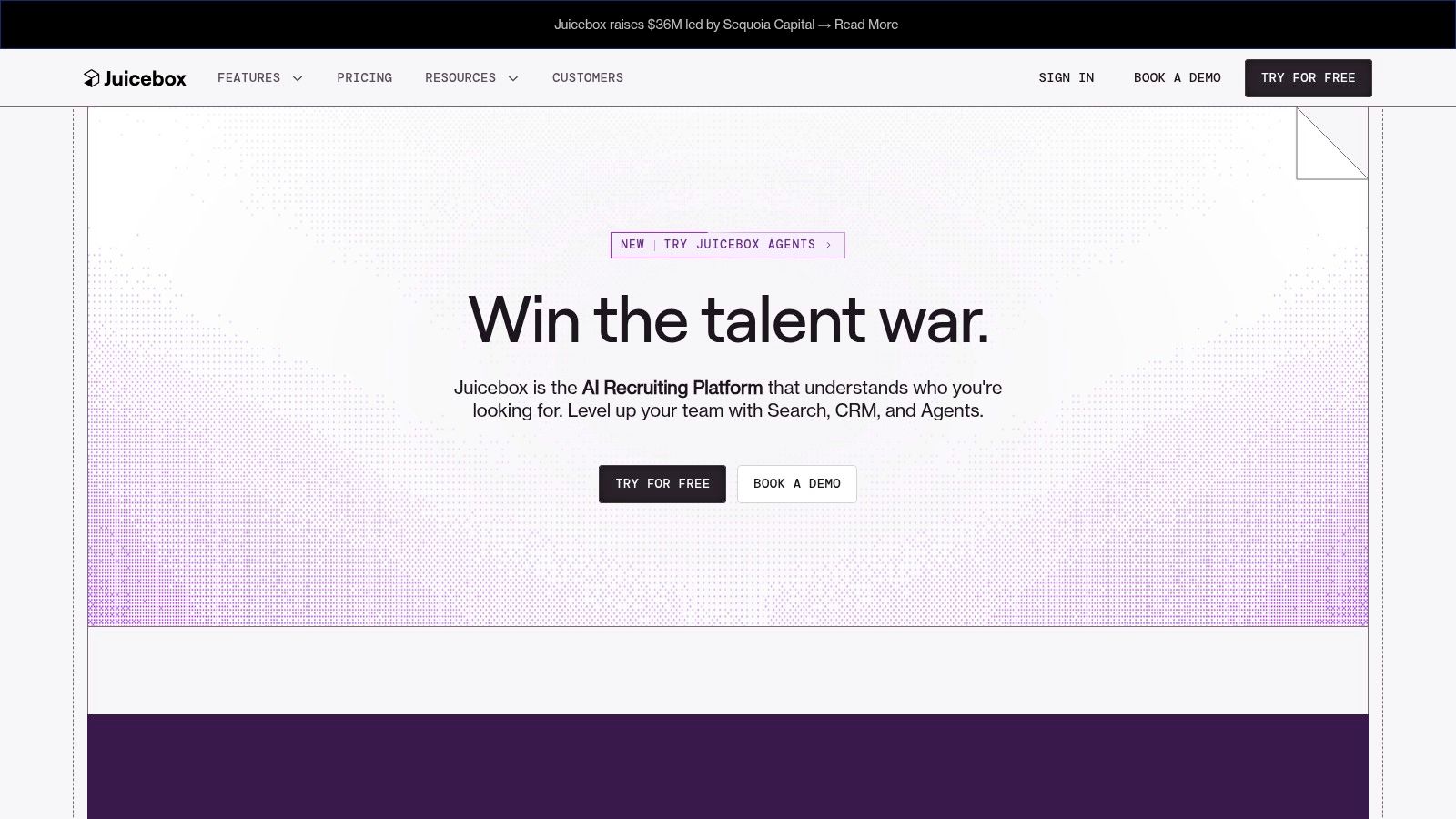
Bottom line: This platform consolidates the entire top-of-funnel workflow into a single interface. Recruiters can search, score up to 5,000 profiles at once, verify emails, and launch multi-step outreach sequences without switching tools.
Companies like Ramp and Cognition AI have leveraged this efficiency to close roles up to 5× faster, demonstrating its real-world impact. This integrated approach is a key differentiator when comparing top 10 AI recruiting tools for 2026.
What truly sets Juicebox apart is its commitment to an all-in-one, efficient workflow. Instead of juggling multiple subscriptions for sourcing, verification, and outreach, users get a unified system. For lean teams, the optional Juicebox Agents feature offers autonomous, 24/7 sourcing that learns from feedback, creating a continuous talent pipeline with minimal manual effort. The transparent, product-led pricing model, which starts with a free tier, provides a clear and cost-effective alternative to traditional, demo-gated enterprise software.
Pros:
Cons:
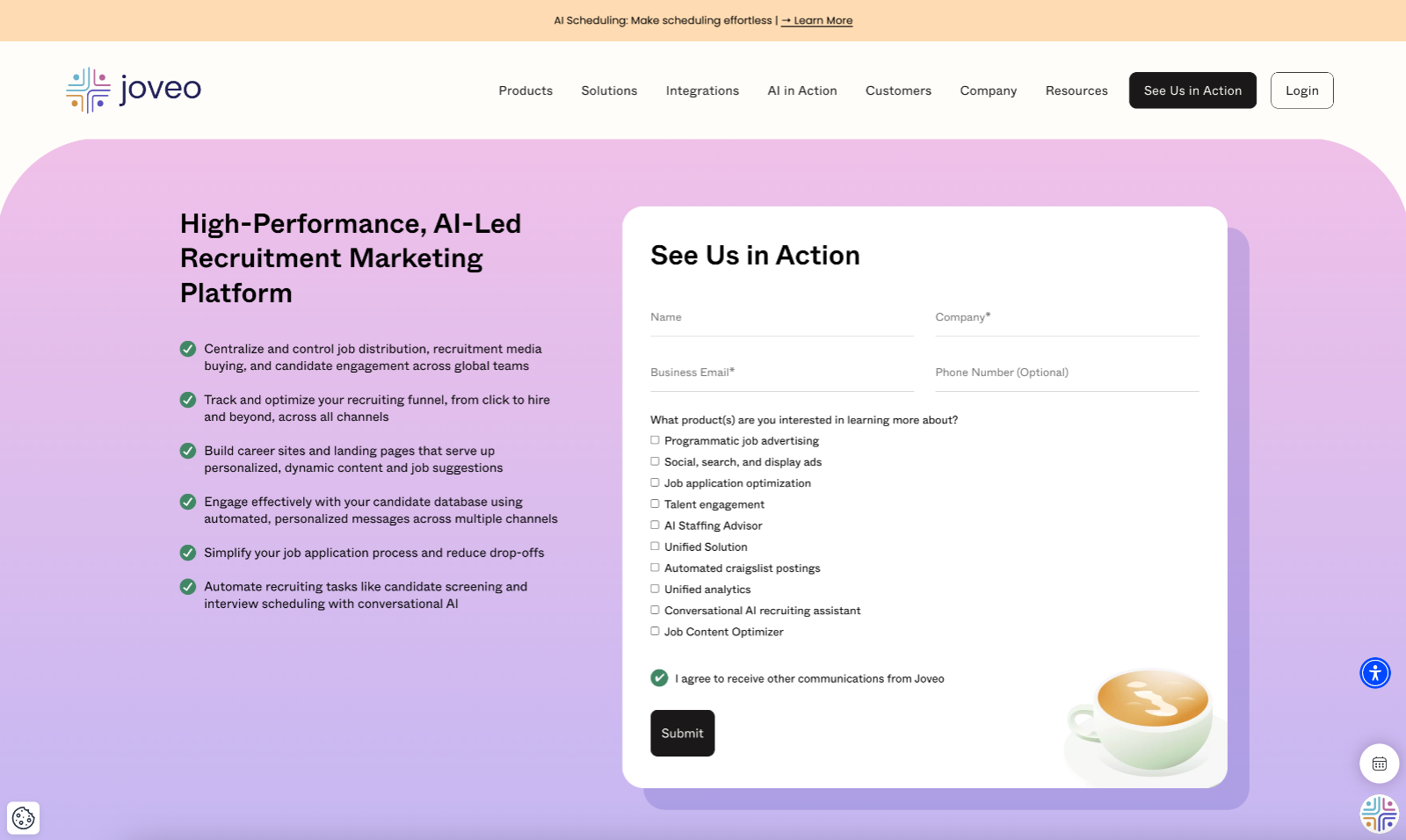
Joveo is a full-funnel recruitment marketing platform that distinguishes itself among recruiting software examples by going beyond sourcing to cover the entire candidate attraction lifecycle. It handles programmatic job advertising, social and display ads, career site building, conversational AI chatbot, talent CRM, and unified analytics in a single platform used by direct employers, staffing agencies, RPOs, and recruitment marketing agencies worldwide.
Its standout feature is full-funnel tracking and optimization — from source click to application to hire — rather than stopping at clicks like most job advertising tools. The tool dynamically reallocates budget across publishers in real time based on what's actually delivering hires. It integrates with major ATS platforms including Workday, Greenhouse, iCIMS, Bullhorn, and Salesforce.
Best For: Enterprise and mid-market talent teams, staffing agencies, and RPOs that want a single AI-driven platform for recruitment media buying, candidate engagement, and source-to-hire analytics.
Recruiterflow is the AI-native recruiting software built specifically for search firms, and it stands out among recruiting software examples for how deeply its intelligence layer is woven into everyday workflows. At the center of the platform is AIRA — a suite of specialized AI agents that captures every interaction, surfaces context from prior searches, and keeps consultant judgment front and center rather than buried under administrative noise. That includes AIRA Search, a true natural-language search that reasons over a living talent graph instead of converting queries into Boolean strings. The platform covers the full stack in one system: CRM, ATS, campaigns, and workflow automation, alongside a multichannel sequencing engine purpose-built for recruiting — running email, LinkedIn, calls, and SMS in one sequence, with branching logic that borrowed sales tools don't offer.
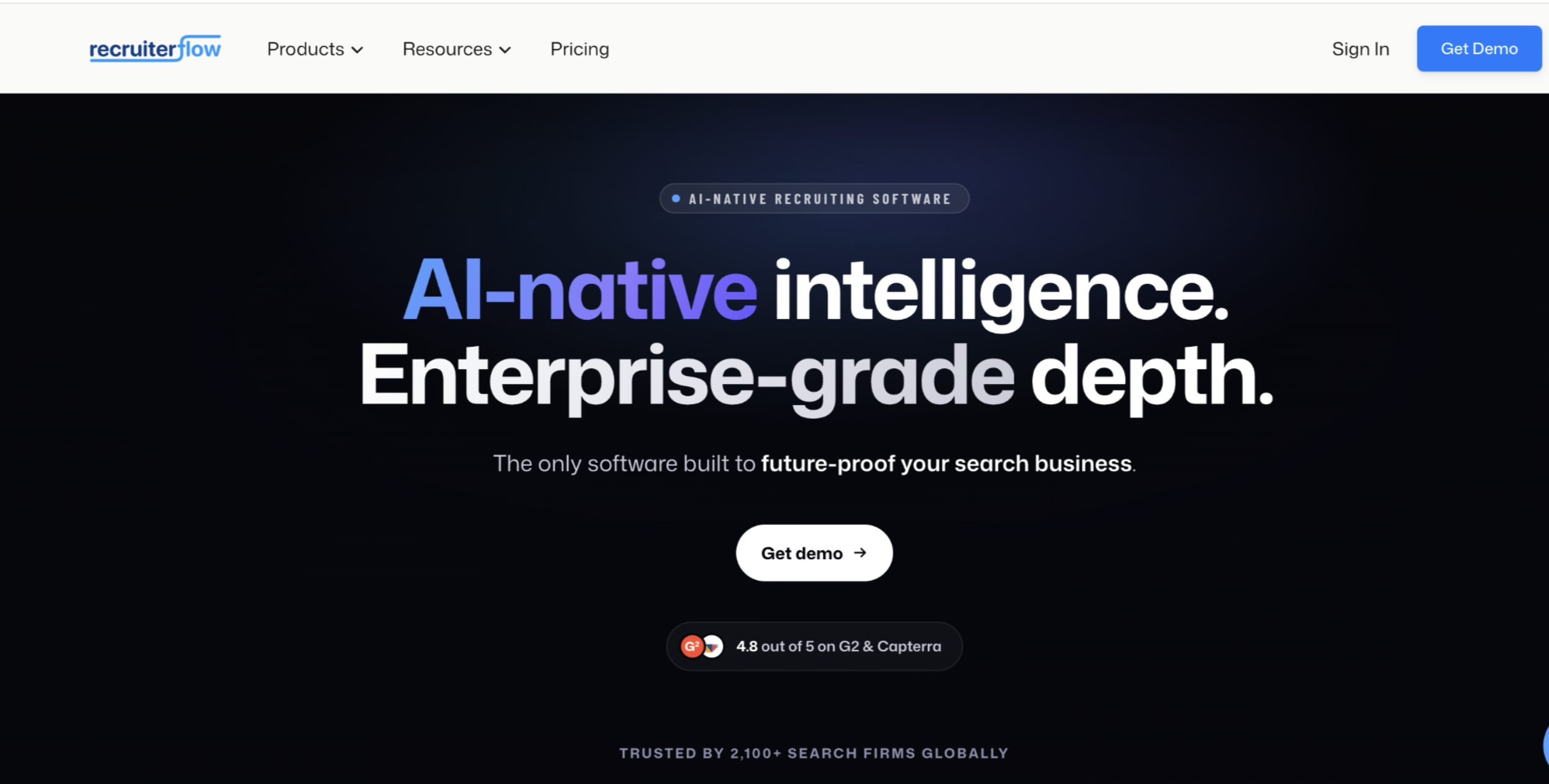
What separates Recruiterflow from a typical CRM with AI bolted on is its enterprise depth. SOC 2 and GDPR compliance, multi-brand architecture, role-based permissions, and a migration approach that preserves a decade of institutional knowledge are all baked in from the start. Recruiterflow has been first to ship every generation of recruiting technology since 2019 — and still ships real product on a six-week release cycle rather than roadmap promises. Over 2,100 search firms already run on it, with published outcomes like Mercury Hampton's 65% drop in time-to-fill (106 → 37 days) and Andiamo's 4× revenue growth.
Best For: Retained, contingent, and executive search firms looking to scale with agentic AI without sacrificing enterprise-grade infrastructure.
As the flagship sourcing platform from the world's largest professional network, LinkedIn Recruiter is a dominant force among recruiting software examples. It provides unparalleled access to a talent pool of over one billion member profiles. Recruiters use its advanced search filters and AI-powered recommendations to pinpoint candidates with specific skills, experiences, and locations. But there's a problem most tools ignore: relying only on one platform means you miss talent everywhere else.
It’s an indispensable tool for many in-house and agency teams, but its premium pricing, which is quote-based and requires an annual contract, can be a significant barrier. While powerful, its reliance solely on the LinkedIn ecosystem means recruiters might miss top talent who aren't active on the platform. For those evaluating its cost-effectiveness, exploring LinkedIn Recruiter alternatives can provide valuable context. Understanding LinkedIn Recruiter pricing is a critical step in this evaluation.
Best For: Recruiters who need direct access to a massive and active professional network for sourcing and outreach.
SeekOut positions itself as a comprehensive talent intelligence platform, making it a powerful entry among recruiting software examples. It aggregates data from hundreds of public sources to create a database of over 800 million candidate profiles. Recruiters leverage its AI-powered search to find talent not only from professional networks but also from sources like GitHub, patents, and academic papers.
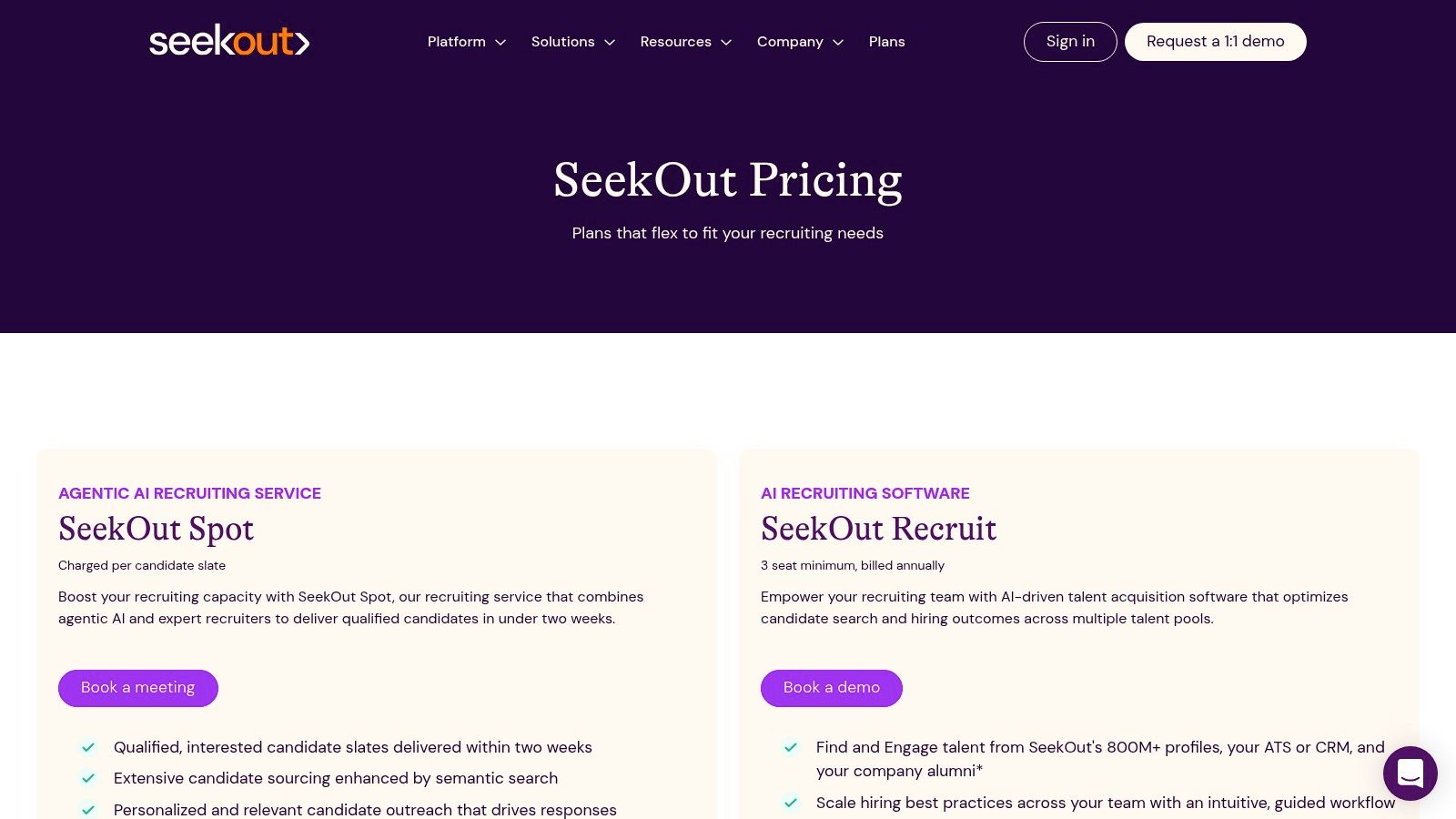
Its key differentiator is the ability to enrich your existing ATS or CRM data, helping teams rediscover and re-engage past applicants with new, updated profile information. While the software is robust, its sales-led pricing model and annual contracts with seat minimums can be a commitment for smaller teams. For organizations looking for a more hands-off approach, the optional SeekOut Spot service provides curated candidate slates for specific roles, blending software with a managed service. Understanding the cost structure is crucial, so it's wise to learn more about SeekOut pricing before committing. A deep dive into various sourcing tools for recruiters can help place its value in context.
Best For: Enterprise teams needing to enrich existing ATS data and source technical or specialized talent from diverse public sources.
hireEZ positions itself as an agentic AI recruiting platform, distinguishing itself among recruiting software examples by focusing on automating the entire hiring workflow. Originally known for its robust outbound sourcing capabilities, it has expanded to cover inbound screening, fraud detection, and automated interview scheduling. Its core value proposition is leveraging AI to handle repetitive tasks, freeing up recruiters to focus on strategic candidate engagement and relationship-building. hireEZ stands out as an automation specialist. To explore how automating tasks can generally streamline operations and achieve speed, consider this guide on automation for business.
The platform’s strength lies in its end-to-end workflow support, from identifying candidates to getting them on the calendar. However, its pricing is not transparent and requires engaging with their sales team, with costs varying significantly based on team size. This lack of public pricing can make initial evaluation difficult for teams on a tight budget. For those weighing its comprehensive automation against its cost, understanding the landscape of hireEZ alternatives is a practical next step. Considering options like a 9-80 work schedule can also impact the kind of automation a team needs.
Best For: Talent acquisition teams seeking to automate a wide range of tasks from sourcing to interview coordination.
Gem operates as a comprehensive, all-in-one recruiting platform that combines a powerful CRM with sourcing, outreach, and analytics. It’s a strong contender among recruiting software examples because it centralizes the entire top-of-funnel workflow. Recruiters use its one-click sourcing extension to pull candidate profiles from sites like LinkedIn and then manage them through personalized, multi-stage nurture campaigns.
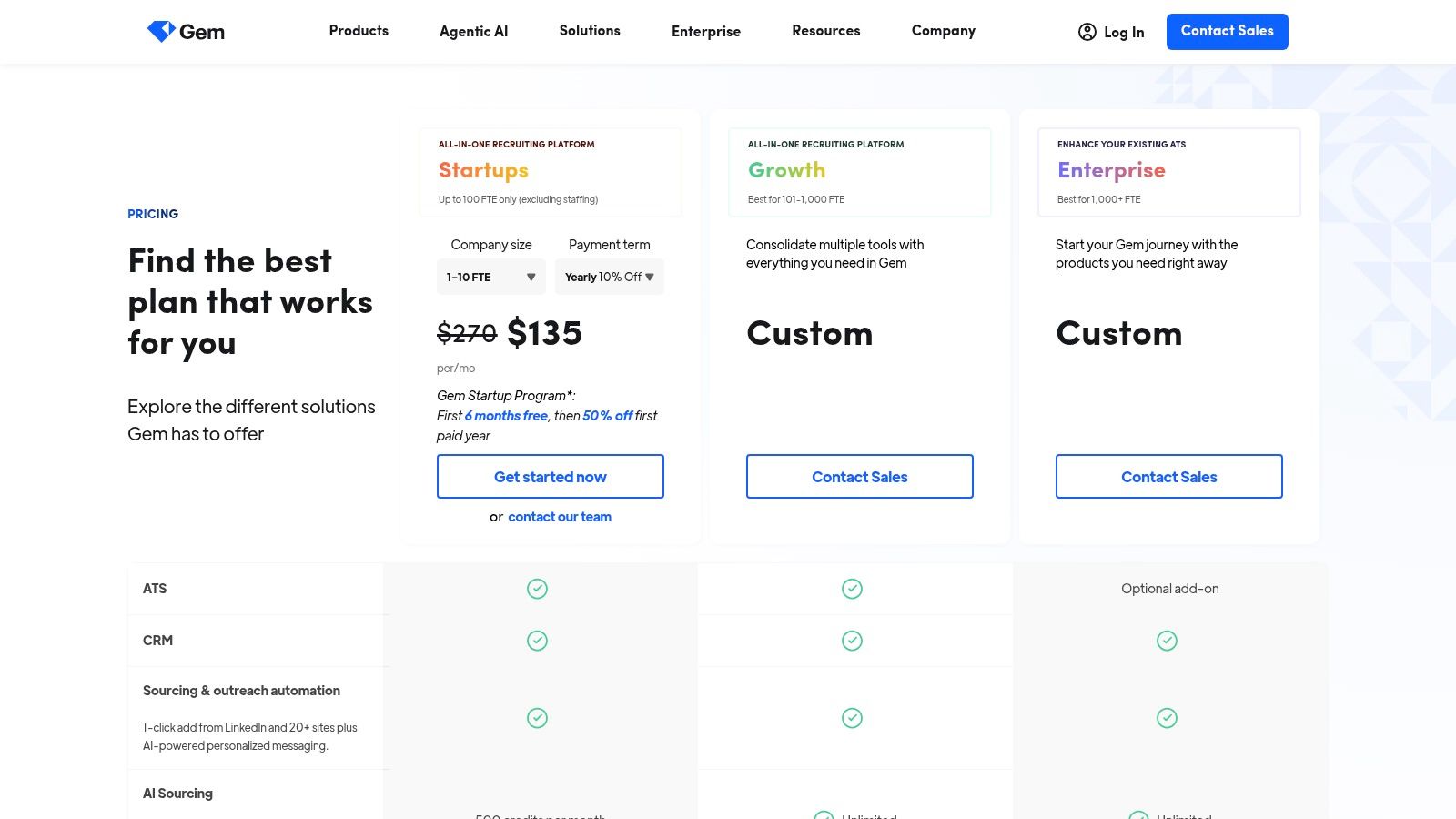
You know what that means? Gem’s primary strength lies in its deep integration with popular Applicant Tracking Systems (ATS) and robust pipeline analytics, giving teams clear visibility into their sourcing effectiveness and outreach performance. While Gem excels at relationship management and data tracking, its pricing model can be a hurdle. Non-staffing plans require a sales consultation, and some of the more advanced AI features are locked behind higher-tier packages. However, it stands out by offering published plans specifically for staffing firms and startups, providing a clearer adoption path for those segments. For teams prioritizing analytics and automated nurture sequences, Gem is a top-tier choice that streamlines everything from initial contact to interview scheduling. For more on automation, see these tips to streamline the recruitment process.
Best For: Teams that need robust CRM functionality, pipeline analytics, and automated outreach integrated directly with their existing ATS.
Loxo positions itself as a comprehensive talent intelligence platform, attracting recruiting agencies and small in-house teams with its powerful free-forever ATS and CRM. This makes it one of the most accessible recruiting software examples for those just starting out or operating on a tight budget. The platform consolidates sourcing, outreach, and applicant tracking into a single interface, aiming to streamline the entire hiring workflow from start to finish. Its core appeal lies in its low barrier to entry, allowing individual recruiters to build a functional tech stack without initial investment.
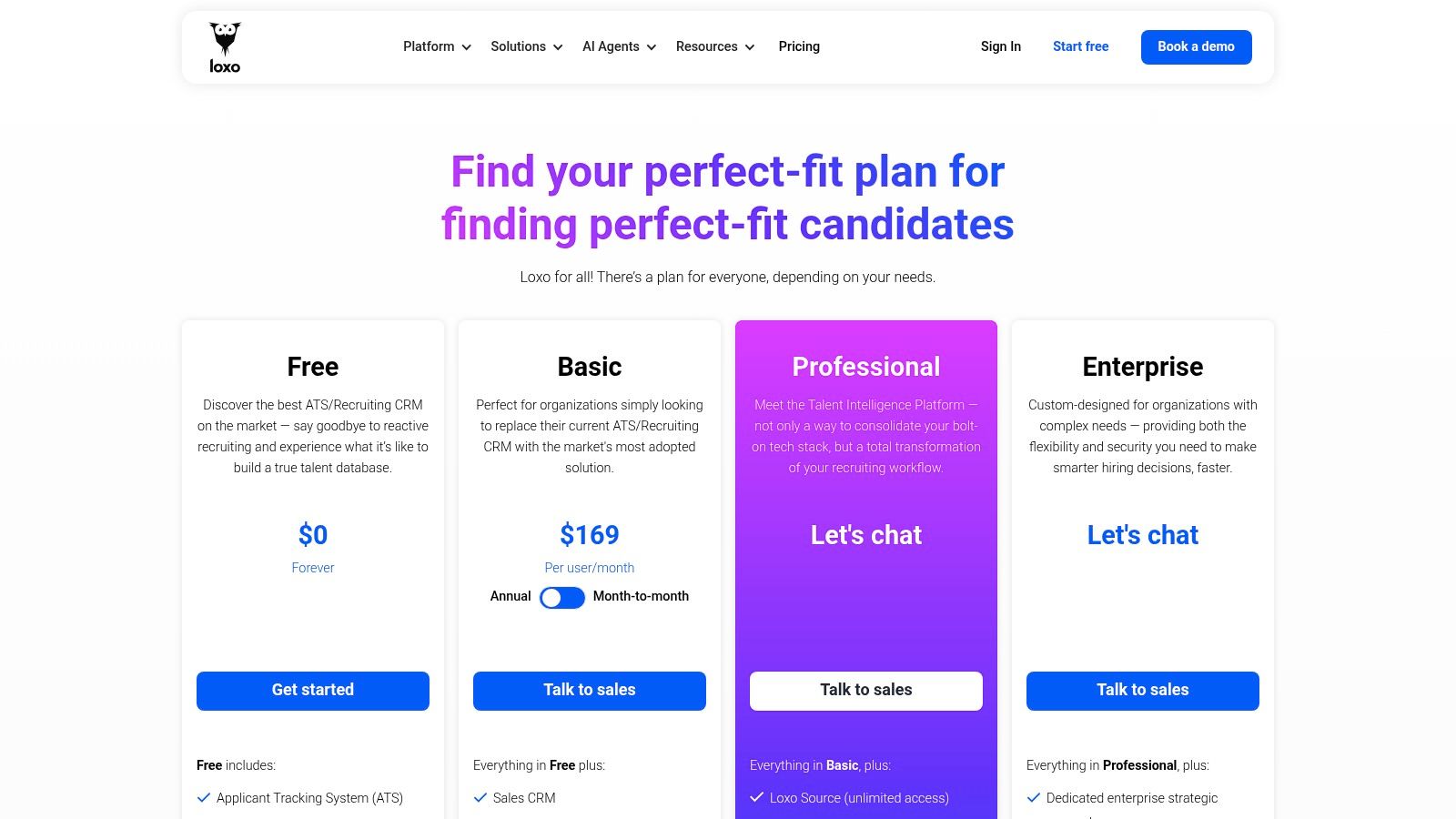
While the free plan is generous for a single user, scaling teams will need to upgrade to paid tiers for features like multi-user access, advanced data enrichment credits, and enterprise-level controls. Loxo’s sourcing database and contact-finding tools are part of its paid offerings, making it a true all-in-one solution only at the premium level. For a deeper look into its capabilities and user feedback, these Loxo reviews offer additional context. It’s a strong contender for teams that anticipate growth and want a platform that can scale with them. For those considering other platforms in this space, researching HireEZ pricing can offer a useful comparison point.
Best For: Small recruiting agencies and freelance recruiters needing a free, robust ATS/CRM with a clear path to upgrade.
Findem positions itself as a Talent Data Cloud, moving beyond simple keyword searches to an attribute-based sourcing model. This makes it a noteworthy entry among recruiting software examples for enterprise teams. Instead of just matching titles, recruiters can build precise talent pools using attributes like "experience with high-growth startups" or "managed teams of 10+ engineers." The platform consolidates disparate people and company data, providing a unified view for sourcing and analytics.
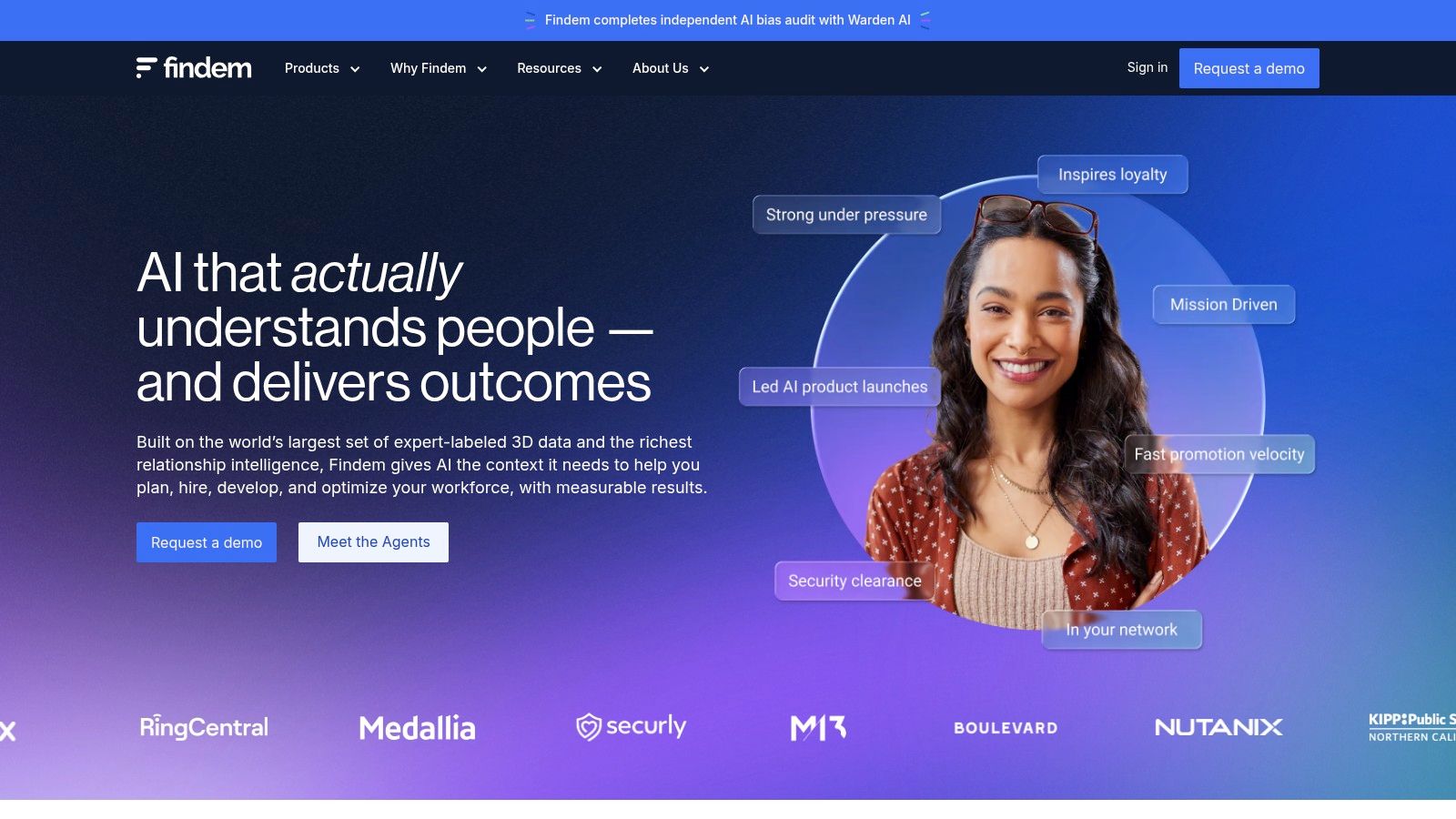
Its core value lies in making talent acquisition a measurable, data-driven function with strong DEI reporting and ROI tracking. However, its sophisticated features and sales-led pricing model position it primarily for large, enterprise-scale customers who need to consolidate their tech stack. Smaller teams may find the platform too complex or costly for their needs, as it's designed for organizations with mature recruiting operations and a focus on strategic workforce planning. Understanding the value of recruiting metrics is key to leveraging a tool like Findem.
Best For: Enterprise talent acquisition teams that need a unified data platform for strategic sourcing and analytics.
Eightfold AI positions itself as a comprehensive talent intelligence platform, moving beyond standard applicant tracking to offer an “Agentic Talent Operating System.” This enterprise-grade solution is one of the more ambitious recruiting software examples, using a massive skills and career-trajectory dataset to power its AI. It supports the entire talent lifecycle, from external acquisition and internal mobility to diversity initiatives and workforce planning. Its core value is connecting skills to opportunities at a massive scale for global organizations.
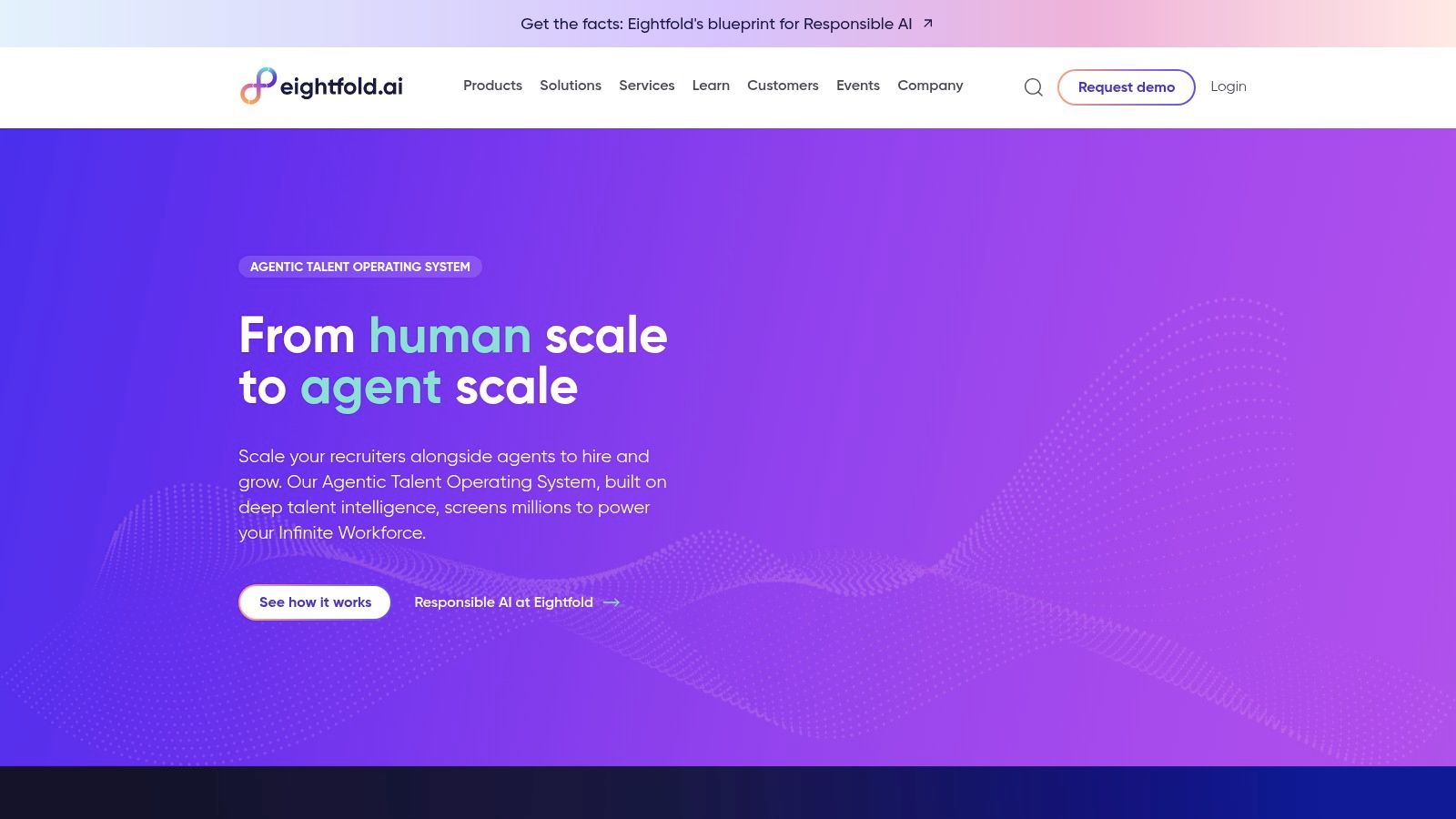
Here’s the deal. Its focus on large enterprises means the platform comes with a significant investment and a complex, multi-module procurement process. Pricing isn't public, and implementation is a major undertaking designed for companies with complex, global hiring needs. While its deep data capabilities are powerful for workforce strategy, smaller teams may find the scope and cost prohibitive for pure sourcing and recruiting tasks. Many companies explore Indeed alternatives for more focused solutions.
Best For: Global enterprises seeking a unified platform for talent acquisition, management, and strategic workforce planning.
Greenhouse is one of the most widely adopted applicant tracking systems (ATS) and a staple among recruiting software examples for mid-market and enterprise companies. It excels at creating structured, fair, and scalable hiring processes. The platform guides teams through every stage, from requisition approvals and interview scheduling to creating consistent evaluation scorecards and generating detailed analytics reports.
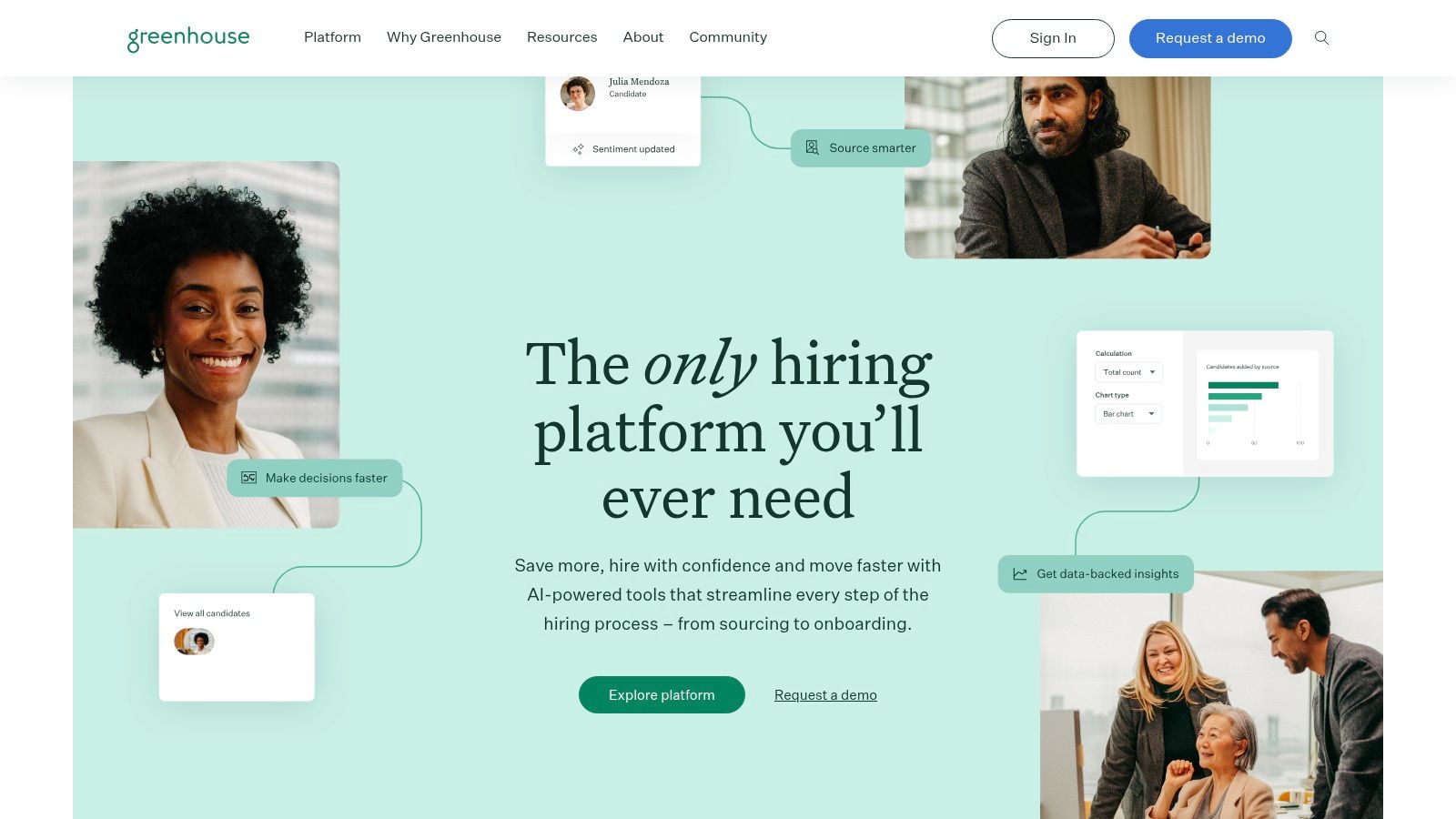
Most people believe an ATS is just a candidate database. The opposite is true. Its primary strength lies in its robust workflow management and its massive partner marketplace. With over 500 integrations and a mature API, Greenhouse serves as the central hub for a company's entire recruiting tech stack, connecting with everything from sourcing tools to background check providers. This deep integration makes it highly customizable. However, its comprehensive nature comes at a cost; pricing is quote-based and requires a sales-led procurement process, making it less accessible for smaller businesses. For teams new to this type of platform, understanding what an ATS is and how it functions is a crucial first step.
Best For: Mid-market to enterprise organizations that need a highly structured, scalable, and integrated hub for their entire hiring process.
Lever stands out among recruiting software examples by tightly integrating its Applicant Tracking System (ATS) with a native Candidate Relationship Management (CRM) platform, known as LeverTRM. This unified approach allows hiring teams to manage active applicants and nurture passive talent pipelines within a single, collaborative environment. Its strength lies in providing a holistic view of the entire talent lifecycle, from initial sourcing to final hire, enriched with automation and deep analytics to track efficiency.
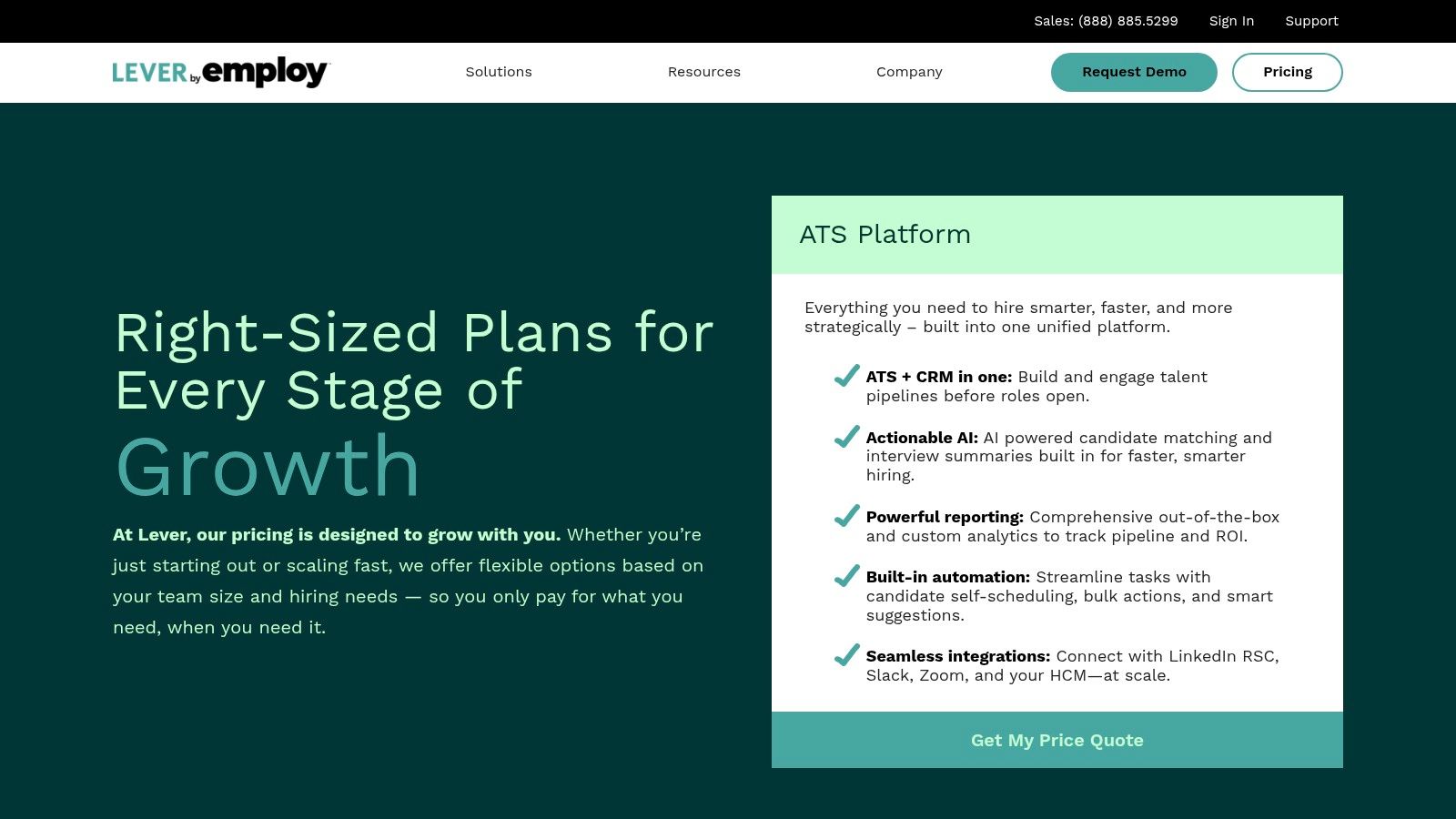
The platform is praised for its clean user interface and robust integration ecosystem, connecting seamlessly with tools like LinkedIn Recruiter, Slack, and major HCMs. However, its comprehensive nature comes with a price tag. Pricing is not public and is configured based on the specific modules, number of seats, and an annual contract, making it a significant investment primarily suited for mid-market to enterprise-level companies. The total cost can vary widely, requiring a custom quote. A key part of using any CRM is crafting effective recruitment emails.
Best For: Mid-size to enterprise talent teams that need a unified ATS and CRM to manage high-volume, collaborative hiring processes.
Ashby has emerged as a powerful all-in-one applicant tracking system that makes it one of the more modern recruiting software examples available today. It’s particularly noted for its exceptional analytics and reporting capabilities, which allow talent teams to track everything from pipeline health to diversity metrics with incredible detail. The platform also streamlines complex tasks like scheduling, automating multi-stage interview loops to reduce administrative overhead and improve the candidate experience.
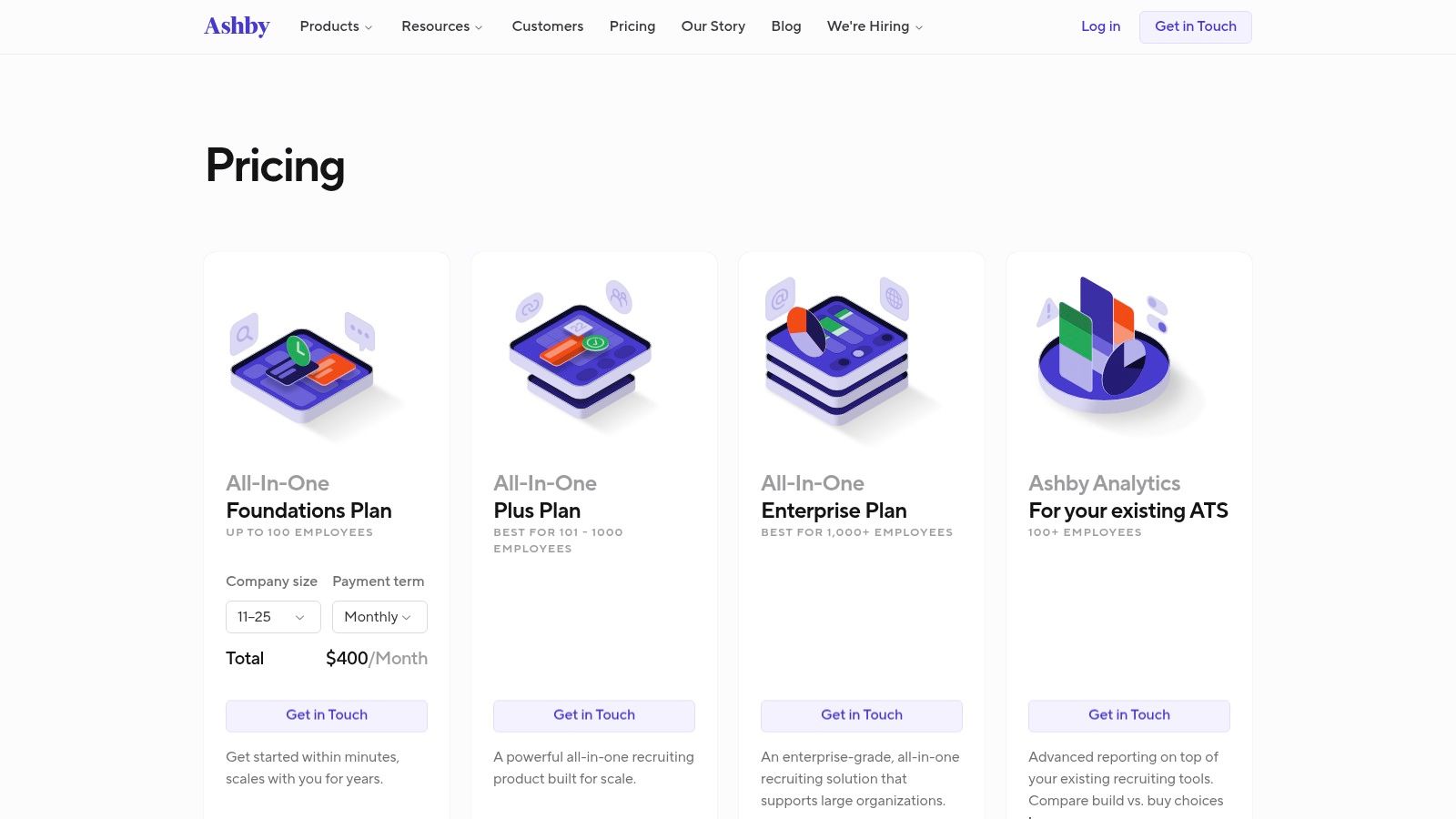
A key differentiator for Ashby is its transparent pricing for small businesses. The "Foundations" plan offers clear, public pricing for companies with up to 100 employees, a rarity in a market dominated by opaque, quote-based models. While this provides an accessible entry point, larger organizations must still engage with sales for custom "Plus" and "Enterprise" quotes, where costs vary based on headcount and feature needs. For teams focused on data-driven recruiting and scalability, Ashby presents a compelling, unified solution. The rise of AI recruiting tools has made platforms like Ashby even more essential.
Best For: Scaling tech startups and data-centric recruiting teams who need deep analytics and automation in one platform.
Workable has established itself as a go-to applicant tracking system for SMBs and mid-market companies, making it a prominent entry among recruiting software examples. Its platform is designed for ease of use and rapid implementation, offering a self-serve purchasing model and a 15-day free trial that lowers the barrier to entry. This approach allows smaller HR teams and startups to get up and running quickly without lengthy sales cycles or complex onboarding procedures.

The system focuses on core recruiting functionalities and includes AI recruiter credits on certain plans to assist with sourcing. While it excels at streamlining the hiring process for less complex needs, companies requiring highly advanced features may find them gated behind Premier plans. Its pricing structure, dependent on employee count and selected packages, requires careful evaluation to ensure it aligns with a company's budget and growth trajectory. Using advanced techniques like X-ray search can often supplement the built-in sourcing capabilities of platforms like Workable.
Best For: Startups and mid-market teams that prioritize a fast, user-friendly ATS with transparent trial and purchase options.
What is the best type of recruiting software for a small business?
Small businesses often benefit most from all-in-one platforms with transparent pricing, like Loxo's free ATS or Ashby's "Foundations" plan for startups.
How do recruiting software and an ATS differ?
An ATS manages applicants who have already applied. Recruiting software is broader, often including sourcing tools to find and engage passive candidates.
Can AI recruiting tools replace human recruiters?
No, AI tools are designed to augment recruiters by automating repetitive tasks like sourcing and screening, freeing up time for strategic engagement.
We've explored a wide range of recruiting software examples, from comprehensive ATS like Greenhouse to powerful AI sourcing engines like Juicebox. The landscape is crowded, and on the surface, many platforms offer similar features. But there’s a critical distinction that separates effective tools from expensive shelf ware: the best software removes friction, not add more steps.
You might think that your current, multi-tool process is working "well enough." But this overlooks the hidden opportunity cost. Why does this fail? Every hour spent on manual data entry or deciphering a clunky UI is an hour you could have spent building relationships with high-value candidates.
As shared by one TA leader at a fast-growing tech firm, switching to an integrated AI sourcing tool educed their time-to-fill for senior engineering roles by 35% in just six months by allowing recruiters to focus on engagement, not administration.
The core benefit of modern recruiting software is velocity. This is what modern tools unlock: the ability to identify, engage, and close critical hires before your competitors even find their profiles. It allows your team to move from a reactive, req-filling posture to a proactive, pipeline-building strategy where you stop fighting your software and start winning the talent war.
{{large_cta}}
Run your first search for free. Find and engage top talent across 800M+ profiles. Trusted by 5,000+ customers.

.png)
.png)
.png)

.png)