
.svg)
SIGN UP FOR JUICEBOX (IT’S FREE!)

Who are you looking for?
Thank you! Your submission has been received!
Oops! Something went wrong while submitting the form.

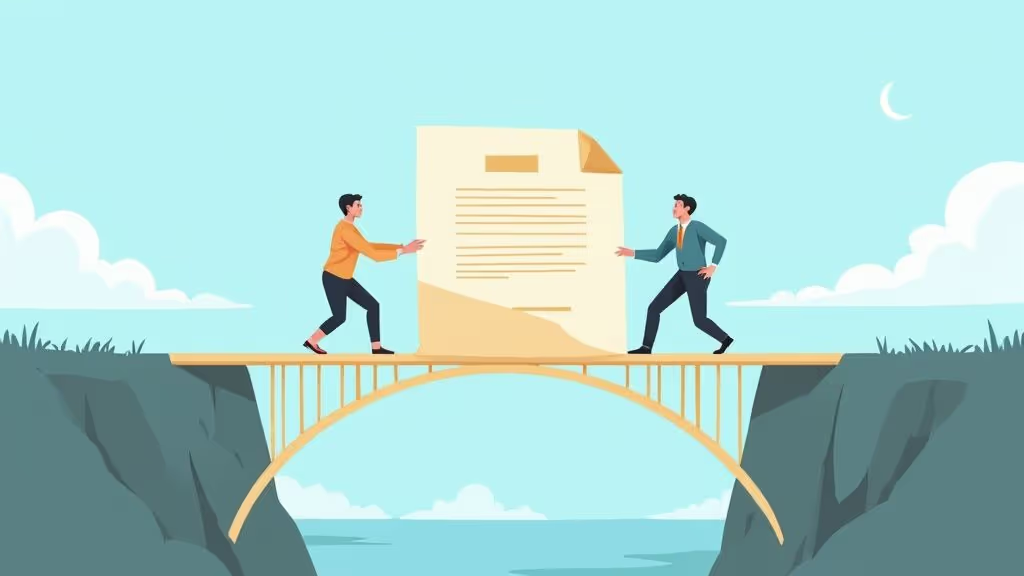
An offer letter is the final bridge connecting your top candidate to their new role.
A weak, confusing, or rickety one is enough to make even the most excited talent pause and turn back, but a strong one makes the decision to cross an easy one. In this guide, you'll learn how to writean offer letter that gets accepted every time.
Unlike generic templates, this guide integrates real recruiter workflows and AI-powered examples to show you how to build a bridge of trust that candidates are excited to cross.
An offer letter is the formal, written document that officially extends a job opportunity to a candidate. It’s the architectural blueprint for the start of an employment relationship, outlining the essential terms and setting clear expectations to seal the deal in a competitive market.
Imagine your entire recruitment process has been about building a bridge to a fantastic candidate. The offer letter is the final, most crucial span of that bridge. A well-built one is clear, strong, and trustworthy, making the decision to cross an easy one. A 2023 SHRM study found that improving the candidate experience can increase new hire retention by up to 25%, and the offer stage is a critical part of that experience.
In a market where the average time-to-fill is 35 days, you can't afford a weak final step. Every detail counts.
To build an offer that candidates confidently accept, you need to focus on three core pillars: clarity, strength, and trustworthiness.
This diagram shows how these three elements form the foundation of an effective offer letter.

This structure ensures that every component, from compensation to company culture, reinforces the candidate's decision to say "yes" and join your team.
A poorly constructed offer letter can completely undermine the entire recruiting process. Ambiguous language, unclear compensation details, or a delayed delivery can chip away at the trust you've worked so hard to build. This isn't just a formality; it's a direct reflection of your company's professionalism. When you take the time to improve the candidate experience at this crucial last step, you dramatically increase your acceptance rates.
Ultimately, your offer letter is the last and most important piece of communication in the hiring cycle. It has to be more than just a document. It needs to be a compelling invitation that makes your top choice feel valued, secure, and genuinely excited to start their journey with you.
An offer letter is like the blueprint for the bridge connecting a candidate to your company. A vague, poorly designed blueprint creates doubt and hesitation. But a strong one—built with clear, high-quality specifications—gives them the confidence to walk across and join your team.
We're breaking down the anatomy of an irresistible offer letter to show you how each part works together to build a foundation of trust. The goal is to answer a candidate's key questions before they even have to ask. Ambiguity is the enemy; clarity closes deals.

Every offer letter needs a solid structure. The table below outlines the non-negotiable components that create clarity, ensure legal compliance, and ultimately, drive up your acceptance rate. Think of these as the steel beams and concrete pillars of your bridge.
By building your offer letter with these essential components, you're not just sending a document; you're providing a clear, compelling, and professional invitation that makes a candidate want to say yes.
This is the part of the offer everyone scrolls to first. Don't just throw a number at them—tell the whole story. Presenting compensation clearly and comprehensively shows you respect the candidate's value.
A 2023 Payscale report found that pay transparency is a massive driver of employee satisfaction. In fact, 60% of employees think they're underpaid when their company has murky pay processes. Your offer needs to paint the full picture. Beyond base salary, showcase the entire rewards package. To make sure your offer is competitive, a solid compensation intelligence strategy is essential. This data-backed approach helps you craft offers that are both fair and hard to refuse.
If you want to speed up the drafting process, a simple online offer letter generator can be a lifesaver for structuring all these details correctly.
An offer letter is the final, critical span of the bridge you're building to your new hire. Winging it could lead you into a legal minefield. Let’s ensure you get across safely with an offer that’s both compelling and bulletproof.
The most important distinction to get right is between a non-binding offer and a formal employment contract. The specific words you use matter. One poorly phrased sentence can accidentally create legal obligations you never intended, stripping away the flexibility of at-will employment. The line between an "offer" and a "contract" is razor-thin.
The legal landscape for hiring is always shifting. Pay transparency laws, for example, are now in effect across several states, forcing employers to disclose salary ranges. Mess this up, and you’re looking at hefty fines.
Here are the non-negotiables:
For anyone hiring for fixed-term roles, it's worth checking out the structure of a contract-to-hire arrangement. And for a deeper dive, reviewing US Employment Agreement templates can clarify the legal distinctions.

Today, an offer letter is a bridge to candidates navigating a world of remote work, distributed teams, and economic uncertainty. Top talent isn't just looking at salary; they’re dissecting offers for flexibility, support, and stability.
Ambiguity is the enemy of a strong offer. If you want a candidate to feel confident saying "yes" to a remote or hybrid role, spell out the details.
Nailing these details proves you have a well-thought-out remote culture. Making sure your team is ready is crucial; our guide on virtual meeting etiquette can help.
Economic turbulence has made candidates more risk-averse. According to a 2023 report from HireBorderless.com, 34% of new hires now leave their jobs within the first six months, often because the reality didn't match the promises. Your offer must project security. Frame the offer around the company's long-term vision, its stability, and how this role is essential to that future. You're not just offering a paycheck; you're offering a secure bridge to a stable future.
In a competitive market, speed and personalization turn a good offer into an accepted one. AI isn't here to replace you—it's here to augment your skills, helping you build a stronger, more personal bridge to candidates, faster.
Think of it: generating a perfectly formatted, legally-vetted offer letter in minutes. By automating the admin work, you get back precious time to focus on the human connection. Modern AI recruiting software can pull data from the entire hiring cycle to help you craft a more compelling offer that speaks to that specific candidate's motivations. It's like having an AI co-pilot that handles the complex assembly of the bridge, leaving you to personally guide the candidate across.
The offer letter is just a document. How you deliver it is the real art that turns a great candidate into your next superstar hire. It’s the final handoff in a relay race—you’ve built momentum, and now it's time to bring it home strong.

Before you attach that PDF, pick up the phone. A verbal offer call is a powerful, personal moment. It's your chance to convey genuine excitement, walk them through the highlights, and make them feel wanted. Your enthusiasm is contagious and can be the tipping point that makes your offer stand out.
Listen closely to their reaction. Are they thrilled? Hesitant? That initial gut check lets you get ahead of any potential concerns before they become deal-breakers.
Once you hang up, move fast. Sending the written offer letter the same day shows you're professional and respect their time. Use a modern e-signature platform like DocuSign or PandaDoc. It makes the process smooth and reflects well on your company’s tech-savviness. Speed and professionalism matter immensely here; a clunky process creates friction and seeds doubt.
Your role now shifts from recruiter to guide. Give them space while gently keeping the process on track. A candidate who feels cornered is more likely to walk away.
This approach keeps things moving forward but leaves the candidate feeling empowered. When you handle this last step with care, you're not just sending a document; you're building a bridge that leads directly to a signed offer.
Even experienced recruiters hit pause when it comes to the nitty-gritty of an offer letter. Let’s clear up a few of the most common questions that pop up when you’re building that final bridge to a new hire.
An offer letter is a formal handshake. It lays out the key terms—title, salary, start date—but it’s not set in stone. The crucial part is usually the “at-will” clause, giving both you and the new hire the flexibility to end the relationship at any time. An employment contract is a rigid legal agreement that often locks in a specific employment term and lists precise conditions for termination, typically used for executive-level roles.
Yes, absolutely. A personal phone call translates the company's excitement into a human connection. A 2024 Gallup poll found that employees who feel a genuine connection to their manager are far more engaged. That feeling can start right here, with your call. It also gives you a chance to read their initial reaction and tackle any small questions before they become big hesitations.
The sweet spot is three to five business days. This industry standard gives the candidate enough breathing room to review everything and consult with their family without feeling rushed. It also keeps the momentum going on your end. For more senior roles, extending that deadline to a full week is a smart, considerate move.
{{large_cta}}
Run your first search for free. Find and engage top talent across 800M+ profiles. Trusted by 5,000+ customers.


.png)
