.svg)
SIGN UP FOR JUICEBOX (IT’S FREE!)

Who are you looking for?
Thank you! Your submission has been received!
Oops! Something went wrong while submitting the form.

Think of human resources software as the central nervous system for your company's most valuable asset: its people. It’s the digital backbone that replaces scattered spreadsheets, disconnected calendars, and mountains of paperwork with a single, unified system. But there’s a problem most tools ignore. They are built to manage the people you already have, not to find the elite talent that will define your future.
This guide explores how to build a modern HR tech stack that handles core administrative tasks flawlessly while giving you a decisive edge in the war for talent. We'll show you how leading companies are combining core human resources software with specialized tools to create a true strategic advantage.
TL;DR: The Core Idea
At its core, HR software is a suite of integrated tools designed to manage the entire employee lifecycle—from the moment a candidate applies to the day they offboard, and everything in between.
The result? Your HR team is freed from the drudgery of repetitive administrative tasks. Instead of chasing down timesheets or manually updating employee records, they can finally focus on what really matters: developing talent, shaping company culture, and making strategic decisions that drive the business forward.
Most people believe HR software is just for efficiency. The opposite is true. Adopting a dedicated HR platform is a fundamental shift in how a business operates, turning HR from a cost center into a strategic driver of growth.
Modern human resources software gives leaders the real-time analytics they need to make smarter, data-driven decisions about their workforce. Imagine tracking performance data alongside compensation history. You can instantly spot your top performers, identify retention risks before they become problems, and build a proactive talent strategy. That's the kind of insight you need to navigate today's talent market. This is why the global market, valued at over US$17.5 billion in 2024, is projected to more than double to US$34.1 billion by 2030, according to HR market trends and forecasts.
While every platform is a little different, most comprehensive solutions are built on a few essential pillars. These modules are designed to work together, creating a seamless experience for both your employees and your HR team.
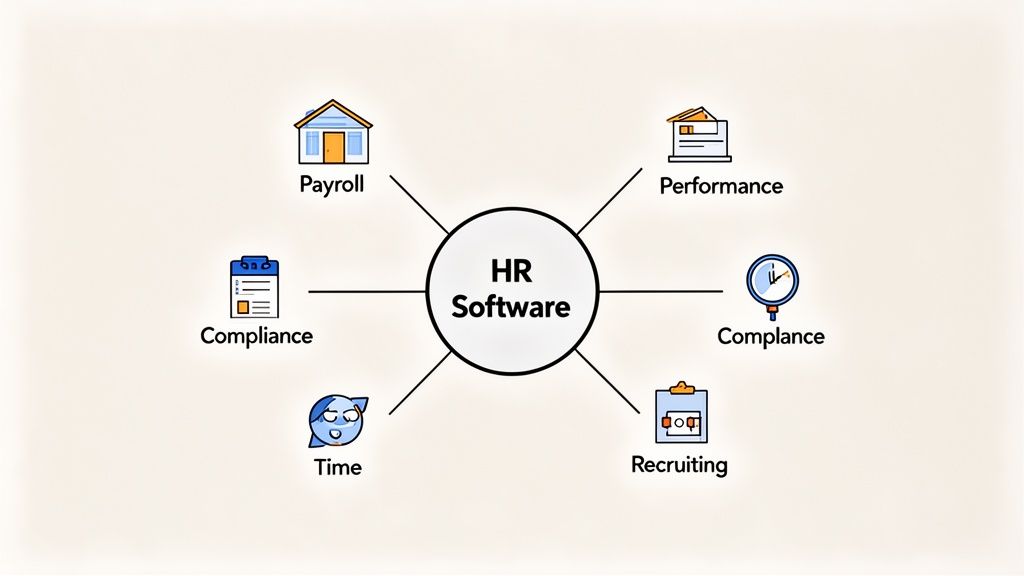
Here's the bottom line. These modules form the foundation of a system that touches every part of the employee experience. Recruiting modules, for instance, often include a built-in Applicant Tracking System (ATS). If you want to go deeper on that, you can explore our guide on what an ATS is and see how it slots into the broader hiring workflow.
Think of a solid human resources software platform less like a single tool and more like a connected ecosystem. Each module is built to solve a specific headache somewhere along the employee journey, from the first interview to the final paycheck. Check out these AI recruiting tools for a look at how modern systems are evolving.
When these components work together, they create a seamless workflow. This is what pulls HR out of the weeds of disjointed administrative tasks and elevates it into a strategic function for the business.
Let's break down the essential modules by looking at the all-too-common operational problems they were designed to fix.
This isn't just a digital filing cabinet; it's the bedrock for all your people analytics. With clean, centralized data, you can start spotting trends, predicting turnover, and making smarter workforce planning decisions. Some forward-thinking organizations even use predictive analytics for HR to get ahead of issues before they can impact the business.
You might think payroll is just about cutting checks. But there's a catch. It's a minefield of tax regulations, withholdings, and compliance rules that can change with almost no notice. Get it wrong, and you're looking at hefty fines and seriously unhappy employees.
This is where a dedicated Payroll module becomes absolutely non-negotiable.
The benefits side of the module is just as crucial. It simplifies open enrollment and empowers employees to self-manage their own plans, which dramatically cuts down the administrative load on your HR team.
ALT: human resources software sample dashboard showing headcount and turnover metrics
But here’s the thing—most all-in-one HR suites have a critical blind spot that undermines every other function. What good is a perfect payroll or performance system if you can't get elite talent in the door in the first place? Their recruiting modules are simply not built to find the passive candidates who will actually move the needle for your company. This is where the ecosystem breaks down.
You might think an all-in-one platform simplifies your workflow. Why add another tool when your current HRIS has an "applicant tracking" feature built-in? But that logic fails because these systems treat recruiting like an administrative chore—a digital filing cabinet for résumés. They aren't built for the strategic, high-stakes game of sourcing.
They can't search across dozens of platforms like GitHub, Behance, or academic sites where the best engineers, designers, and researchers actually spend their time. The result? Your talent pool shrinks to just active applicants and the same recycled profiles everyone else is finding on LinkedIn. A report from Gartner shows that organizations using specialized tools see a significant jump in their quality of hire.
This is where dedicated talent sourcing platforms completely change the game. Instead of being a jack-of-all-trades, they do one thing exceptionally well: find the best possible candidates, no matter where they are online. This model lets your Core HR system remain the central hub, while a specialized recruiting tool supercharges how you find new talent.
Here’s a real-world example: Fintech leader Ramp needed to hire top engineers. Instead of settling for their HRIS, they used a specialized AI sourcing tool to search across more than 30 platforms at once. The outcome? They found and hired key engineers 5x faster than their previous benchmark. That's the kind of impact a dedicated tool delivers. You can dive deeper into these platform differences in our recruiting software comparison guide.
The future of HR tech isn't about finding one massive platform that does everything poorly. It’s about building an agile, integrated stack where each piece is the absolute best at what it does. This is how you can effectively streamline your recruitment process.
A modern approach looks like this:
This "best-of-breed" strategy transforms your human resources software from a simple record-keeping system into a strategic engine for growth.
Picking a human resources software platform is a big deal. The trick is to look past the shiny feature lists. You need a smart evaluation framework to cut through the marketing noise and find the software that actually fits how your company works. A key part of this is understanding the differences between options like these Indeed alternatives.
It’s tempting to pick a system that solves today’s problems for today’s headcount. That’s a classic trap. You need to grill vendors on how their platform handles growth.
A platform that can’t grow with you isn’t a solution. It’s a temporary patch that’s guaranteed to cause headaches later.
No human resources software operates in a silo. It has to talk to everything else in your tech stack. A study from MuleSoft found that the average organization uses 976 different applications. If your core HR system doesn’t play well with others, you’re just building hundreds of new data silos. Before you even think about signing a contract, map out your current tools and ensure the HR software has proven, pre-built integrations for your must-have systems, like the best talent acquisition software.
The most powerful software in the world is completely useless if your team hates using it. A clean, intuitive interface isn't just a "nice-to-have"—it's the single most important factor for getting people to actually adopt the tool. Without adoption, there’s no ROI. A Deloitte report put it perfectly: the digital experience you provide your employees is now just as critical as the one you provide your customers.
Choosing your HR software is just the first step. A smooth transition and high user adoption don't happen by accident. They’re the direct result of a structured, phased approach that anticipates challenges and prioritizes people over the platform.
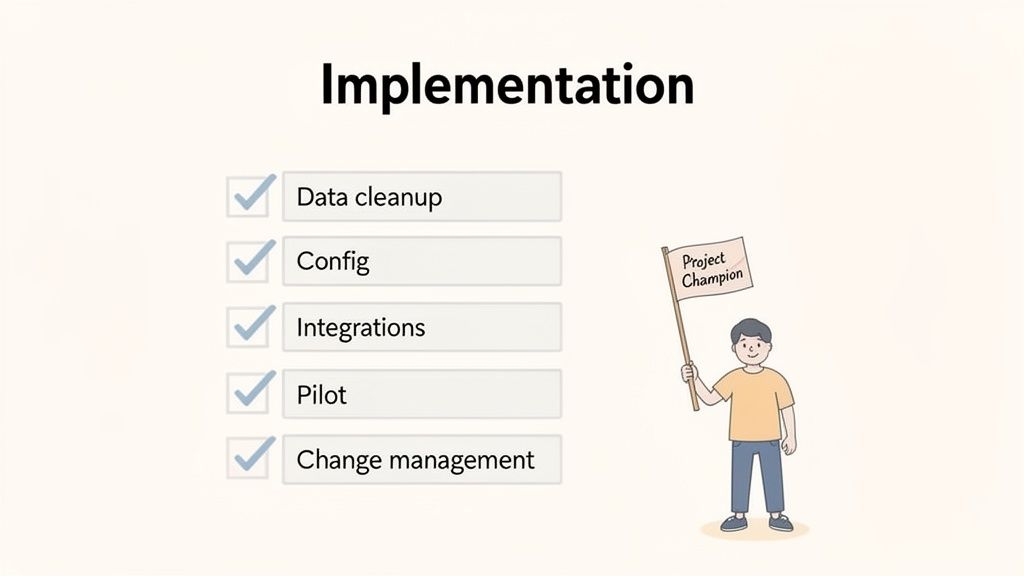
Your new system is only as good as the data you feed it. Before you move a single byte of data, conduct a thorough audit. A study by Experian found that inaccurate data hits the bottom line of 88% of organizations.
But wait, there's more. You must appoint a dedicated project champion—someone with the authority and visibility to drive the project forward. A great one can boost success rates by over 30%, according to the Project Management Institute.
Now what? It's time to mold the software to your specific workflows. This phase is all about configuring user roles, setting up permissions, and defining the approval chains that actually reflect how your company operates. Get your integrations right from day one. Ensure your new human resources software talks seamlessly to payroll, your ATS, and any other critical business systems.
Before a company-wide launch, run a pilot program with a small, representative group of users. This is your beta test. It lets you identify bugs, gather real-world feedback, and refine your training materials in a low-stakes environment. Effective change management is all about communication. Your team needs to understand the "why" behind the new system. Frame it not as a mandate from leadership but as a tool to make their jobs easier. This is especially important for things like a 9-80 work schedule implementation.
What is the difference between HRIS, HRMS, and HCM?Think of it like building blocks. HRIS is the foundation for core employee data. HRMS adds on talent management tools. HCM is the full, all-in-one suite.
How much does human resources software cost?Costs vary widely, from $5 per employee per month for basic tools to over $50 for enterprise suites. Always lean toward vendors with clear, public pricing.
Can I integrate recruiting tools with my HR software?Absolutely. Modern recruiting platforms have robust APIs designed to connect seamlessly with systems like Greenhouse, Lever, and other core HR platforms.
How does HR software improve employee retention?It gives you the data to be proactive. Performance and feedback modules let you track engagement, identify top performers, and create meaningful development plans.
The core benefit of modern human resources software is its power to transform HR from a reactive cost center into a proactive, strategic driver of business growth.
This is what unlocks your team’s ability to move beyond administrative tasks and build a world-class talent pipeline—the ultimate competitive advantage in any market.
{{large_cta}}
Run your first search for free. Find and engage top talent across 800M+ profiles. Trusted by 5,000+ customers.