.svg)
SIGN UP FOR JUICEBOX (IT’S FREE!)

Who are you looking for?
Thank you! Your submission has been received!
Oops! Something went wrong while submitting the form.

You can't hit your product roadmap or sales targets without the right people. It’s that simple. And that simple truth is the foundation of human capital management (HCM).
This isn’t just a fancy new term for HR. It's a fundamental shift in thinking—from "managing personnel" to "investing in talent" as a core business driver, just as critical as product development or marketing. While most companies treat their tech stack as an asset, Juicebox helps you treat your people with the same strategic rigor.
In this guide, we'll break down the HCM frameworks modern companies use to build an unstoppable talent engine:
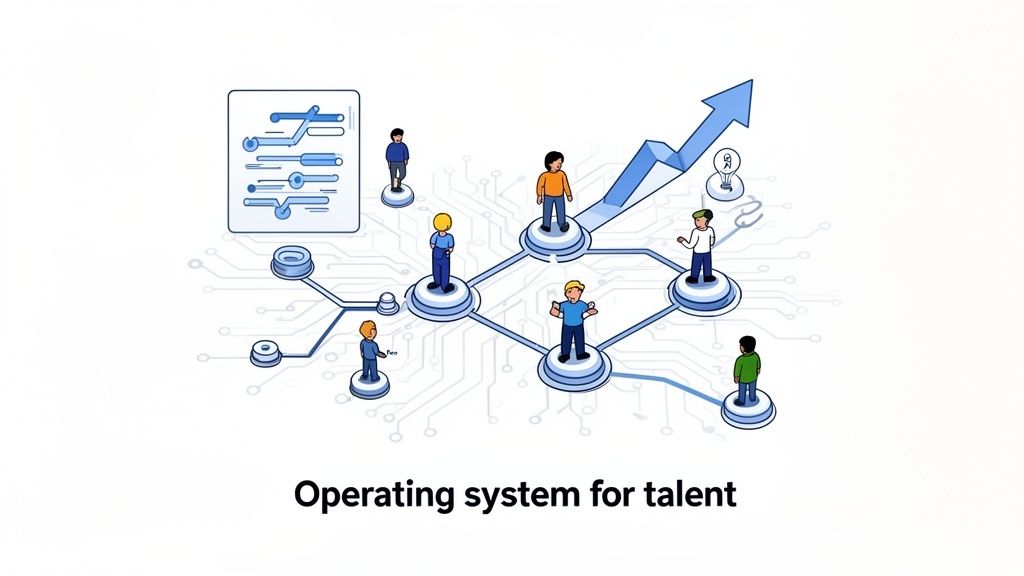
Think of HCM as the operating system for your company's talent. A normal OS manages hardware and software. A talent OS, on the other hand, manages the acquisition, development, and optimization of your most valuable asset—your people.
It’s a strategic, data-driven approach that ties every talent decision directly to business outcomes like revenue, innovation, and market share. This is where you can find great freelance recruiter professionals.
The market is betting big on this shift. The global Human Capital Management market, valued at $22.2 billion in 2023, is on track to hit a staggering $75.45 billion by 2034. Why the explosion? Because companies are finally realizing they need sophisticated workforce analytics and automation to compete, a trend backed up by a recent Deloitte survey of 10,000 leaders. You can check out the latest market reports for more details.
So, what's the real difference? Here's the bottom line: traditional HR has always been focused on administrative tasks—compliance, payroll, keeping records. It’s essential, but it’s reactive.
Modern human capital management is proactive and strategic.
While old-school systems were built to store employee data, modern AI-native platforms are built to actively grow its value. This is what separates companies that just talk about talent from those that actually build winning teams. It forces you to ask a critical question: Is your system just a digital filing cabinet, or is it an engine for building a stronger organization?
Let’s get practical. The differences are night and day:
This strategic mindset gives companies a massive edge. You stop just filling open reqs and start building a talent engine that fuels long-term growth. The focus shifts from simply counting heads to making every hire count. When you understand the data behind your team's skills and performance, you can make smarter decisions on who to hire, where to invest in training, and how to structure teams for the biggest impact. You can learn more about People Analytics in our detailed guide.
This proactive approach to talent is no longer a luxury for big corporations. It’s quickly becoming the standard for any company serious about winning. It's time to explore the top 10 AI recruiting tools for 2026.
Effective human capital management isn't about a single program or software. It’s a complete system, a coordinated strategy that clicks together like puzzle pieces. The best way to get your head around it is to break it down into five interconnected pillars. Each one marks a critical stage in the employee journey, and together, they build a high-performance organization.
This framework takes the fuzzy concept of "maximizing talent" and turns it into a series of concrete, measurable business functions.
Myth-Busting: Most believe HCM is just a fancy new name for HR. The opposite is true. HCM is an investment strategy designed to multiply the value of your talent, while traditional HR is often treated as a cost center focused on compliance and administration.
This is the front door to your company. Strategic talent acquisition isn't just about posting a job and waiting for applications to roll in. It’s about proactively hunting for the skills your company needs to win—not just today, but three years from now. It’s a data-driven function focused on building a sustainable pipeline of A-players.
Why does this matter so much? Because hiring the right people is the single highest-leverage activity any company can do. A single top-tier engineer or a killer salesperson can have an outsized impact on your revenue and how fast you can build and ship products.
This has never been more critical. Talent acquisition is a booming segment within human capital management, and for good reason. A 2023 Deloitte survey found that a staggering 59% of HR leaders are planning a complete workforce reimagination in the next few years. This lines up with market forecasts showing the unified HR solutions market exploding from $31.49 billion in 2024 to $75.45 billion by 2034. The message is clear: companies are scrambling for better hiring tech. You can read the full research about these market projections here.
Think about it this way: a modern recruiter using a tool like PeopleGPT can ditch clunky Boolean strings and just type a natural language prompt:
“Find me backend engineers in San Francisco who have worked at a YC-backed fintech startup and have experience with Rust.”
The platform then finds, vets, and helps engage qualified people across 30+ platforms—all in a fraction of the time it would take to do manually. That's the difference between reactively filling seats and strategically building a winning team.
Once you’ve hired amazing people, the next job is to create an environment where they can actually do their best work. The performance and engagement pillar is all about setting crystal-clear goals, providing constant feedback, and measuring what truly matters—impact, not just activity.
It’s about answering one simple question: "Are our people working on the right things, and do they feel motivated and supported while doing it?"
Look, this is where the rubber meets the road. This pillar is what connects an individual's daily grind to the company's big-picture goals. And it pays off. Engaged employees aren't just happier; they're more productive, more innovative, and they stick around longer. According to Gallup, businesses with highly engaged teams see a 23% difference in profitability. That's not pocket change.
Let's be real: the skills that got your company here won't get you there. This pillar is all about the continuous upskilling and reskilling of your team. It involves creating personalized learning paths, setting up mentorships, and building a culture where being curious is celebrated.
This isn’t about some dusty library of corporate training videos nobody watches. It’s about building a living, breathing system that spots future skill gaps and closes them before they become a problem. When you invest in your people's growth, you're not just making them more capable; you're also giving them a massive reason to stay. Our guide on building a robust talent development program dives deeper into how to do this right.
This pillar is about much more than just a paycheck. Total rewards covers everything of value an employee gets from their job: base salary, bonuses, equity, benefits, and all the non-monetary perks like a 9-80 work schedule, recognition, and a great culture. A strategic approach ensures your compensation isn't just competitive, but also fair and directly tied to performance.
It’s how you recognize and reward the value your people create. When you get it right, it fuels high performance and reinforces the exact behaviors that make the business successful.
If the other pillars are the car's body, this one is the engine. People analytics and technology provide the data and tools you need to make smart, objective decisions across the entire employee lifecycle. It’s about finally moving away from gut feelings and toward data-backed insights.
Here’s the deal: this is where a modern human capital management platform becomes non-negotiable. It pulls in data from all the other pillars to show you trends, predict outcomes, and measure the ROI of your talent strategies. You can finally get clear answers to questions like:
Without this tech and data pillar, the others are just operating in silos, and their strategic impact gets stuck in first gear. To learn more, compare options like HireEZ pricing against other platforms.
The world of HR technology is an alphabet soup of confusing acronyms. For recruiters and talent leaders, figuring out the difference between HCM, HRIS, and HRMS isn't just about semantics—it's about choosing tools that help you build a winning team, not just manage paperwork.
Let's cut through the noise with a simple analogy. Imagine you're building a high-performance race car.
You might think your current ATS and HRIS are getting the job done. But this siloed approach creates dangerous data gaps that cost you top candidates and slow down your hiring. Why? Because your ATS knows who you’re interviewing, but it doesn't talk to the system that understands your current team’s skills or your future business needs. That’s a massive blind spot.
The difference for a recruiter is stark. An HRIS can tell you your current headcount. A human capital management platform, on the other hand, reveals the critical skills you need for next year's product launch and shows you exactly where to find that talent. To navigate this tech landscape effectively, it's crucial to understand how to choose the right business process automation software that aligns with your strategic goals.
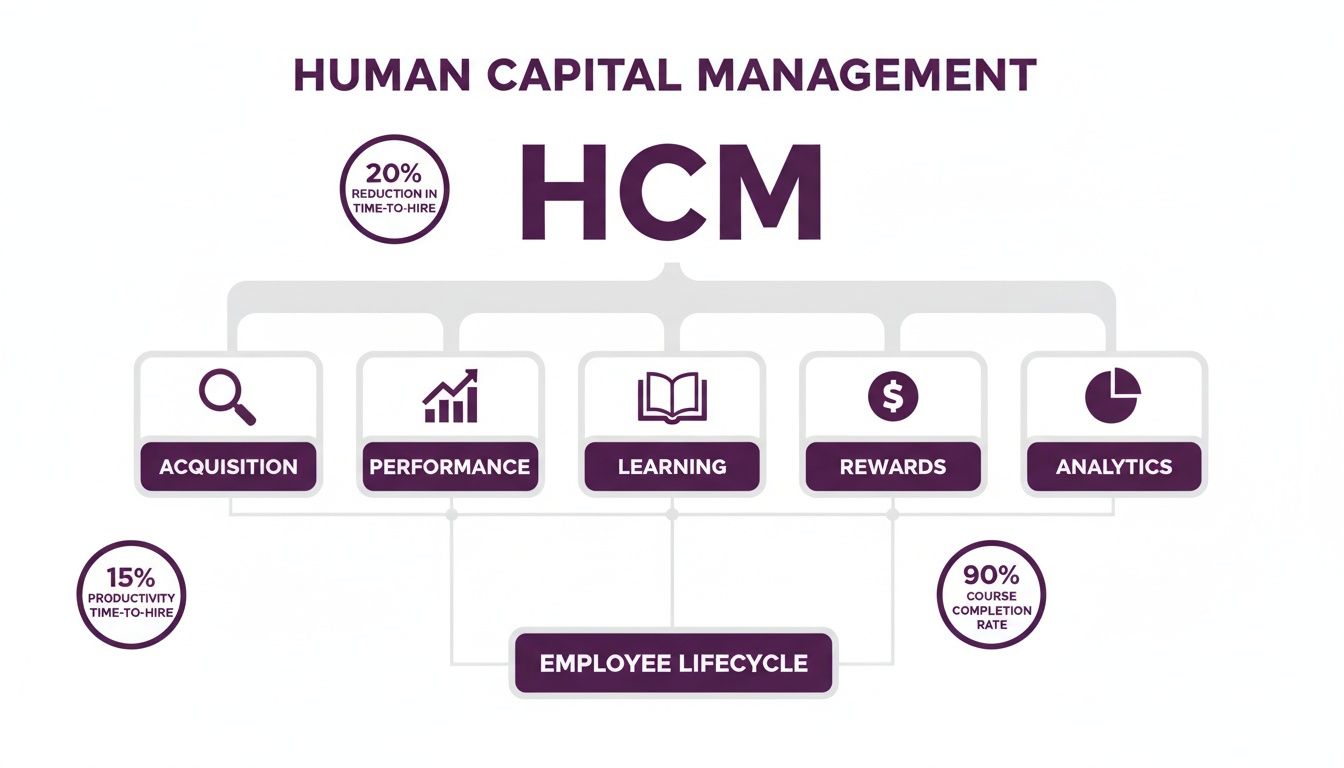
As the diagram shows, a true HCM strategy integrates everything from talent acquisition and performance management to analytics, creating a connected ecosystem where every part informs the others. It's also worth understanding LinkedIn Recruiter pricing to see how it fits into the broader ecosystem.
Artificial intelligence isn't some far-off concept in human capital management anymore—it's the engine running behind the scenes of today's smartest talent decisions. We've moved past the generic fluff and into specific, high-impact uses like predicting who might leave, automatically mapping out skills, and a totally new way of finding people.
AI is fundamentally changing what a recruiter does all day. Think of it as an assistant that handles all the repetitive, soul-crushing tasks—endless Boolean strings, sifting through thousands of resumes, double-checking contact info. This frees up recruiters to do what they do best: build relationships and actually close candidates.
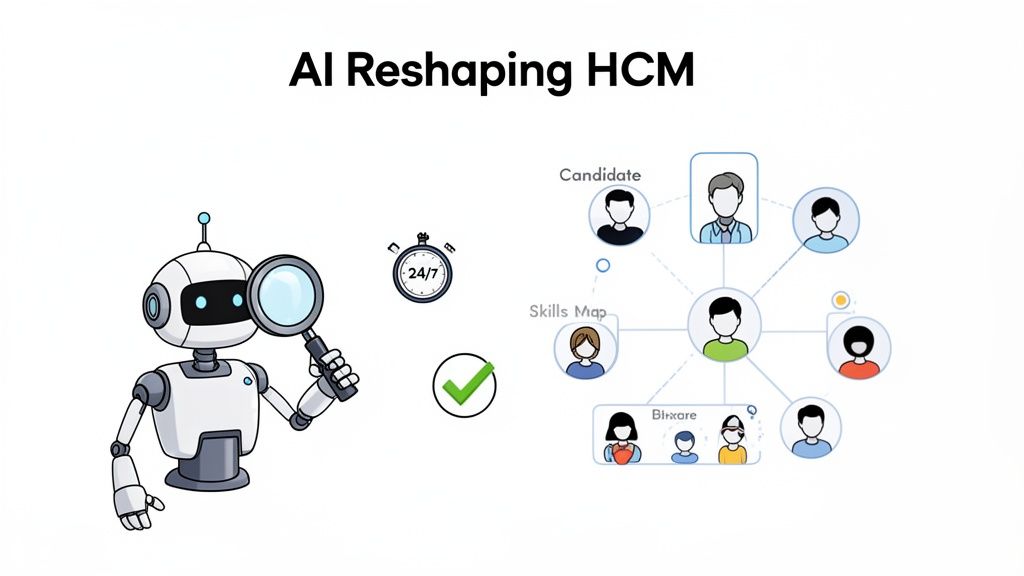
Modern AI flips the whole sourcing process on its head. Instead of recruiters having to learn the machine's language (Boolean), the machine now understands human language. This makes finding talent way faster and more intuitive.
What does that actually look like?
(intitle:resume OR inurl:resume) ("software engineer" OR "developer") AND "Java" AND ("AWS" OR "Azure") AND ("San Francisco" OR "SF") -jobs -samplesBut there’s a problem most tools ignore. AI can pull thousands of profiles in seconds, but how do you ensure they're any good and avoid bias at that scale? The answer is data quality. Modern platforms solve this by cross-referencing information from over 30 sources to validate skills. This transparency is a critical defense against hidden biases. You might also want to explore Indeed alternatives.
This isn't just about saving time; it's about getting better results because the AI understands context in a way that rigid Boolean logic never could. The proof is in the results. By unifying sourcing with an AI-native tool like PeopleGPT, companies like Ramp and Perplexity found 80% of their talent outside of LinkedIn's walled garden. This multi-source approach, integrated into a single workflow, accelerated their time-to-hire by a factor of 5x.
Beyond just finding people, AI is making internal talent mobility much smarter. By analyzing performance reviews, project histories, and industry trends, AI-driven HCM platforms can now:
This kind of strategic foresight turns human capital management from a reactive function into a predictive one. It lets you build the workforce you'll need for tomorrow, not just fill the open reqs you have today. For more examples, check out our guide on the top AI tools for HR.
For a startup or scale-up, the term "human capital management" can sound intimidating—like something reserved for massive enterprises with dedicated HR armies. But it doesn't have to be complicated.
Building a smart HCM strategy isn't about buying a pricey, all-in-one software suite. It's about making a series of connected, deliberate decisions that turn your people into your biggest growth driver. Here’s a no-fluff guide to doing just that.
The first step has absolutely nothing to do with HR. It’s all about the business. What do you need to accomplish in the next 12–18 months? Are you launching a new product? Breaking into a new market? Trying to triple your customer base?
Only once you have those concrete goals can you start building a talent strategy that actually supports them. This simple shift ensures every dollar you spend on hiring or training is tied directly to a business outcome, a key aspect of effective workforce management.
What gets measured gets managed. It’s a cliché for a reason. From your very first hires, start tracking a few key metrics that tie your talent efforts back to business performance.
You might think you need a complex dashboard, but you can start simple. Why does that fail? Because focusing on vanity metrics like "resumes screened" tells you nothing about business impact. Instead, focus on what really moves the needle:
Juicebox scaled to 2,000 customers in its first year with a tiny 4-person team by applying a lean, tech-first HCM approach to our own hiring. It’s proof that strategic talent management is the ultimate key to capital-efficient growth. Tracking these gives you a tight feedback loop.
Got questions about human capital management? Here are the most common things talent leaders ask.
The core goal is to maximize the value employees bring to the business by strategically investing in how you find, develop, and engage your people.
Absolutely. Small businesses use HCM principles to automate hiring, track performance, and make data-driven decisions that help them compete for top talent.
Focus on metrics tied to business outcomes: quality of hire, employee lifetime value, time to productivity, and engagement scores tell the real story.
Not at all. Think of it as a company-wide business strategy that aligns managers, leadership, and finance on getting the most out of your talent.
The common thread here? Modern HCM isn't about administrative box-ticking; it's about strategic impact. It’s the connective tissue between every talent decision—from hiring to development—and the company's bottom line. For TA teams, this is a major shift. According to experts at SAP, you can start small with a phased approach, focusing on a Minimum Viable Product (MVP) to get quick wins. The key is to pick a real business problem—like slow hiring—and build your strategy out from there. For more insights, check out our guide on key recruiting metrics.
{{large_cta}}
Run your first search for free. Find and engage top talent across 800M+ profiles. Trusted by 5,000+ customers.