.svg)
SIGN UP FOR JUICEBOX (IT’S FREE!)

Who are you looking for?
Thank you! Your submission has been received!
Oops! Something went wrong while submitting the form.

Figuring out how to work from home for the long haul means you need a real system, not just a carbon copy of your old office routine. It’s a complete mindset shift—one that’s built on asynchronous communication, a workspace that actually works for you, and the right tech to get things done.
But there’s a problem. Most guides on this topic offer generic advice like "buy a good chair." This guide is different. We're handing you a complete framework—a remote recruiting operating system (OS)—built specifically for the high-pressure world of tech recruiting, based on insights from how top performers use our platform, PeopleGPT.
The move to remote work isn’t a phase; it's a permanent shift for a massive part of the workforce. According to a 2024 Upwork study, 12.7% of full-time employees now work fully remotely, with 28.2% in a hybrid model. For recruiters, this isn't a trend you can ignore. It’s the new normal.
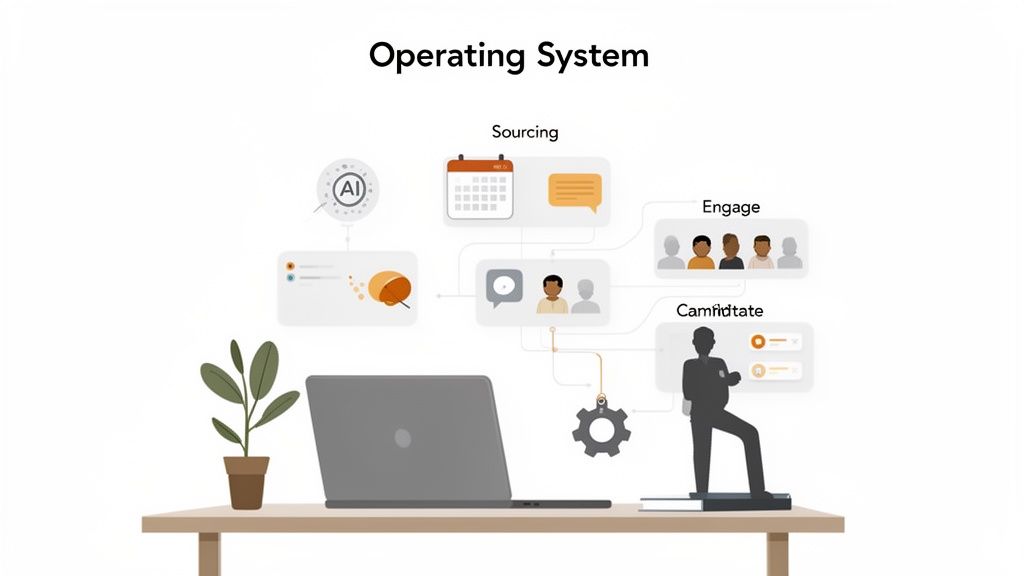
The biggest mistake recruiters make? Trying to jam office habits into a remote setup. It never works. Constant check-ins, a culture of back-to-back synchronous meetings, and clunky manual sourcing workflows were already inefficient at the office. At home, they become productivity black holes.
It's time for a better way. This is your playbook for turning your home setup into a high-performance engine for strategic talent acquisition.
Let's pause. See what’s happening here?
We're not just talking about surviving remote work; we're talking about thriving in it. The core benefit we keep returning to is this: a well-designed remote system gives you leverage. It allows you to achieve better results in less time. Keep that idea in mind as we dive into the "how."
Success in a remote role doesn't come from mimicking the office. It comes from leaning into the freedom of asynchronous work. The old way of thinking valued presence; the new model values output.
This means designing your day around focused work blocks, not a calendar packed with meetings. It’s about prioritizing clear, written communication over endless back-and-forth pings. It’s a fundamental change in how you measure your own performance and a key part of learning how to work from home effectively.
| Core Principle | Old Model (Office-Centric) | New Model (Remote-First OS) |
|---|---|---|
| Productivity Metric | Hours “online” or physically at a desk | Measurable outcomes (e.g., qualified pipeline, hires) |
| Communication Style | Synchronous (meetings, taps on the shoulder) | Asynchronous-first (docs, comments, concise messages) |
| Work Structure | Reactive; driven by interruptions and meeting schedules | Proactive; designed around deep-work blocks |
| Tooling Philosophy | Tools that replicate office collaboration | Tools that automate tasks and enable async work |
| Sourcing Method | Manual, time-intensive searches (endless scrolling) | Automated, AI-driven sourcing and engagement |
This table isn't just a list of differences—it's a roadmap. Adopting the "New Model" principles is the first and most critical step toward thriving as a remote recruiter.
For example, a traditional recruiter might grind away for hours manually sifting through LinkedIn profiles. In contrast, a recruiter with a remote-first OS uses AI-powered recruiting automation tools to source, verify, and engage candidates across dozens of platforms in minutes. The focus shifts from the hours spent clicking to the result delivered: a pipeline brimming with qualified talent. For more on this, check out our guide on how to streamline your recruitment process.
This is your blueprint for peak performance. We’ll show you exactly how to build this OS, from your physical desk to your digital tech stack, so you can stop reacting and start orchestrating your entire workflow.
Your physical environment is your silent partner in this game. When you’re figuring out how to work from home without losing your pipeline, a dedicated workspace isn't just a nice-to-have. It’s the very foundation of your remote setup. This is all about creating a zone that signals to your brain: it’s time to recruit.
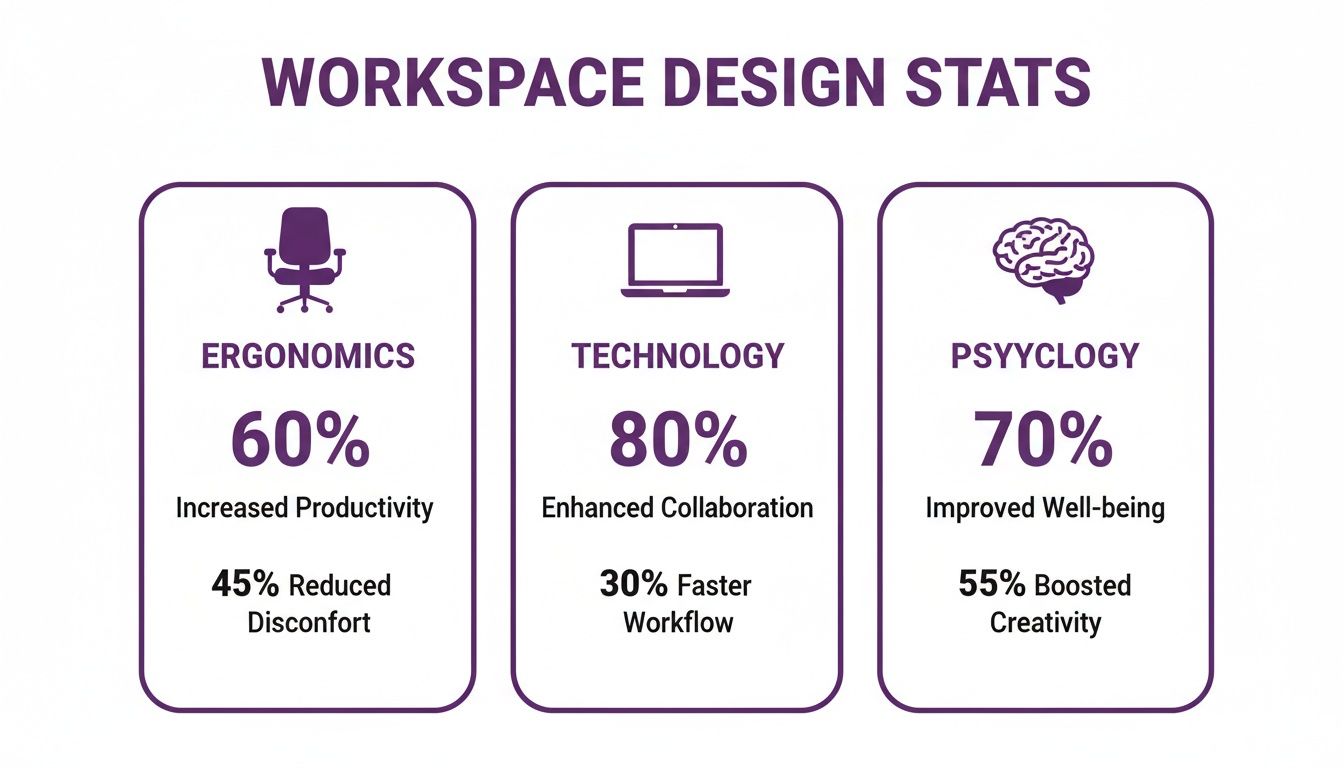
Forget the generic advice. We're going to break it down into what I call the "Recruiter's Trifecta" for a killer workspace: ergonomics for endurance, technology for speed, and psychology for focus.
Recruiting is a marathon. Your physical setup has to support you through long days of sourcing, screening, and outreach without leaving you drained.
PATTERN INTERRUPT
Hold on. Does this sound too simple to work?
That's the point. Most productivity "hacks" are overly complex. Simple ergonomic adjustments work because they address the core problem: physical discomfort drains mental energy. By creating a comfortable environment, you free up cognitive resources for the deep work that actually matters.
Your tech setup is where you get your biggest advantage. For recruiters, dual monitors are non-negotiable. You can have a candidate’s profile up on one screen while you’re crafting a personalized InMail on the other. It’s a massive efficiency boost.
A high-quality microphone and webcam are just as crucial. Crisp audio and clear video build instant credibility with both candidates and hiring managers, making every virtual conversation more impactful. Thinking of becoming a freelance recruiter? This is table stakes.
You might think you need a perfect, Instagram-worthy home office to crush your numbers. But that’s a common trap that leads to procrastination.
Myth: You need a perfect, dedicated home office to be productive.
Truth: Consistency beats perfection every single time. A simple, dedicated corner that you use only for work is far more powerful than a beautiful room where work and life constantly bleed together. Why that fails is simple: your brain craves clear boundaries.
The biggest challenge for remote recruiters isn't usually productivity; it's the lack of separation between your job and your life. You have to build boundaries, and it starts with your space and your daily rituals.
Your "commute" is now a mental transition. I call it the "60-second commute"—a dead-simple routine to get your head in the game for the day.
Your 60-Second Commute Checklist:
This little ritual creates a clear dividing line, helping you shift from "home mode" to "work mode" with purpose.
For any top-tier remote recruiter, the right tools are everything. Your tech stack isn't just a collection of apps—it's the engine that powers your entire day. The goal is a lean, powerful system that handles the grunt work, freeing you for what actually matters: building relationships.
But there’s a problem most tools ignore: fragmentation. You’ve got one tool for sourcing, another for contact info, a third for outreach, and a clunky ATS trying to hold it all together. All that constant tab-switching? It’s a silent productivity killer.
The old way of sourcing—cobbling together endless Boolean strings and scrolling through LinkedIn—is broken. It’s slow, manual, and locks you into one platform. A modern approach demands something better.
This is where AI-native platforms like Juicebox's PeopleGPT are changing the game. Instead of fighting with complex search syntax, you use natural language to find exactly who you’re looking for across 30+ sources.
For example: "Find software engineers in San Francisco who have worked at a YC-backed startup and have experience with TypeScript." The platform instantly scans over 800 million profiles and returns a clean, ranked list.
This single-prompt approach cuts out hours of tedious work on every single search.
You might think adopting a new AI platform means a massive time sink just to get started. Why that fails is that modern tools are built for speed. Juicebox customers, for instance, often go from signing up to their first qualified shortlist in under 60 seconds. The intuitive design means there's practically no learning curve, busting the myth that new tech has to be complicated. This is a core idea behind the top 10 AI recruiting tools for 2026.
The most effective remote recruiters are masters of consolidation. They find a core platform that handles:
Proof comes from our own data: Juicebox customers often cut their software spend by over 80% compared to a standard LinkedIn Recruiter subscription, all while closing roles 5x faster. The reason is simple: everything happens in one place.
The infrastructure of remote work has totally changed how we operate. A recent WebWork study analyzing over 480,000 hours of work found that remote employees spend 51% of their time in deep work tools and 34% in communication tools.
Even more telling? AI tools now account for 22% of all deep work time. This is a huge signal for recruiters: your tech stack has to support focused, high-leverage work, not create more noise. Your stack should empower deep work, not add to the distraction.
In a remote world, great communication doesn’t just happen. It’s designed. If you really want to nail how to work from home, you’ve got to flip the script from a synchronous-first to an asynchronous-first way of thinking. This isn’t about going dark; it’s about taking back your focus.
Asynchronous communication is all about creating space for deep work. Think clear, detailed written updates, project boards, or well-thought-out email threads. This one shift can kill off pointless meetings and give you back the uninterrupted time you need for real work—like digging for great candidates.
What's the bottom line? You're building a system of intentional communication rhythms.
First things first: you have to treat your calendar like a fortress. Time blocking is a game-changer here.
But this isn’t just about blocking off a generic "work time." Get granular.
Suddenly, your day goes from being a reactive mess to a proactive, focused workflow.
PATTERN INTERRUPT
Let me guess what you're thinking.
"My company culture would never allow this." That's a common objection. But you don't need permission to block your own calendar. Start small. Prove the model by delivering a high-quality candidate list sourced during one of your deep work blocks. Results change minds faster than arguments ever will.
One of the biggest fears for any remote recruiter is the hiring manager getting antsy. The answer is proactive, concise, written communication. Don’t wait for them to ask for an update.
Here’s a dead-simple template for a weekly status report:
Subject: Weekly Pipeline Update: [Role Title]
This takes five minutes but saves hours in meetings. You can even use a tool like Loom to record a quick video walkthrough of the pipeline for a more personal touch. It’s one of the most vital recruiting metrics to communicate clearly.
When you’re learning how to work from home, the biggest challenge isn't finding enough to do—it's knowing when to unplug. True productivity isn't about logging more hours. It's about delivering better outcomes in less time. This means you have to consciously manage your energy, not just your time.
One of the most effective ways to manage distractions is the Pomodoro Technique. It’s simple: you work in focused 25-minute intervals, separated by short 5-minute breaks. After four "Pomodoros," you take a longer break.
This technique forces you to break down big tasks (like sourcing for a tough role) into manageable chunks. It reframes your day from one long slog into a series of achievable wins. For more energy-aligned productivity tips for working from home, it’s worth exploring different ways to structure your focus blocks.
Without the physical act of leaving an office, your workday can bleed endlessly into your evening. A shutdown ritual is a non-negotiable routine that creates a clear psychological boundary between "work you" and "home you."
Here’s a simple framework:
This isn't just about finishing work; it's about reclaiming your personal time. That’s essential for long-term sustainability and avoiding the need for a drastic sabbatical leave to recover from burnout.
How can I prove my productivity when working remotely?
Focus on outcomes, not hours. Use a weekly update to share key metrics like outreach volume, response rates, and candidates moved to the next stage.
What's the key to a successful remote interview?
Ensure your tech is flawless and structure the conversation to test for remote work skills like self-motivation, communication style, and time management.
How do I avoid feeling isolated while working from home?
Be intentional. Schedule virtual coffee chats, participate actively in team channels on platforms like Zoom, and make time for non-work conversations to build rapport.
Is it possible to build strong hiring manager relationships remotely?
Absolutely. Proactive, data-driven communication is key. Regular, concise updates on pipeline progress and roadblocks build more trust than casual office chats.
Learning how to work from home isn't about perfectly copying your old office routine in a new location. It's about designing a smarter, more intentional way of working.
By building a reliable system for your workspace, tools, and communication, you unlock a level of focus and freedom that the traditional office could never offer. This allows you to deliver incredible results from anywhere, take back control of your schedule, and finally build a sustainable, high-performance career.
{{large_cta}}
Run your first search for free. Find and engage top talent across 800M+ profiles. Trusted by 5,000+ customers.



.png)