back to blog
How to Conduct Phone Interviews That Reveal True Talent concept

How to Conduct Phone Interviews That Reveal True Talent

Vicky Liu
7
Min

Published: Oct 09, 2025 • Updated: Jan 11, 2026

A phone interview shouldn't be a simple Q&A; it should be a strategic spotlight. The goal is to illuminate a candidate's core competencies, check for cultural alignment, and ensure you're only moving top-tier talent down the funnel.

TL;DR: How to Conduct a Strategic Phone Interview

  • Build Your Blueprint: Deconstruct the job description into non-negotiable hard and soft skills, then create a standardized scorecard to ensure objective, fair evaluations for every candidate.
  • Master Conversational Inquiry: Use a mix of behavioral and situational questions to move beyond the resume. Active listening and thoughtful follow-up questions are your most powerful tools.
  • Focus on Alignment First: According to a 2023 Bankrate survey, salary is the #1 factor for job seekers. Discussing compensation early respects everyone's time and prevents wasting cycles.

The Phone Interview as a Strategic Spotlight

The phone interview is your strategic spotlight. In a sea of resumes, it's the fastest way to shine a light on the most promising candidates and filter out those who just look good on paper. This isn't your typical guide; we treat the phone screen as the critical diagnostic it is. Unlike generic roundups, this post integrates real recruiter workflows and AI sourcing examples powered by PeopleGPT.

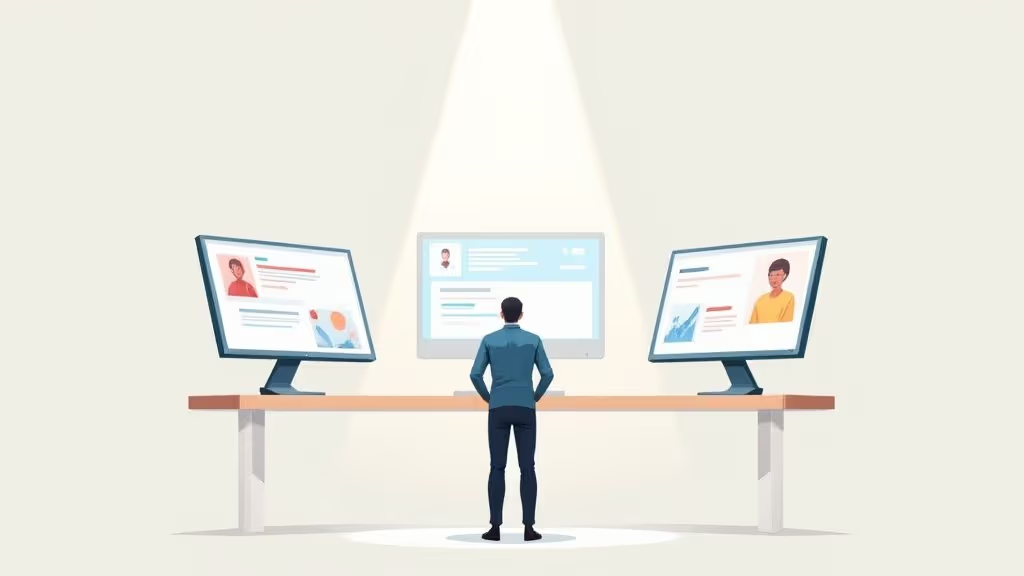
A spotlight shining on a resume, illustrating the concept of a strategic phone interview.

The modern hiring landscape has made this first touchpoint more important than ever. Around 62% of interviews are now conducted virtually, making phone screens a critical first step (Standout CV, 2023). A sharp phone interview process can slash the recruitment cycle, especially when you're dealing with an average of 118 applicants per role. A well-executed screen saves countless hours and seriously boosts the quality of your hires.

Getting this stage right is crucial. A well-executed phone screen does more than just verify resume details; it sets the tone for the entire hiring journey. It's your first real opportunity to assess communication skills, motivation, and professional presence. This doesn't just speed things up; it also dramatically improves the candidate experience and strengthens your employer brand from the very first call.

Building Your Interview Blueprint Before You Dial

A great phone interview is won long before you pick up the phone. The prep work is what turns a generic call into a strategic assessment. Think of it as creating a blueprint for a spotlight; it ensures every conversation is structured, fair, and actually illuminates what you need to know. Without a plan, interviews can easily devolve into unstructured chats that rely too much on gut feeling—which are often unreliable predictors of job performance.

Deconstruct the Job Description

The foundation of your blueprint is the job description. Start by breaking it down into two key categories. First, pull out the non-negotiable hard skills—the technical abilities a candidate must have. Next, pinpoint the essential soft skills, like collaboration or resilience. Listing these is critical for crafting questions that get to the heart of the matter. For a deeper look, check out our guide on how to write a job description that attracts the right people.

Standardize Your Evaluation Criteria

Once you know what you're looking for, you need a consistent way to measure it. This is where a simple, standardized evaluation scorecard becomes your best friend. A scorecard forces objectivity into the process and dramatically cuts down the risk of unconscious bias. A 2023 SHRM study found that 42% of recruiters admit unconscious bias plays a role in their decisions, which is exactly why a structured evaluation is non-negotiable.

A scorecard isn’t a rigid script; it’s a framework for consistency. It ensures you’re comparing candidates based on the same set of predetermined criteria, not just on who told the most compelling story.

Keep the scorecard simple. For each core competency (like "Problem-Solving" or "Communication"), create a basic rating scale, maybe 1 to 5. This simple quantitative approach makes it worlds easier to compare candidates side-by-side.

Phone Interview Preparation Checklist

PhaseAction ItemKey ObjectiveRole AnalysisDeconstruct the job descriptionIsolate non-negotiable hard skills and essential soft skills.EvaluationCreate a standardized scorecardDefine objective criteria and a rating scale (e.g., 1-5) for each skill.Question DesignDraft core behavioral & situational questionsDevelop questions that directly test the competencies on your scorecard.Candidate ResearchReview the candidate's LinkedIn profileFind talking points to build rapport and show genuine interest.LogisticsConfirm time, date, and dial-in detailsEnsure a smooth, professional start to the conversation.

Following this checklist—from JD breakdown to candidate research—makes the whole process more effective and much less stressful.

Infographic about how to conduct phone interviews

Mastering the Art of Conversational Inquiry

A great phone screen isn't a rigid Q&A session; it's a dynamic conversation. The goal is to make candidates comfortable enough to share real stories while you gather the insights needed to make a smart hiring decision. Think of it less like an interrogation and more like a collaborative discovery where your spotlight can reveal a candidate’s true capabilities, not just check boxes on a list.

Illustration of two speech bubbles connecting, symbolizing a conversation.

Moving Beyond the Resume with Behavioral Questions

Behavioral questions are your secret weapon for getting past a polished resume. They’re built on a simple idea: past performance is the best predictor of future behavior. Instead of asking what a candidate would do, you ask for specific examples of what they have done. For example, skip "Are you a good team player?" and ask, "Tell me about a time you disagreed with a teammate. How did you handle it and what was the outcome?" If you need more ideas, we've put together a list of powerful interview questions to ask.

Testing Future Actions with Situational Questions

While behavioral questions look back, situational questions look forward. You present a hypothetical scenario to see how a candidate thinks on their feet. For instance, you might ask a potential project manager, "Imagine you're leading a project and a key stakeholder suddenly wants to change the scope with only two weeks left. How would you handle that?" Their answer tells you everything about their approach to communication and managing expectations under pressure.

The Power of Active Listening and Follow-Up Probes

Asking great questions is only half the battle. You have to really listen to the answers. Active listening isn't just about hearing words; it's about picking up on tone, hesitation, and what isn't being said.

The most insightful moments in an interview often come from the follow-up question. A simple "Can you tell me more about that?" or "What was the most challenging part of that process for you?" can unlock a wealth of information.

Don't be afraid of a little silence. Pausing after a candidate finishes their answer often encourages them to add more, sometimes revealing their most candid thoughts. Mastering advanced online interview techniques will dramatically improve your ability to connect with candidates and get the information you need.

Dealing with Tech Glitches and Scheduling Hiccups

Even the best-laid plans can be derailed by a choppy connection or a scheduling mix-up. Your ability to handle these hurdles with grace becomes a huge part of the candidate experience. Think of yourself as building a sturdy bridge for the conversation to ensure a smooth journey.

Building that bridge starts with clear, proactive communication. Use a scheduling tool that shows mutual availability. Once a time is locked, send a detailed confirmation email: date, time (with time zone!), who is calling whom, and duration. Tech problems happen more often than you'd think. According to Zippia (2023), a whopping 78% of companies now use video for interviews, making tech readiness paramount.

Handling In-Call Disruptions Like a Pro

No matter how much you prepare, things can still go sideways. How you react says just as much about your company as their answer to a tough question.

  • Bad Audio: If the connection is terrible, don't power through. Say, "It sounds like we've got a bad connection. Is it okay if I hang up and call you right back?"
  • Background Noise: A quick acknowledgment puts everyone at ease. "Apologies for the noise, looks like a delivery just showed up." It makes the interaction feel more human.
  • A Nervous Candidate: Offer reassurance. A simple, "Take your time, there's no rush," can work wonders. Kicking off with light small talk helps them relax.

Your response to an unexpected problem is a direct reflection of your company's culture. Handling it with empathy and professionalism turns a potential negative into a positive experience.

Creating a Professional Audio Environment

Your audio setup is the bedrock of a good phone interview. Always use a headset with a microphone to cut down on echo and background noise. Please, avoid your computer's built-in mic or speakerphone. Next, find a quiet, private spot where you won't be interrupted. For more tips, our guide on virtual meeting etiquette has great advice for setting up a pro-level remote space.

Translating Conversation into a Confident Decision

Once you hang up, the real work begins. Your job is to turn those notes into a solid, data-backed hiring decision. This is where you move past "gut feeling" and connect the dots. This step is the bridge from conversation to conviction, ensuring only candidates with the highest probability of success move forward.

From Notes to Objective Evaluation

Jump on your scorecard immediately after the call while details are fresh. Go through it competency by competency and jot down specific examples from the call that justify your rating.

  • Problem-Solving: Did they use the STAR method to walk you through a challenge?
  • Collaboration: When they talked about a team project, was it all "we" or "I"?
  • Technical Acumen: Could they break down a complex idea into simple terms?

This habit of anchoring ratings to real evidence turns a subjective opinion into a defensible analysis.

Using AI as Your Analytical Co-Pilot

Modern AI recruiting tools can give your judgment a boost. AI doesn’t replace your intuition; it sharpens it with data. An AI tool like PeopleGPT can scan a call transcript to highlight key skills, check alignment with the job description, and surface potential red flags you might have missed.

PeopleGPT Workflow: Post-Interview Analysis

  • Prompt → "Analyze the transcript from my phone interview with Jane Doe for the Senior Product Manager role. Based on our job description, highlight all mentions of experience with Agile methodologies, stakeholder management, and product roadmap development. Flag any answers that seem evasive or lack specific examples."
  • Output → Within seconds, PeopleGPT gives you a color-coded transcript. It highlights every relevant keyword, summarizes Jane's experience in those three key areas, and flags two instances where she gave vague answers about handling team conflict.
  • Impact → You just saved yourself 45 minutes of manually combing through notes. More importantly, you now have a data-rich summary to share with the hiring manager, leading to a much more focused and productive debrief. This kind of structured, AI-assisted approach cuts down on bias and helps you make decisions faster.

By blending your structured evaluation with AI-powered analysis, you create a powerful, repeatable system. It's how you ensure you're advancing candidates who not only interview well but who have the concrete skills to kill it in the role. Need more ideas on what to look for? Check out our article on reference check questions for inspiration.

Phone Interview FAQs

Recruiters are always looking to refine their phone interview game. How long is too long? What's the best way to handle a candidate who gives one-word answers? Let’s get into some clear, practical answers to the most common challenges.

How Long Should a Phone Interview Last?

The sweet spot is 30 minutes. This gives you enough time to build rapport, dig into important questions, and leave room for the candidate to ask their own. Anything shorter can feel like an interrogation, while dragging it out is overkill for a first screen. The goal here is efficiency—gather enough intel to make a confident yes/no call on moving them to the next round.

What Is the Best Way to Take Notes During the Call?

Taking great notes is non-negotiable, but not if it means you stop listening. The sound of frantic keyboard clacking is a dead giveaway that you're not fully present. Use a hybrid approach: keep a doc open but stick to shorthand or bullet points to capture standout phrases and quantifiable wins.

Your notes are there to jog your memory, not replace your engagement. Jot down just enough to help you fill out the scorecard accurately right after you hang up.

For a better experience, use a transcription tool (with permission) to free yourself up to focus entirely on the conversation. It’s a perfect example of how smart AI sourcing tools can make your job easier.

How Do You Handle a Difficult or Unresponsive Candidate?

When a conversation stalls, it's your job to try and jump-start it.

  • Pivot to an open-ended story: Ask, "Could you walk me through a project you were especially proud of?" This forces a narrative instead of a simple "yes" or "no."
  • Rephrase your question: Try saying, "Let me ask that a different way. What I'm really trying to get at is how you approach..."
  • Gently call it out: A soft reset can work wonders. "It sounds like you might be in a noisy spot. Is this still a good time for you?"
    If you're still met with silence, that's data in itself. It might just be a red flag for a role that needs strong communication skills.

Should You Discuss Salary During the First Phone Screen?

Yes. 100% yes. Bringing up salary expectations early is one of the most respectful and efficient things you can do. The 2023 Bankrate survey confirmed that pay is the #1 factor for job seekers. Why wait three rounds to find out you’re miles apart? Keep it simple: "Just to make sure we're on the same page, would you be open to sharing the salary range you're targeting for your next role?" This one question saves everyone a massive amount of time and aligns with our guide on recruiter salary best practices.

Find Your Next Hire Faster

By treating the phone interview as a strategic spotlight, you move beyond simple screening and into true talent assessment. You save time, reduce bias, and ensure your hiring managers only meet with highly qualified, well-aligned candidates. This focused approach is the first step toward building a world-class team.

Ready to stop sorting through endless applications and start talking to the right people? See PeopleGPT in action—book a free demo today.

SIGN UP FOR JUICEBOX (IT’S FREE!)
Who are you looking for?
A stylized black and white logo featuring a minimalist design with geometric shapes.
Thank you! Your submission has been received!
Oops! Something went wrong while submitting the form.
Who are you looking for?
A stylized black and white logo featuring a minimalist design with geometric shapes.
Thank you! Your submission has been received!
Oops! Something went wrong while submitting the form.