.svg)
SIGN UP FOR JUICEBOX (IT’S FREE!)

Who are you looking for?
Thank you! Your submission has been received!
Oops! Something went wrong while submitting the form.

.png)
Choosing an ATS defines your hiring experience, from how you discover candidates to how you manage, sequence, and schedule them.
While many companies use Gem, a robust CRM that has strong pipeline analytics and sequences features, there are other places where the platform falls short.
For teams seeking Gem alternatives, we’ve put together a list of seven of the best options on the market.
While Gem offers comprehensive engagement and analytics for larger teams, it’s not the right fit for all recruiters due to the following drawbacks.
We’ve ranked this list of the best Gem alternatives based on the most common areas Gem falls short: scalable pricing, ease of use, and access to AI features.
Best for: Plain-language sourcing and automated outreach
What it does: Juicebox is a sourcing engine with CRM capabilities, performing two key recruiting functions without overloading the user with the breadth of an all-in-one bundle. Juicebox’s plain language search scans over 800 million profiles from over 30 sources, including GitHub and research publications, to find better fits for your hiring needs.
Juicebox has autonomous AI agents that recruiters can brief and direct to search in plain language, with independent AI governance (SOC 2 Type II, ISO 42001-ready, with a public Warden AI bias audit).
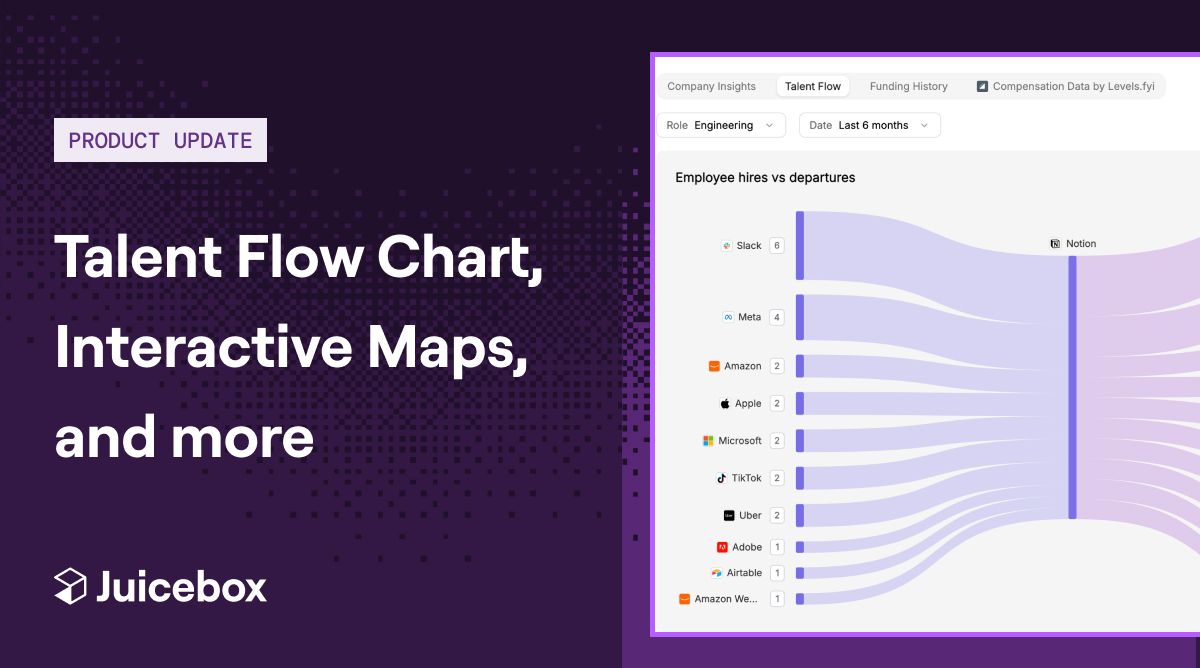
Juicebox also helps recruiters keep candidates engaged with personalized outreach cadences that can be automated and sent to verified email addresses. Finally, Juicebox offers a comprehensive intelligence layer, complete with compensation data and talent-flow mapping.
Juicebox layers onto existing ATSs with no migration, bringing an intelligence layer to sourcing that ATS-first tools don’t offer.
Limitations: Juicebox is a sourcing layer with a CRM, not an ATS.
Pricing: Paid plans are available, with free search to start.
Best for: Technical and diversity sourcing at enterprise scale.
What it does: SeekOut’s strengths are deep technical talent signals, including GitHub, diversity filters, and talent-market intelligence. SeekOut offers SeekOut Recruit (a software your team operates) and a fully autonomous option run through its Spot, a service staffed by SeekOut’s recruiters and backed by their AI.
Limitations: SeekOut is expensive, and its fully autonomous option is not one your team operates but is instead delivered through Spot, a human service.
Pricing: SeekOut offers both a self-serve plan for individual recruiters and custom-quoted team pricing.
Best for: Contact-rich outbound sourcing at volume.
What it does: hireEZ aggregates candidate data from open-web sources, syncing results with users’ ATSs. Also, hireEZ’s AI sourcing assistant can save recruiters time spent searching through platforms.
Limitations: hireEZ is a sourcing tool, not a full CRM that can replace Gem’s sequencing and pipeline management. Reviewers also flag issues with contact-data accuracy and the complex user interface.
Pricing: hireEZ doesn’t publish pricing, and all plans are quote-based, priced per seat annually.
Best for: Teams wanting an all-in-one ATS, CRM, and sourcing platform.
What it does: Loxo is a consolidated platform containing an ATS and a recruiting CRM, as well as sourcing and outreach functions. For agencies, Loxo offers a hiring manager portal that offers candidate status reports and pipeline progress. Also available is a sales CRM for businesses that are also using Loxo for business development and deal tracking.
Limitations: Contact data accuracy could be improved, and migration of existing data can be complex, as this tool replaces several in a stack.
Pricing: Loxo pricing includes a free tier, per-seat plans, and custom quotes.
Best for: Data-driven in-house teams wanting a modern ATS with strong analytics.
What it does: Ashby combines an ATS, sourcing CRM, scheduling, and data analytics, and is best for larger companies (over 200 employees) with structured, high-volume hiring needs. Ashby’s most significant differentiator is the depth of its analytics, which include KPIs like pipeline velocity, pass-through rates, time-to-fill, and source quality.
Limitations: Ashby is expensive, with a steep learning curve. Sourcing is not the tool’s core focus, and these features also come at a cost.
Pricing: Pricing is primarily quote-based and customized, meaning that plans range greatly depending on the size of the organization and feature access.
Best for: Agencies and executive search scaling multi-channel outreach.
What it does: SourceWhale is an engagement platform running candidate and business development outreach across email, LinkedIn, and calls. SourceWhale integrates with users’ existing ATSs and CRMs, syncing outreach activity back to these platforms before enriching data with diversity insights and other analytics.
Limitations: SourceWhale is an outreach layer, not a sourcing engine or ATS. Sourcing tools with built-in outreach (like Juicebox) can be a better fit for teams seeking a Gem alternative, since they also offer sequencing. Users also report a steep learning curve.
Pricing: All pricing plans are custom.
Best for: Large global enterprises wanting a full talent-lifecycle platform.
What it does: Beamery is an enterprise talent-lifecycle platform that includes a CRM, recruiting, marketing, internal mobility, and candidate nurture functions. Data is highly regulated, with strong data retention controls and permissioning, which is key for specialized industries.
Limitations: Beamery is expensive, with long implementations and a steep learning curve. For teams that primarily need to source or engage candidates, Beamery is likely too robust.
Pricing: All pricing plans are custom.
If you’re thinking about replacing Gem, you likely need a platform that offers something Gem doesn’t, so start by identifying what you need your new tool to do: Are you hoping to discover new candidates from one centralized platform? Have you been struggling with sync lag and data inconsistency problems or disorganized information? Do you need outreach to scale beyond what your team offers? Are you managing an enterprise recruiting lifecycle that requires a more comprehensive platform?
From there, ask yourself these key questions to see if it’s the best fit for you:
If you’re looking for a Gem alternative because you want a lightweight tool that will improve your sourcing layer, Juicebox is purpose-built for this work.
Juicebox is a focused sourcing platform with a CRM and automated outreach, combining the power of plain-language search across 800 million profiles with the ability to engage candidates and track recruiting activity in a single place.
Juicebox layers onto your existing ATS without a time-consuming migration, and with a user-friendly UI, teams can start gaining value on day one—no extensive implementation or training required.
Try Juicebox free today.
Run your first search for free. Find and engage top talent across 800M+ profiles. Trusted by 5,000+ customers.