.svg)
SIGN UP FOR JUICEBOX (IT’S FREE!)

Who are you looking for?
Thank you! Your submission has been received!
Oops! Something went wrong while submitting the form.

In 2026, the war for talent is won long before the first interview. A strong employer brand is no longer a 'nice-to-have'; it's the core engine for attracting, hiring, and retaining the specialized talent that defines your company's trajectory. Yet, most companies treat it as a fluffy marketing exercise, posting generic culture photos and vague mission statements. The predictable result? A wasted budget and losing top candidates to competitors who get it right. This isn't just another list of generic tips; it's a playbook of actionable employer branding best practices designed to build a talent magnet.
This guide moves beyond surface-level tactics to establish a systematic approach that consistently attracts A-players. Our perspective is forged from helping over 2,500 high-growth tech companies, including unicorns like Ramp and Perplexity, hire up to 5x faster by focusing on authentic storytelling and a candidate-first process. Unlike generic advice, we focus on operational frameworks that turn your brand into a measurable, high-ROI recruiting channel.
If you’re tired of the endless cycle of sourcing passive candidates only to lose them to a stronger offer, it's time to build an employer brand that gives you a genuine, sustainable advantage. This article provides the specific steps to turn your reputation into your most powerful recruiting tool.
TL;DR: 10 Employer Branding Best Practices for 2026
An Employer Value Proposition (EVP) is the cornerstone of your strategy. It's the unique set of benefits an employee receives in return for their skills and experience. A strong EVP clearly answers the question, “Why should a top candidate join and stay at our company?” It goes far beyond compensation, articulating your culture, mission, and opportunities for growth.
But how do you ensure your EVP isn't just corporate jargon?

For tech companies, your EVP must highlight what makes you different. For example, GitLab champions a remote-first culture and radical transparency, attracting talent who value autonomy. According to their public handbook, they operate with a "bias for action," a core tenet that shapes their EVP. By defining what makes you special, you create a magnet for the right kind of talent.
Crafting an EVP isn't a top-down exercise; it must be rooted in reality. Authenticity is non-negotiable.
By grounding your EVP in both internal truths and external market data, you develop a powerful narrative. Exploring diverse employer branding examples can provide further inspiration.
Your employees are your most credible brand ambassadors. An advocacy program empowers them to share authentic experiences, while a structured referral program turns their networks into a high-quality talent pipeline. This is one of the most effective employer branding best practices for generating high-intent applicants.
You might think that formal programs are too complex for a growing company. But the truth is, informal advocacy is already happening—you're just not harnessing it.
For tech startups, this is particularly potent. When an engineer at a company like Replit shares a technical blog post, it reaches a highly relevant audience with a genuine message. A LinkedIn study found that referred candidates are 4x more likely to get hired. This strategy taps into inherent trust to build a powerful recruiting engine.
Creating a successful program requires making it easy, rewarding, and consistent. The goal is to operationalize word-of-mouth marketing for talent.
Your careers page is your employer brand’s digital storefront. It's often the first place a candidate goes to learn about your culture and open roles. An effective careers page tells a compelling story, showcases your team, and gives candidates a clear reason to apply.
For example, Stripe’s careers page effectively communicates its focus on engineering rigor and solving complex global payment problems. A crucial component of this is to develop a compelling career website that attracts and informs potential candidates.
But there's a problem most careers pages ignore: they talk at candidates, not to them. They list requirements instead of showing possibilities.
Optimizing your career site is a key employer branding best practice that turns passive interest into active applications.
Your recruiting process is a candidate's first tangible interaction with your culture. A transparent, candidate-first hiring process respects applicants' time, provides clear communication, and delivers timely feedback. Slow, opaque workflows signal internal chaos, damaging your brand and causing you to lose top candidates.
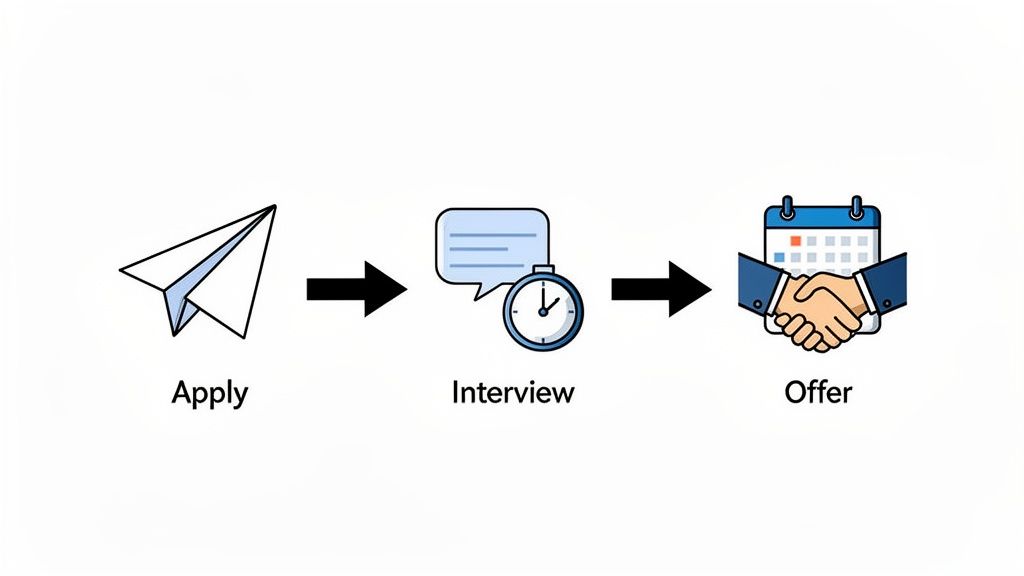
Most companies believe their hiring process is candidate-friendly. The data says otherwise. A CareerBuilder survey found that 81% of candidates say continuous communication would greatly improve their overall experience.
Stripe, for instance, aims for tight 5-7 day hiring cycles for senior roles, communicating a culture of efficiency and respect for talent. A positive interview experience, even for rejected candidates, can turn them into brand advocates.
Creating a hiring experience that strengthens your employer brand requires operational discipline.
A genuine commitment to Diversity, Equity, and Inclusion (DEI) is a critical component of your employer brand. Candidates actively seek workplaces where they feel they belong. Simply stating you value diversity isn't enough; you must demonstrate it through transparent actions and measurable goals. This is a powerful way to attract a wider, more innovative pool of talent.

Companies that lead in this area are transparent. Salesforce, for example, not only publishes its diversity metrics but has also invested millions in pay equity adjustments. This public commitment signals that DEI is an integrated business priority, not just an HR initiative.
Integrating DEI into your brand requires a multi-faceted approach. Authenticity stems from action, not just words.
An employer branding strategy without metrics is just a collection of hopeful tactics. To ensure your efforts deliver a tangible ROI, you must define clear KPIs, track performance, and iterate based on data. This data-driven approach transforms employer branding from a cost center into a strategic growth driver.
For fast-growing companies, measuring these outcomes is non-negotiable. Google famously tracks recruiter productivity and cost-per-hire by sourcing channel to optimize its budget. By establishing a feedback loop, you can double down on what works and cut what doesn't, systematically improving your hiring engine over time.
Adopting a measurement mindset requires setting baselines, leveraging technology, and committing to a regular review cadence.
What is the single most important employer branding practice?
Defining an authentic Employer Value Proposition (EVP) is the most critical step. It serves as the foundation for all other branding activities.
How can a small startup compete with large companies?
Focus on what makes you unique: culture, mission, and direct impact. Leverage employee advocacy and transparent processes to build trust and attract talent.
How do you measure the ROI of employer branding?
Track metrics like cost-per-hire, time-to-fill, offer acceptance rates, and new hire retention. Compare these against your pre-initiative baselines.
Building a world-class employer brand isn't about isolated tactics; it's about creating a self-reinforcing system where your reputation becomes your most powerful recruiting tool. By implementing these employer branding best practices, you shift from chasing talent to attracting it.
This unlocks a profound competitive advantage: your brand does the heavy lifting, warming up cold outreach and drawing in top-tier candidates who are already aligned with your mission. You stop competing solely on compensation and start winning on culture, opportunity, and impact.
{{large_cta}}
Run your first search for free. Find and engage top talent across 800M+ profiles. Trusted by 5,000+ customers.
.png)