.svg)
SIGN UP FOR JUICEBOX (IT’S FREE!)

Who are you looking for?
Thank you! Your submission has been received!
Oops! Something went wrong while submitting the form.

True diversity in recruiting isn't just about hitting a metric; it's about fundamentally recalibrating your company’s talent compass to find untapped potential.
For experienced recruiters, this compass often feels broken, pointing back to the same familiar, homogenous talent pools no matter how you try to find a new direction. This is a strategic imperative to build a more innovative and resilient team. The solution lies in using AI-powered intelligence to shift your sourcing from a frustrating, quota-driven chore into a strategic advantage that builds a measurable, high-quality DEI pipeline.
According to a 2024 SelectSoftware Reviews report, while 78% of employees say a diverse workplace is a key factor when considering a job, only 22% of companies are actively building DEI into their hiring. With a platform like PeopleGPT, you can find the right path.
We get it. You're already under immense pressure to deliver a diverse slate of candidates in a market where everyone is fighting over the same small pond of talent. You're expected to find needles in haystacks that have already been picked over a dozen times.
But this guide offers a different path forward, hinting at a counterintuitive solution that can increase your qualified diverse candidate pipeline by 3x.

If you're a recruiter, you’ve probably felt it: the immense pressure to improve diversity, followed by the sinking feeling that you’re stuck in a frustrating cycle. No matter how hard you try to find a new direction, your talent compass seems broken, constantly pointing back to the same saturated, homogenous talent pools. This isn't a personal failure. It’s a systemic one, built on outdated methods and flawed assumptions that have been baked into recruiting for decades. The most common excuse is the “pipeline problem”—the idea that there’s a fundamental lack of qualified, diverse talent. But there's a problem with that logic. The issue isn't a lack of talent; it's the tools and techniques we use to find them.
A key issue is the echo chamber of familiar networks. Relying on an immediate professional network or alumni circles creates a powerful echo chamber, as people tend to know others who are demographically and professionally similar to them. Your compass isn't broken; it's just calibrated to a tiny, well-mapped portion of the talent landscape. You're completely ignoring vast, undiscovered territories teeming with qualified professionals. It's a comfortable strategy, but it's also a self-defeating one if you want to build a truly diverse team. This is a common challenge we see when exploring the best sourcing tools for recruiters.
Unconscious bias also has a sneaky way of embedding itself into search logic. Requiring degrees from specific "top-tier" universities or experience at a handful of well-known companies disproportionately filters out exceptional candidates from underrepresented backgrounds. A now-famous 2004 study by MIT and the University of Chicago proved this perfectly. Researchers sent out identical resumes, changing only the names to be more "White-sounding" or "Black-sounding." The "White-sounding" names received 50% more callbacks. These biases get amplified by automation, which is why strategically navigating ATS systems is so critical for candidates. The key benefit, which we'll revisit, is that AI can help overcome this when applied correctly.
The belief that AI tools are inherently more biased than human recruiters is becoming outdated. While early AI models replicated human biases, modern talent intelligence platforms are specifically engineered to counteract them. The opposite is now often true. By focusing on verified skills, career trajectory, and project contributions—rather than demographic proxies—these systems can surface a more equitable and qualified slate of candidates. The mechanism behind this is the AI's ability to analyze millions of data points without the cognitive shortcuts humans rely on.
Finally, passive sourcing channels like job boards yield predictable, and often disappointing, results. The candidates who see these postings are usually the same active job-seekers flooding every other company’s pipeline.
Here's the deal:
To achieve genuine diversity in recruiting, you have to move beyond these crowded channels. Underrepresented talent isn't always actively looking for a new role on mainstream platforms. They might be leading niche online communities, contributing to open-source projects, or speaking at specialized conferences. Relying solely on inbound applications is like fishing in a stocked pond and wondering why you keep catching the same type of fish. Your talent compass needs a major upgrade to detect signals from these less-traveled paths.

We've established why old-school hiring methods keep failing to move the needle on diversity in recruiting. They’re like a broken compass, always pointing back to the same familiar, oversaturated talent pools. Now, let's explore how you can recalibrate that compass with AI to discover entire continents of incredible, diverse talent that have been invisible until now. Think of AI as a powerful navigation system, not a replacement for your own expertise. It can process millions of data points across dozens of platforms, spotting career paths and skill clusters that a human sourcer would almost certainly miss. This is how you break free from the limits of your own network and the biases hardwired into traditional search, which is a core concept in the best AI recruiting tools.
An AI talent intelligence platform is designed to hunt for signals that truly matter—evidence of skill, not just shiny brand names on a resume. This could be anything from contributions to open-source projects and papers published in niche journals to speaking gigs at industry events. These are the digital breadcrumbs left by top performers who might not have a cookie-cutter career path but have precisely the skills you're desperate to find. By focusing on this kind of verifiable proof, AI automatically widens your search aperture, helping you discover the Senior Software Engineer who is a top contributor on GitHub but went to a state school. A key part of this is reducing hiring bias with AI tools and an evidence-based approach.
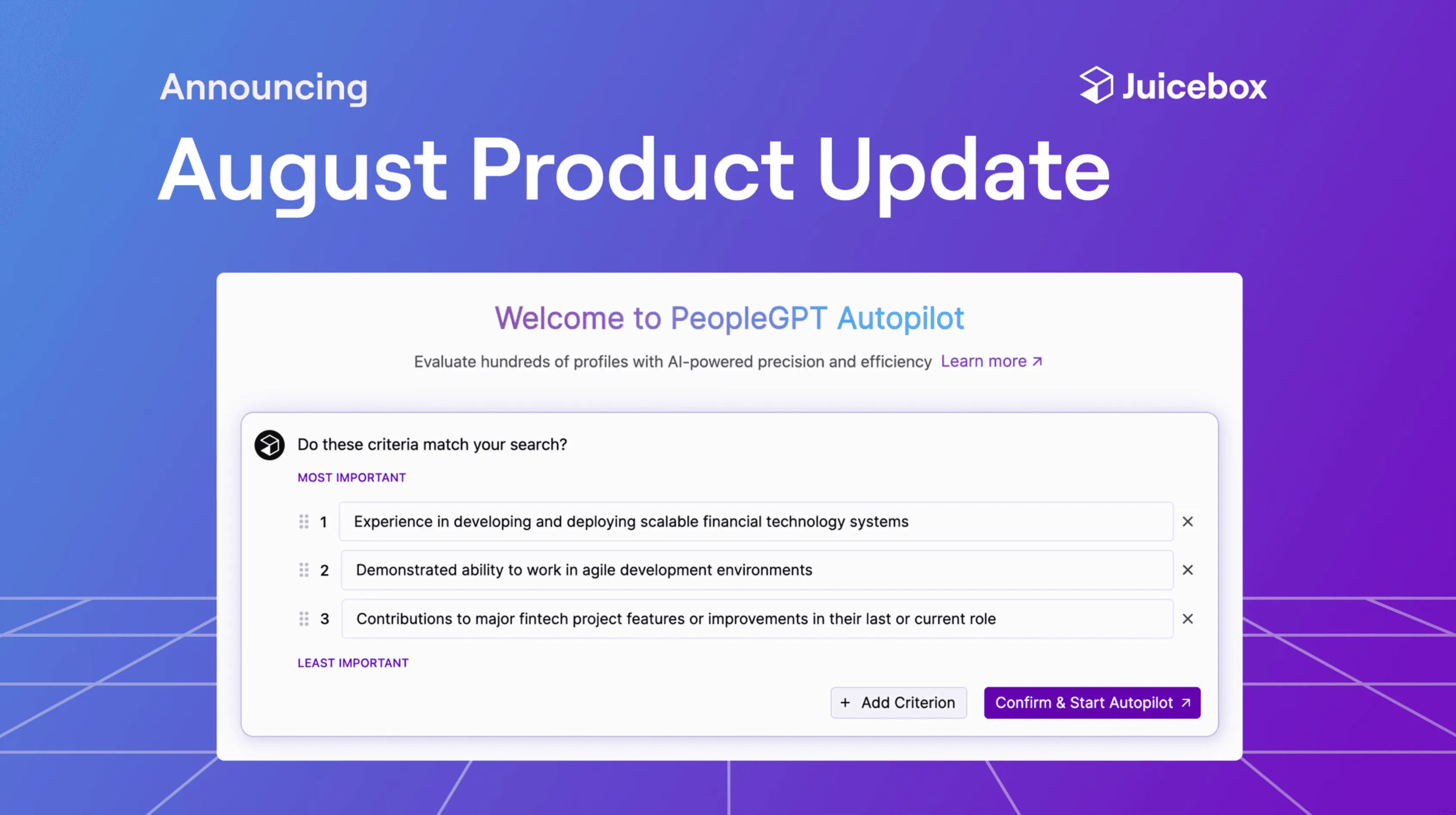
This skills-first method naturally boosts diversity by putting every candidate on a more level playing field. But there's more. The theory is great, but seeing it in action is where things get really exciting. Modern tools like PeopleGPT let recruiters use plain English to run incredibly specific, diversity-focused searches that would be a nightmare to build with Boolean strings. This is a core concept for anyone learning how to use AI in recruitment effectively.
Here’s what that looks like.
PeopleGPT Workflow: Finding Overlooked Female Engineers
Prompt: Female software engineers in the US who have contributed to open-source machine learning projects on GitHub but did not attend an Ivy League university.
Output:
Impact:
This workflow shows how AI doesn't just find people; it finds the right people by homing in on specific, skill-based criteria that blow right past traditional resume filters. It recalibrates your talent compass to point directly at qualified, diverse professionals your competitors are completely missing. The result is a direct, measurable upgrade to both the diversity and the quality of your candidate pipeline.
Sourcing a diverse pipeline is a huge win, but it’s only half the journey. Too often, talented candidates from underrepresented backgrounds get into the funnel only to drop off because the process itself isn't truly inclusive. Recalibrating your talent compass isn't just about finding new people; it's about making sure the path from application to offer is fair for everyone who walks it. This means you have to bake the principles of diversity into every single stage of the hiring lifecycle, not just sourcing. The only way to spot and eliminate the hidden biases that cause your pipeline to leak its most valuable talent is with a data-driven approach, similar to the discipline required for a 9-80 work schedule.
An inclusive process demands a hard look at every touchpoint. It starts with outreach that uses neutral language and continues with structured interviews designed to assess skills, not "cultural fit." Without a structured, data-informed process, even the best sourcing efforts will fall flat. This is where so many well-intentioned diversity programs fail—not from a lack of talent, but from a lack of an inclusive framework to support that talent. Getting a handle on what is people analytics provides the foundation you need to track these crucial metrics and is a responsibility often held by a Chief People Officer.
You might think that focusing this heavily on process is overkill. Here's why that's wrong. A 2020 McKinsey report found that companies in the top quartile for ethnic and cultural diversity were 36% more likely to be more profitable than their peers. Salesforce put this into practice with targeted mentorship and recruitment initiatives, leading to a 24% increase in employee satisfaction among underrepresented groups by 2024. They sourced 20% of their Product Marketing hires in just 6 months using a diversity-focused program.
The difference between a legacy approach and a modern, inclusive one becomes crystal clear when you put them side-by-side. Traditional methods often lean on gut feelings and unstructured feedback, which are breeding grounds for unconscious bias.
Here’s the deal.
See how the methodologies stack up:
| Stage | Traditional Method | AI-Enhanced Method | Impact on Diversity |
| Outreach | Generic, one-size-fits-all email templates. | Personalized outreach based on skills and projects. | Higher engagement from candidates who feel seen for their work. |
| Screening | Manual resume review based on pedigree signals. | Blind screening focused on skills and achievements. | Reduces affinity bias and opens the door for candidates with non-traditional paths. |
| Interviews | Unstructured conversations, “gut feeling” decisions. | Structured interviews with standardized scoring rubrics. | Ensures all candidates are evaluated on the same objective criteria. |
| Analytics | Manual, often incomplete tracking of diversity metrics. | Real-time dashboards showing pass-through rates by demographic. | Pinpoints exact stages where diverse candidates are dropping off. |
By systematically applying data and structure to each step, you transform the hiring process from a subjective maze into a clear, fair path for everyone. This ensures your diversity recruiting efforts actually translate into hires.
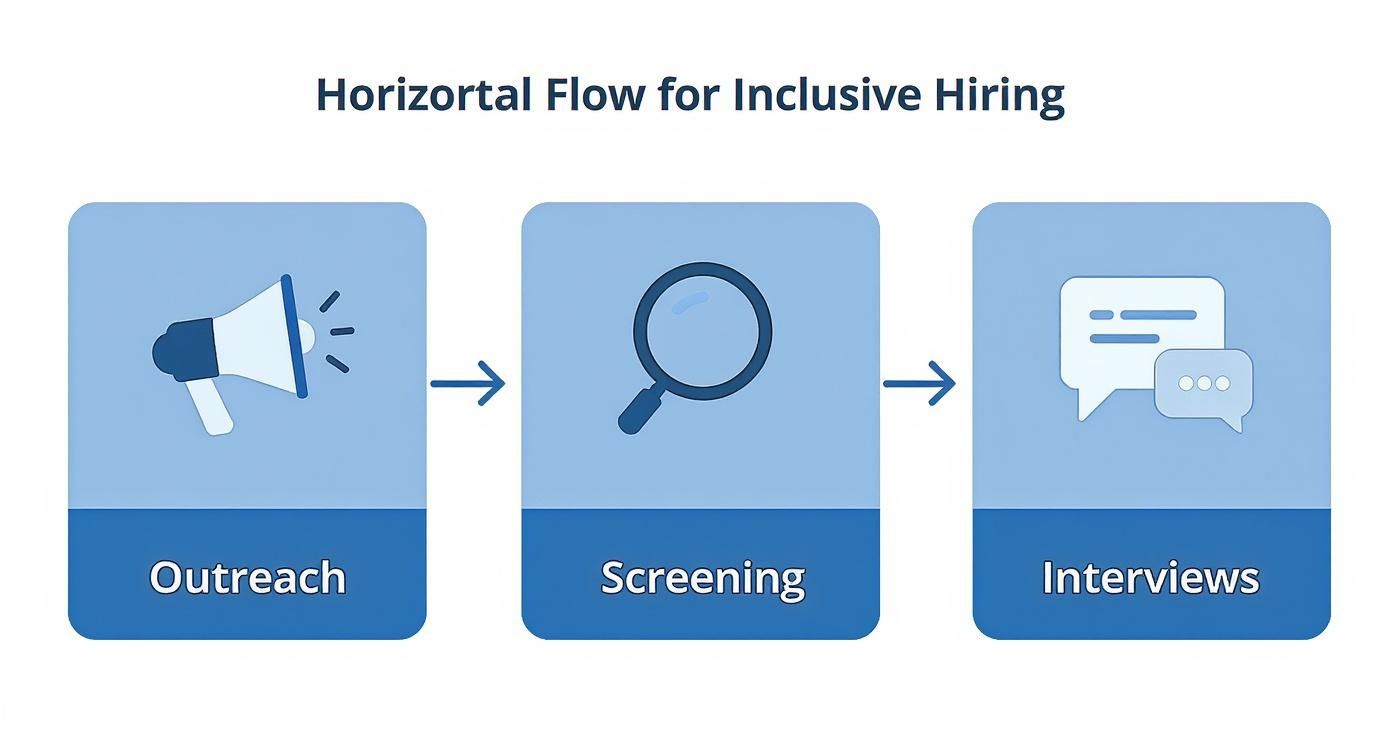
Building a diverse pipeline is a huge first step, but it doesn't automatically lead to a more inclusive team. Without the right way to measure your efforts, your talent compass might feel like it’s pointing toward true north when you’re actually just wandering in a slightly different direction. You can't improve what you don't measure. When it comes to diversity in recruiting, just counting demographics at the finish line is like trying to captain a ship by only looking at the destination port. Success is found in the journey, which means you need to look past high-level numbers and track how underrepresented candidates move through every stage of your hiring funnel. It’s about making sure every candidate gets a fair shot from application to offer.
To get a clear picture of what's really happening, you need to track a few key recruiting metrics. Think of these as checkpoints that help you spot friction and potential biases that cause your pipeline to leak its most valuable talent. These include pass-through rates by demographic, pipeline diversity by stage, and offer acceptance rates by demographic. If you see a major drop-off for a particular group between the phone screen and the hiring manager interview, that’s a huge red flag waving right in your face. If you start with a sourcing pool that’s 50% women but your final interview slate is only 10% women, you know you have a serious problem somewhere in the middle.
Simply tracking these numbers isn't enough. The real work starts when you interpret the data and use it to make real changes. Digging into these metrics also helps you stay compliant and avoid legal headaches related to adverse impact analysis. The data also provides a crucial reality check. The U.S. workforce is about 76.5% White and 12.8% African American; yet half of Black workers feel their race has held back their career advancement (Gallup, 2023). This context is exactly why measurement is so critical—companies that focus on ethnic diversity are 36% more likely to outperform their competitors. The key is to use this data not to point fingers, but as a diagnostic tool. This data-driven approach turns your talent compass into a precision instrument.
The implication for your own career is massive. Recruiters who master the art and science of data-driven, inclusive hiring are making themselves indispensable. They can prove the direct impact of diversity on every key business metric, from engagement to revenue. The future of recruiting belongs to those who can build teams that reflect the real world. The ultimate strategic advantage is using AI to overcome human bias, and you are the one who delivers it.
Sign up for PeopleGPT—it's free
Tie your efforts directly to business outcomes. Point to research showing a clear link between diversity and profitability, such as McKinsey’s report that ethnically diverse companies are 36% more likely to outperform peers. Frame it as a competitive advantage.
The first step is a diversity audit of your hiring funnel. Track pass-through rates for different demographic groups at every stage—from application to offer. This data will pinpoint exactly where underrepresented candidates are dropping off so you know what to fix.
Intentionally look beyond your usual channels. Engage with niche communities where diverse talent gathers, such as professional organizations for underrepresented groups, specialized online forums, open-source projects, or partnerships with HBCUs and HSIs.
Modern talent intelligence platforms are built to counteract bias. Instead of relying on subjective proxies like university prestige, they focus on objective, verifiable criteria like skills and project contributions, leveling the playing field for all candidates.
{{large_cta}}
Run your first search for free. Find and engage top talent across 800M+ profiles. Trusted by 5,000+ customers.