.svg)
SIGN UP FOR JUICEBOX (IT’S FREE!)

Who are you looking for?
Thank you! Your submission has been received!
Oops! Something went wrong while submitting the form.

Last Updated: October 26, 2023
In today's competitive talent market, the best candidates don't just apply for jobs; they choose experiences. A compelling candidate journey is no longer a “nice-to-have” but a critical recruiting advantage. The hiring process is a bridge you build to connect with top talent; if any part is weak, the best people won't cross. This guide provides the blueprint for building that bridge.
Unlike generic advice, this post integrates real recruiter workflows and AI sourcing examples powered by PeopleGPT, showing you how to build a talent pipeline that's not just full, but truly engaged. We'll explore ten powerful candidate engagement strategies designed to transform your hiring process from a simple transaction into a lasting relationship.
One of the most impactful candidate engagement strategies is to move beyond generic, templated messages and embrace personalization at every touchpoint. This approach treats candidates as unique individuals, not just applicants in a queue. It involves tailoring communication based on their professional background and interactions with your company so far. The goal is to create a contextual, human-centric dialogue that makes candidates feel seen and valued from their first interaction.

In a competitive talent market, the candidate experience is a significant differentiator. According to a 2022 survey by Greenhouse, 75% of job seekers reported they were never ghosted by a company they rated as having an "excellent" candidate experience. Personalized communication is a key driver of that positive perception. It demonstrates respect for the candidate's time and effort, fostering goodwill and strengthening your employer brand, even if they aren't hired.
This strategy moves away from the dreaded recruitment "black hole" and focuses on keeping candidates consistently informed. Transparent and proactive communication involves setting clear timelines, providing honest feedback, and delivering regular status updates. This approach builds trust and respect by giving candidates visibility into the process, ensuring they feel secure on the bridge you've built.

In an uncertain job market, clarity is a significant competitive advantage. Failing to communicate creates a negative experience that can damage your employer brand, as 64% of applicants say a negative experience would make them less likely to purchase goods or services from that employer (Talent Board, 2023). Companies like Buffer, which publicly shares its salary formulas, use radical transparency to attract top talent. This openness demystifies the process and positions your organization as a trustworthy employer.
Top candidates are not just looking for a job; they are seeking the next step in their career. One of the most compelling candidate engagement strategies is to prominently showcase internal mobility, learning programs, and clear career paths. This approach reframes a role from a static position to a dynamic launching point for long-term growth, showing them the destination the bridge leads to.

In a competitive market, salary and benefits are often just table stakes. A 2023 report from the Society for Human Resource Management (SHRM) found that professional development opportunities are a top factor for job satisfaction. By highlighting growth potential early, you attract candidates with a long-term mindset. This strategy transforms the conversation from "what can you do for us?" to "here is how we will invest in you."
Transforming the passive application process into an active, engaging journey is a powerful strategy. This approach moves beyond resumes and interviews to offer hands-on experiences like job simulations or interactive challenges. It gives candidates a realistic preview of the role and your culture, allowing them to experience the work firsthand before they commit to crossing the bridge.
Interactive assessments provide a two-way street for evaluation. While you assess a candidate’s practical skills, they assess whether the job is the right fit for them. According to a 2022 report by HireVue, companies using skills-based hiring methods saw a 75% reduction in hiring time. These strategies reduce the risk of early turnover by setting realistic expectations from the start, ensuring a better long-term match for both sides.
One of the most powerful candidate engagement strategies is to transform your current employees into authentic brand ambassadors. This approach leverages their genuine voices to build credibility far more effectively than traditional corporate messaging. Instead of hearing polished marketing copy, candidates get a real, unfiltered look into your company culture from the people who have already crossed the bridge.
In an era of skepticism, authenticity sells. A 2023 report from Glassdoor reveals that 86% of job seekers research company reviews and ratings to decide where to apply. Employee advocacy directly addresses this need for social proof. When candidates see genuine stories from diverse team members, it validates your employer brand and provides a credible, insider's view of what it’s like to work at your organization.
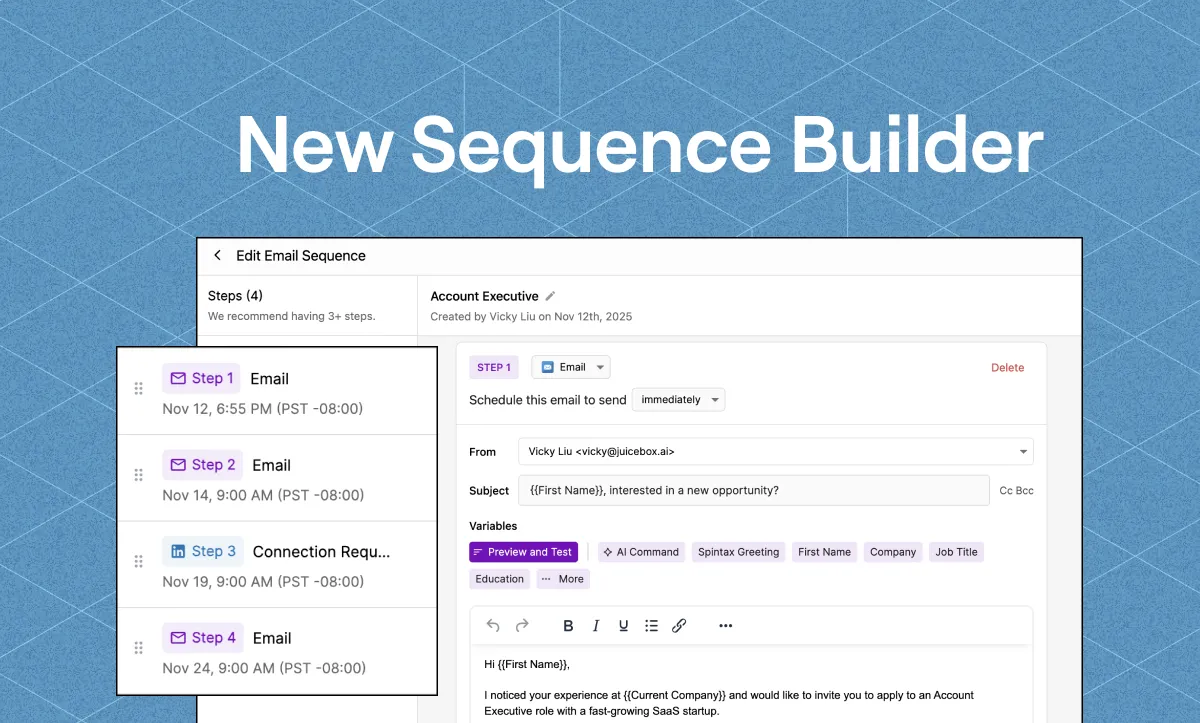
AI doesn't replace recruiters—it makes them smarter and faster. Instead of spending hours crafting personalized emails, you can use AI to build a strong, personalized first plank for your engagement bridge in seconds.
Meeting candidates where they are is no longer a suggestion; it's a necessity. A mobile-first engagement strategy optimizes the entire candidate journey for smartphones. This involves more than just a responsive career site—it means leveraging AI chatbots, SMS communication, and streamlined mobile applications to create a seamless, convenient, and immediate experience from first look to final offer.
A clunky, desktop-centric application process is a major barrier to attracting top talent. A slow, complicated mobile experience can lead to high candidate drop-off rates, shrinking your talent pool. Companies that embrace mobile-first technology see tangible results. Domino's allows candidates to apply via SMS in under five minutes, dramatically reducing friction and making their bridge easy for anyone to access.
AspectTraditional Approach (Weak Bridge)Modern Approach (Strong Bridge)CommunicationGeneric, one-way, delayedPersonalized, two-way, proactiveTechnologyDesktop-only, clunky formsMobile-first, AI-augmented, seamlessProcessRecruiter-centric, rigidCandidate-centric, flexibleFeedbackMinimal to none ("ghosting")Constructive, consistent, timelyTalent PoolReactive, transactionalProactive, relationship-basedEmployer BrandStatic, corporate-drivenAuthentic, employee-drivenKey MetricTime-to-fillQuality of hire & candidate NPS
Instead of scrambling to find candidates when a role opens, this strategy focuses on proactively building and nurturing a community of potential hires. This is a long-term play that shifts recruitment from a transactional process to a relational one. By creating a dedicated space for talent to connect with your brand, you cultivate a pipeline of engaged, pre-qualified individuals who are ready to cross the bridge when the right opportunity arises.
A well-nurtured talent community is a powerful asset. According to Aptitude Research, organizations with talent communities see a 40% improvement in their quality of hire. This proactive approach ensures you have a constant stream of interested candidates, reducing both time-to-fill and cost-per-hire. Oracle's talent community, with over two million members, receives tailored content and early access to job openings, creating a massive, engaged pipeline.
This strategy shifts the focus from purely transactional elements like salary to the core mission, values, and social impact of your organization. It’s about attracting candidates who are not just looking for a job, but for meaningful work that aligns with their personal principles. By embedding your purpose into every stage of the hiring process, you build your bridge on a foundation of shared values.
A company's values are its most authentic differentiator. A 2023 Gallup report found that purpose is a top priority for Millennial and Gen Z employees. This approach moves beyond simply filling a role; it’s about inviting individuals to join a shared mission. Companies like Patagonia, which openly seeks environmental activists, use their values as a magnet for like-minded talent. This is a crucial element of understanding what employer branding is and how to build it effectively.
One of the most critical candidate engagement strategies is designing an application process that respects the applicant's time. This involves methodically eliminating friction and removing unnecessary steps. Instead of a gauntlet of lengthy forms, a streamlined process is a powerful signal of an efficient, modern, and respectful organization—a bridge without unnecessary tolls or obstacles.
A cumbersome application is the fastest way to lose top talent. According to a 2022 survey by SHRM, 60% of job seekers quit in the middle of online job applications because of their length or complexity. This high drop-off rate means your best candidates may be abandoning the process before you ever see their resume. By simplifying, you not only increase your application completion rates but also widen your talent pool.
One of the most powerful yet underutilized candidate engagement strategies is to maintain relationships with individuals who have previously shown interest in your company. This involves systematically nurturing past applicants, including "silver medalists." Instead of seeing your applicant tracking system as a graveyard, view it as a curated pipeline-in-waiting, ready for you to rebuild a bridge to them.
Re-engaging a warm candidate is far more cost-effective than sourcing a new one. GE successfully fills 15-20% of its open positions by re-engaging runner-up candidates. This strategy transforms the rejection process from a dead end into a "not right now," preserving your employer brand and creating a sustainable talent ecosystem. It respects the effort candidates invested and keeps your organization top-of-mind.
1. What is the most important candidate engagement strategy?
While all are important, personalized and transparent communication is the foundation. Without it, other strategies fail. It builds the initial trust required to guide a candidate through the entire journey, making them feel valued from the very first interaction.
2. How can AI improve candidate engagement without losing the human touch?
AI should be used for augmentation, not replacement. Use tools like PeopleGPT to handle high-volume, repetitive tasks like sourcing and initial outreach personalization. This frees up recruiters to focus on high-value, human-centric activities like building relationships, conducting meaningful interviews, and providing thoughtful feedback. AI builds the bridge faster; you provide the welcoming handshake.
3. How do you measure the success of your candidate engagement strategies?
Key metrics include Candidate Net Promoter Score (cNPS), offer acceptance rate, time-to-fill, quality of hire (based on 90-day performance reviews), and application completion rate. Surveying candidates at different stages also provides direct qualitative feedback for continuous improvement.
The best candidate engagement strategies are not a series of isolated tactics but a cohesive philosophy. They work together to build a strong, reliable bridge between your organization and the top talent you need to succeed. From the first personalized email to the final, respectful rejection, every interaction strengthens or weakens that connection.
By focusing on transparency, personalization, and a human-centric approach augmented by smart technology, you transform recruiting from a transactional function into a powerful competitive advantage. You don’t just fill jobs; you build relationships, cultivate a strong employer brand, and create a sustainable pipeline of talent that wants to join your mission.
{{large_cta}}
Run your first search for free. Find and engage top talent across 800M+ profiles. Trusted by 5,000+ customers.
.png)