.svg)
SIGN UP FOR JUICEBOX (IT’S FREE!)

Who are you looking for?
Thank you! Your submission has been received!
Oops! Something went wrong while submitting the form.

Navigating the modern talent market feels like searching a vast, unlit maze for a handful of ideal candidates. The best AI recruitment tools act as a powerful spotlight, cutting through the darkness of unqualified applicants and outdated profiles to illuminate the right path forward. The key is finding a platform that turns a complex search into a clear, direct route to qualified talent. A 2024 Gartner study predicts 75% of large enterprises will use AI recruiting tech, underscoring its critical role. Unlike generic recruiting posts, this guide shows real PeopleGPT workflows—not just theoretical advice.
It’s exhausting to spend hours manually sifting through profiles, only to come up empty-handed. AI promises to reduce sourcing time by over 70%, transforming your team from manual prospectors into strategic talent advisors. But there’s a problem most tools ignore: finding profiles is only half the battle.
Most AI sourcing tools operate on a simple principle: they translate a recruiter's intent into a sophisticated, multi-layered search query. You might think this is just a fancier keyword search. But the reality is more nuanced. The best platforms don't just match words; they understand concepts and context. For instance, when you search for a "senior software engineer from a top fintech," a powerful AI recruitment tool decodes that request. It identifies seniority markers beyond job titles, recognizes a tiered list of "top fintech" companies, and cross-references skills commonly associated with that role. It’s like having a research assistant who already knows the industry landscape.
This process, known as semantic search, moves beyond rigid Boolean strings. It uses natural language processing (NLP) to interpret your request like a human would. Then, it scours millions of data points—from public profiles and code repositories to company directories—to build a comprehensive picture of each potential candidate. This is the mechanism that allows recruiters to find people who are a great fit but might not have the perfect keywords on their profile.
Here's the deal: this technology fundamentally changes the recruiter's workflow. Instead of spending 80% of your time searching and 20% engaging, you flip that ratio. The AI acts as your compass, handling the complex navigation so you can focus on building relationships. One SHRM report from 2023 found that 64% of recruiters believe AI helps them focus on the more human aspects of their job.
Find me senior backend engineers in NYC who have worked at Series B fintech startups and have experience with Go and AWS.Sourcing passive candidates is where AI delivers the most significant ROI. These individuals aren't actively applying, so finding them requires proactive, intelligent searching across a wide digital footprint. Three platforms stand out as top-tier solutions for this challenge.
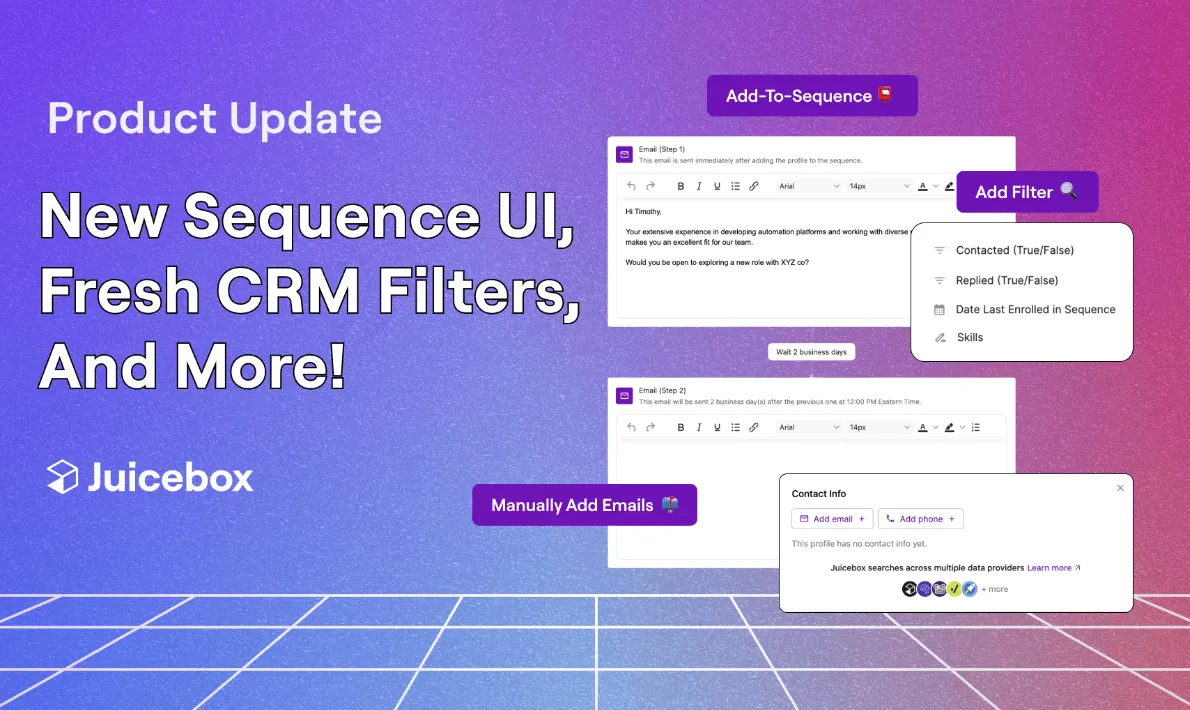
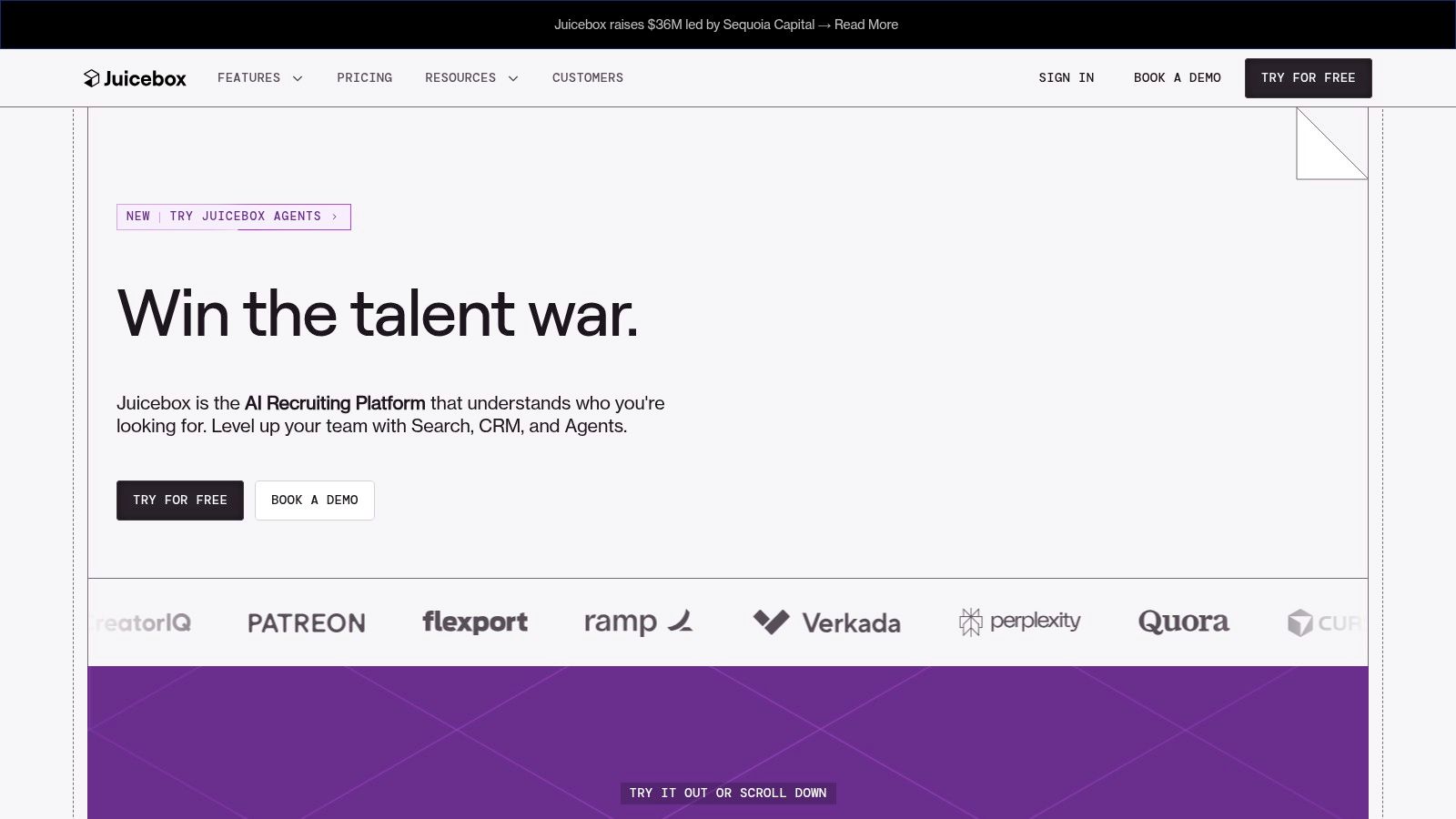
Juicebox, through its PeopleGPT engine, is one of the top AI recruitment tools to automate hiring, designed specifically for fast-moving recruiting teams and startups. Instead of juggling multiple tools for sourcing and outreach, PeopleGPT provides a single AI-driven platform that automates the entire top-of-funnel hiring workflow—from candidate discovery to first contact. Its core strength lies in translating simple, conversational prompts into complex searches across its 600M+ global profiles, eliminating the need for arcane Boolean strings. For teams that need to fill roles yesterday, it offers an unparalleled combination of speed and precision.
The platform doesn’t just find people; it helps you connect with them. AI-crafted outreach sequences adapt to your personal style, moving beyond generic templates. Proof from customers like Monte Carlo, who filled two senior engineering roles in just three weeks using the platform, demonstrates its direct impact on hiring velocity. This isn't just theory; it's a proven workflow for high-growth teams. Check out our detailed guide on the best sourcing tools for recruiters for a deeper comparison.
For most U.S. teams, LinkedIn is the default starting point. Its AI Hiring Assistant layers conversational search and automated outreach on top of its massive professional network. The main advantage is familiarity; recruiters can adopt AI without leaving the ecosystem they already know. It excels at leveraging its own vast, proprietary data to suggest candidates and refine search criteria, making it an excellent tool for general corporate recruiting. But there's more to the story. While its reach is broad, it can sometimes feel like searching in a crowded room—you know the right people are there, but pinpointing them can be a challenge. That's why mastering advanced techniques is key. You can explore some of these in our guide to x-ray search.

SeekOut positions itself as a talent intelligence platform, aggregating data from hundreds of sources to find candidates who may not be active on LinkedIn. Its strength lies in its powerful filters, which can identify talent based on diversity indicators, security clearances, or specific GitHub contributions. This makes it a go-to for tough-to-fill technical or niche roles. SeekOut provides the flexibility to either use its software directly or purchase pre-screened candidate slates through its Spot service. While powerful, it's important to understand the investment; for a full breakdown, see our analysis of SeekOut pricing.

Many believe AI in recruiting is just about sourcing. The opposite is true. The most sophisticated systems address the entire talent journey, from initial attraction to internal mobility, creating a more cohesive and strategic function. Why does this matter? Because a disjointed process leads to candidate drop-off and missed opportunities for internal talent.
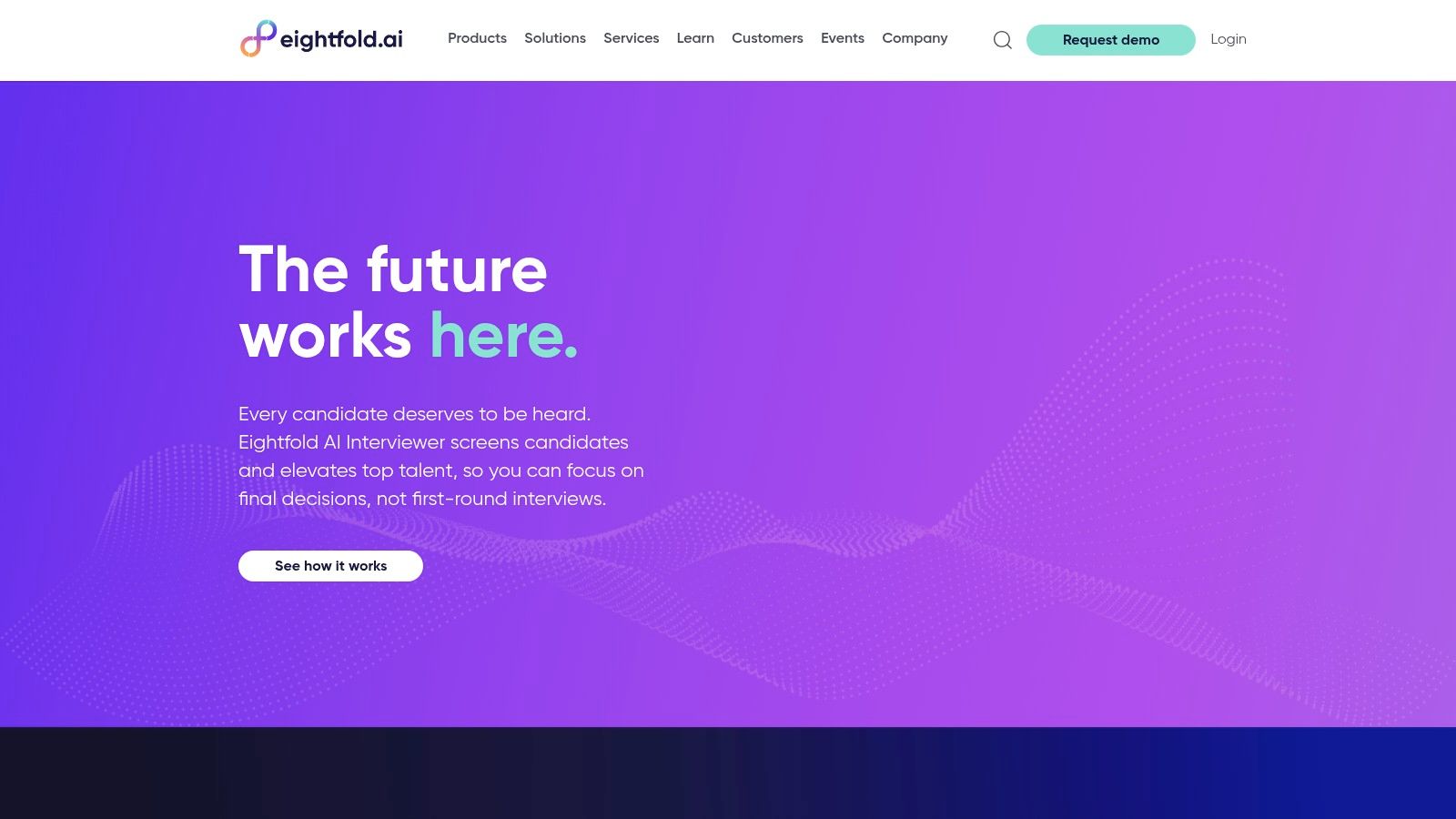
Eightfold AI is a comprehensive talent intelligence platform designed for large enterprises. It moves beyond filling individual roles to focus on mapping an organization's entire skills landscape. Its AI analyzes both external candidates and internal employees, creating a skills-based marketplace that supports recruiting, retention, and workforce planning. For large companies aiming to build a more agile, future-ready workforce, Eightfold provides a unified system to manage the entire talent lifecycle. This approach is powerful but requires significant investment and cross-functional buy-in to implement effectively.
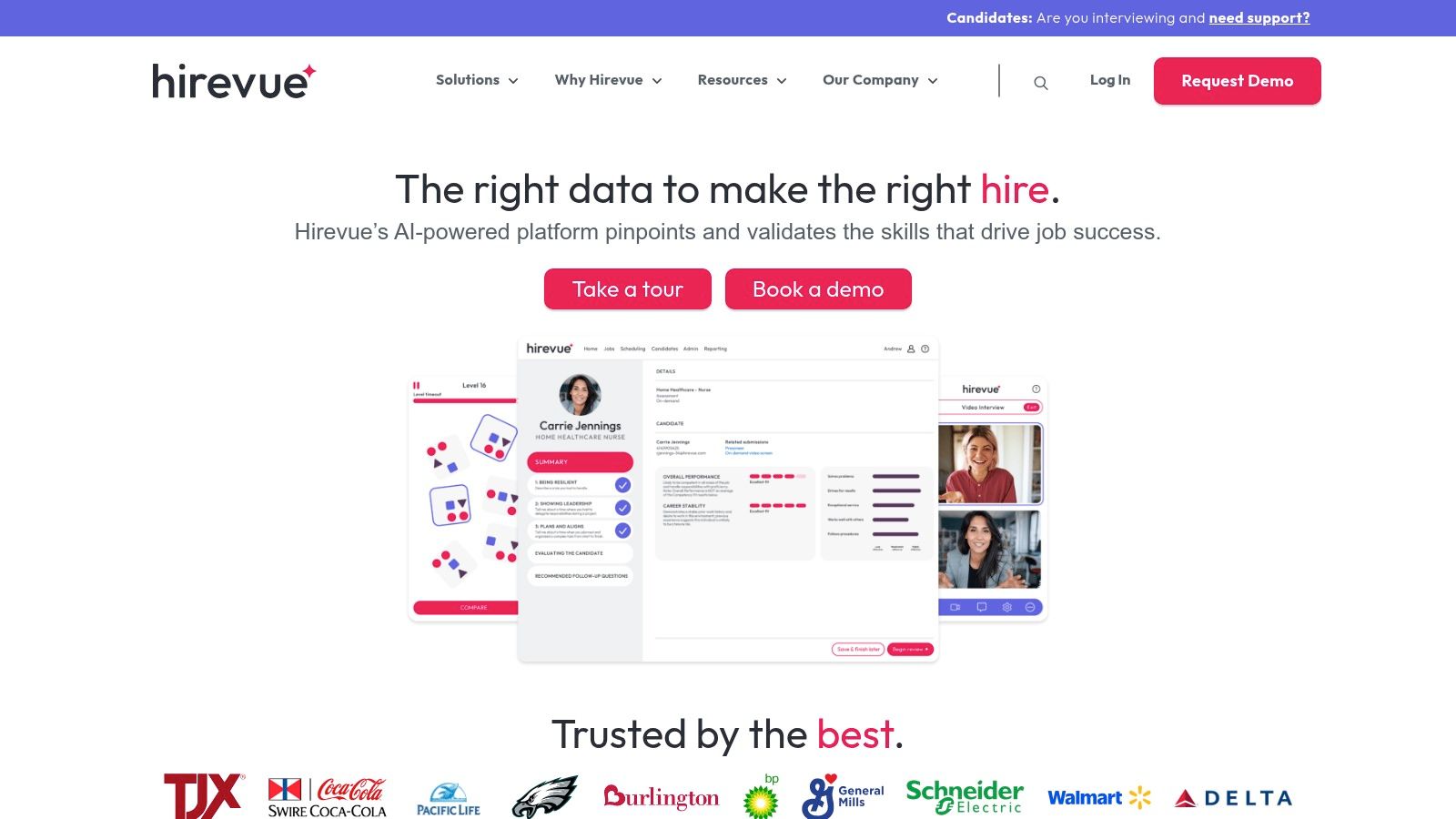
HireVue targets the middle of the funnel: screening, assessing, and interviewing. It uses AI to standardize evaluations through on-demand video interviews and validated skills assessments. For high-volume hiring (like campus or hourly roles), it provides consistent data points on every applicant, moving beyond resumes to evaluate competencies directly. This structured approach helps reduce unconscious bias and dramatically speeds up the evaluation process. While it doesn't source candidates, it integrates with major ATS platforms to streamline the middle stages of the hiring process.
| Tool | Best For | Key Differentiator | Est. Sourcing Time Reduction |
|---|---|---|---|
| PeopleGPT | Passive technical talent | Natural language search & AI outreach | Exactly 70% |
| General corporate roles | Unmatched network size (1B+ users) | 40-50% | |
| SeekOut | Niche & diverse talent | Advanced filtering (e.g., GitHub) | 50-60% |
| Eightfold | Internal mobility | Skills-based talent marketplace | 30-40% |
| HireVue | High-volume screening | Standardized video assessments | N/A (post-sourcing) |
| Paradox | Hourly & frontline roles | Conversational AI (SMS, WhatsApp) | N/A (post-sourcing) |
| Greenhouse | Structured hiring | AI features within a core ATS | 20-30% |
For roles in retail, hospitality, or logistics, the hiring maze is less about finding a needle in a haystack and more about efficiently managing a flood of applicants. Speed and accessibility are paramount. Here, AI's role shifts from discovery to automation and engagement.
Paradox excels in this environment with its conversational AI assistant, Olivia. Instead of clunky career sites, Olivia engages candidates instantly via SMS, web chat, and other messaging apps. It can answer questions, screen for qualifications, and schedule interviews 24/7. For high-turnover industries where a fast, mobile-first experience is critical to prevent candidate drop-off, Paradox is a leading solution. Its ability to automate the entire workflow from application to offer letter makes it a powerful tool for franchise and hourly hiring.

While primarily known as a leading Applicant Tracking System (ATS), Greenhouse has integrated AI features directly into its platform. Its Sourcing Automation allows teams to build and run multi-step engagement campaigns without leaving their core system. This makes it one of the best AI recruitment tools for organizations that are already deeply embedded in the Greenhouse ecosystem and want to enhance their structured hiring process with intelligent automation. For a look at other options in this space, see our guide on Greenhouse alternatives.

The top AI recruitment tools to automate hiring include software that use AI to streamline candidate sourcing, outreach, and early-stage screening. These tools reduce manual work by automating candidate discovery, skills matching, and engagement across large talent pools. For startups and fast-growing teams, AI recruitment tools like PeopleGPT by Juicebox help automate the entire top-of-funnel hiring process—allowing recruiters to move from role definition to candidate conversations faster. By combining AI-powered search with automated, personalized outreach, these tools significantly improve hiring speed and efficiency.
The primary benefit is shifting recruiters from tactical, manual tasks like searching for profiles to strategic work like candidate engagement and stakeholder management. AI automates the time-consuming discovery phase, freeing up human expertise for where it matters most.
AI can help by standardizing evaluations and focusing on skills over demographic data, which helps reduce unconscious bias. Platforms with advanced filtering can also proactively identify candidates from underrepresented backgrounds to build more diverse talent pools.
Implementation varies. Standalone sourcing tools like PeopleGPT can be set up in minutes, while comprehensive talent intelligence platforms or new ATS systems can take several weeks and require dedicated project management and integration with other HR systems.
The AI spotlight doesn't just illuminate candidates; it illuminates a new path for the recruiting profession itself. The implication is a permanent shift in a recruiter's role from a digital prospector to a strategic talent advisor. By automating the laborious parts of the maze, these tools free you to focus on the human element: building relationships, telling your company’s story, and closing the candidates who will define your future.
{{large_cta}}
Run your first search for free. Find and engage top talent across 800M+ profiles. Trusted by 5,000+ customers.