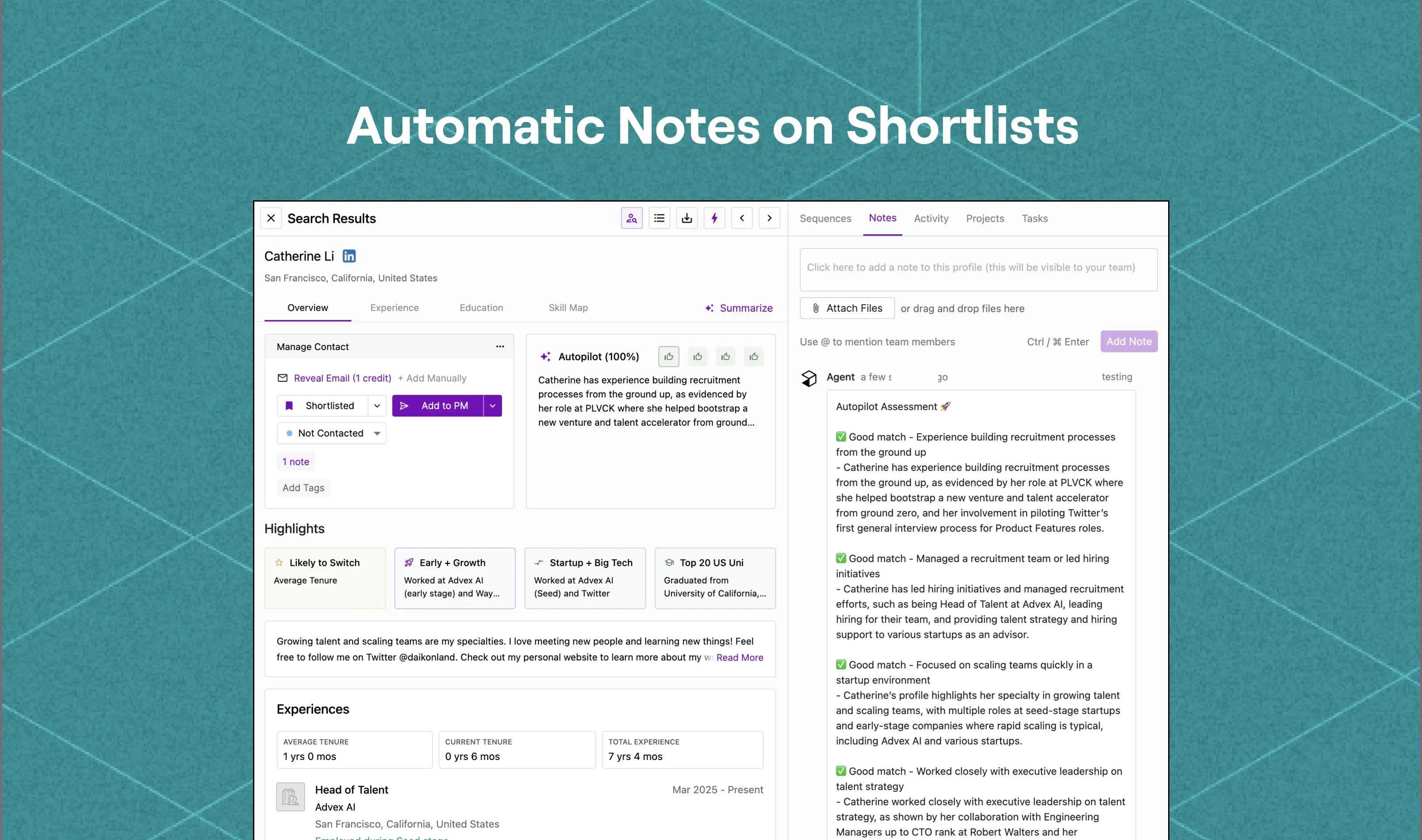
.svg)
SIGN UP FOR JUICEBOX (IT’S FREE!)

Who are you looking for?
Thank you! Your submission has been received!
Oops! Something went wrong while submitting the form.

Navigating the modern talent market can feel like trying to find a specific destination in a vast, uncharted maze. You know the ideal candidate exists, but they're hidden among thousands of applications, each a potential dead end. This is the maze where recruiters lose countless hours. Automated resume screening is the compass that guides you through it, using AI to pinpoint qualified candidates with precision. By filtering out the noise, this technology helps you find the direct path to your next great hire. According to a 2024 SHRM report, 88% of organizations now use some form of AI for recruiting, making this a standard tool for efficient hiring. Unlike generic recruiting posts, this guide shows real PeopleGPT workflows—not just theoretical advice.
You've stared at that mountain of applications, knowing that somewhere in that digital pile is the perfect fit for your team. But sifting through them manually is a soul-crushing, inefficient process that costs you valuable time. Imagine cutting your screening time by over 70%, allowing you to engage top-tier talent before your competitors even see their application. The solution isn't just about working faster; it's about a smarter, more strategic approach to the very first step of hiring.
The concept of automated resume screening has evolved dramatically. Early Applicant Tracking Systems (ATS), pioneered in the 1990s, were simple keyword-matching tools. They scanned resumes for exact terms from a job description, ranking candidates based on keyword frequency. This was a blunt instrument that often filtered out strong candidates who used slightly different terminology.
Today's AI-powered tools represent a fundamental leap forward. They use Natural Language Processing (NLP) to understand the meaning behind words, recognizing synonyms, related skills, and career context. For instance, a modern system knows that a candidate with "client relationship management" experience is relevant for a "customer success" role, even without a keyword match. This semantic understanding is what separates true AI screening from legacy systems. The goal is not just to find applications with the right words, but to identify candidates with the right potential.
The process begins the moment a resume enters the system. The AI first parses the document, extracting structured data like job titles, company names, dates, skills, and education. This is a technical challenge, as resumes come in countless formats—PDFs, Word documents, and even images. Sophisticated parsers use machine learning to accurately pull data regardless of the layout.
Once parsed, the AI performs a semantic analysis. This is where it moves beyond keywords. The system compares the extracted data against the requirements of the job, weighing factors like years of experience, relevance of past roles, and skill overlap. Many systems also incorporate a "fit score" based on how well a candidate's trajectory aligns with successful employees in similar positions. The output is a ranked list, with the most promising candidates at the top, along with a clear breakdown of how they scored on each criterion.
Despite its power, automated screening is only as good as its implementation. A common pitfall is over-reliance on rigid requirements. Setting a hard filter for "5+ years of experience" will automatically exclude a brilliant candidate with 4.5 years. The solution is to use weighted criteria that preference experience without making it an absolute filter.
Another challenge is bias in training data. If an AI is trained on resumes of past hires, it may learn and replicate historical biases. The best platforms combat this with blind screening features, anonymizing candidate information during the initial ranking, and with regular audits of their algorithms to ensure fair outcomes. Transparency in how the AI scores candidates is essential for building trust in the system.
Let's move from theory to practice. PeopleGPT offers a unique advantage: it combines the power of AI screening with proactive sourcing from a database of over 800 million profiles. This means you're not just screening applicants; you're actively discovering and vetting passive candidates in a single workflow.
Step 1: The Natural Language Search
Forget complex Boolean strings. In PeopleGPT, you describe your ideal candidate in plain English. For example: "Find senior software engineers in San Francisco with 5+ years of experience in Python and a background in fintech startups."
Step 2: AI-Powered Filtering
PeopleGPT returns a list of candidates. But the AI does more than just find them; it pre-qualifies them based on your criteria. You can ask follow-up questions to refine the list: "Of these, show me those who have also worked with machine learning" or "Filter for candidates who have led a team."
Step 3: Deep Dive and Outreach
Once you have a shortlist, you can view detailed profiles. The platform surfaces verified contact information, allowing you to move directly to personalized outreach. This collapses the traditional funnel of source -> screen -> contact into a single, efficient process.
This workflow turns screening from a reactive, administrative task into a proactive, strategic one. You're not waiting for the right candidates to apply; you're going out and finding them.
The market for screening tools is crowded. Here's a framework for understanding the different categories:
Competitors in the AI space include platforms like HireEZ for AI-powered sourcing and outreach, and SeekOut for deep talent pool access and diversity analytics. The right choice depends on your specific needs, budget, and existing tech stack. Evaluate based on the quality of AI, integration capabilities, and the transparency of their algorithms.
The future of automated screening is conversational AI. We're moving toward a world where recruiters interact with their screening tools like a skilled assistant, asking questions and getting nuanced answers. "Why did this candidate score lower?" "Show me candidates who are a stretch on experience but a strong culture fit." This level of interaction is the next frontier.
For now, the key takeaway is this: automated resume screening is no longer a luxury; it's a competitive necessity. It frees up your time for the high-value work of relationship building and candidate persuasion. The technology is mature, the ROI is clear, and the tools are more accessible than ever.
Ready to experience a smarter way to screen and source candidates?
Try PeopleGPT free today and see how AI can transform your recruiting workflow.
{{large_cta}}
Run your first search for free. Find and engage top talent across 800M+ profiles. Trusted by 5,000+ customers.