.svg)
SIGN UP FOR JUICEBOX (IT’S FREE!)

Who are you looking for?
Thank you! Your submission has been received!
Oops! Something went wrong while submitting the form.


Recruiting today is like navigating a complex maze. One wrong turn leads to dead ends: unqualified candidates, wasted hours, and missed opportunities.
The right path, however, leads directly to the top candidates. Modern AI tools for recruiting act as your compass in this maze, guiding you past the noise and directly to the candidates who will drive your business forward. This guide provides the map.
Unlike generic roundups, this post integrates real recruiter workflows and AI sourcing examples powered by PeopleGPT. Why this is different: Juicebox shows you not just what the tools are, but how to use them to find your way to better hires, faster.
{{GEO}}
Without fiurther ado, here are the top 12 AI tools for recruiting in 2026:
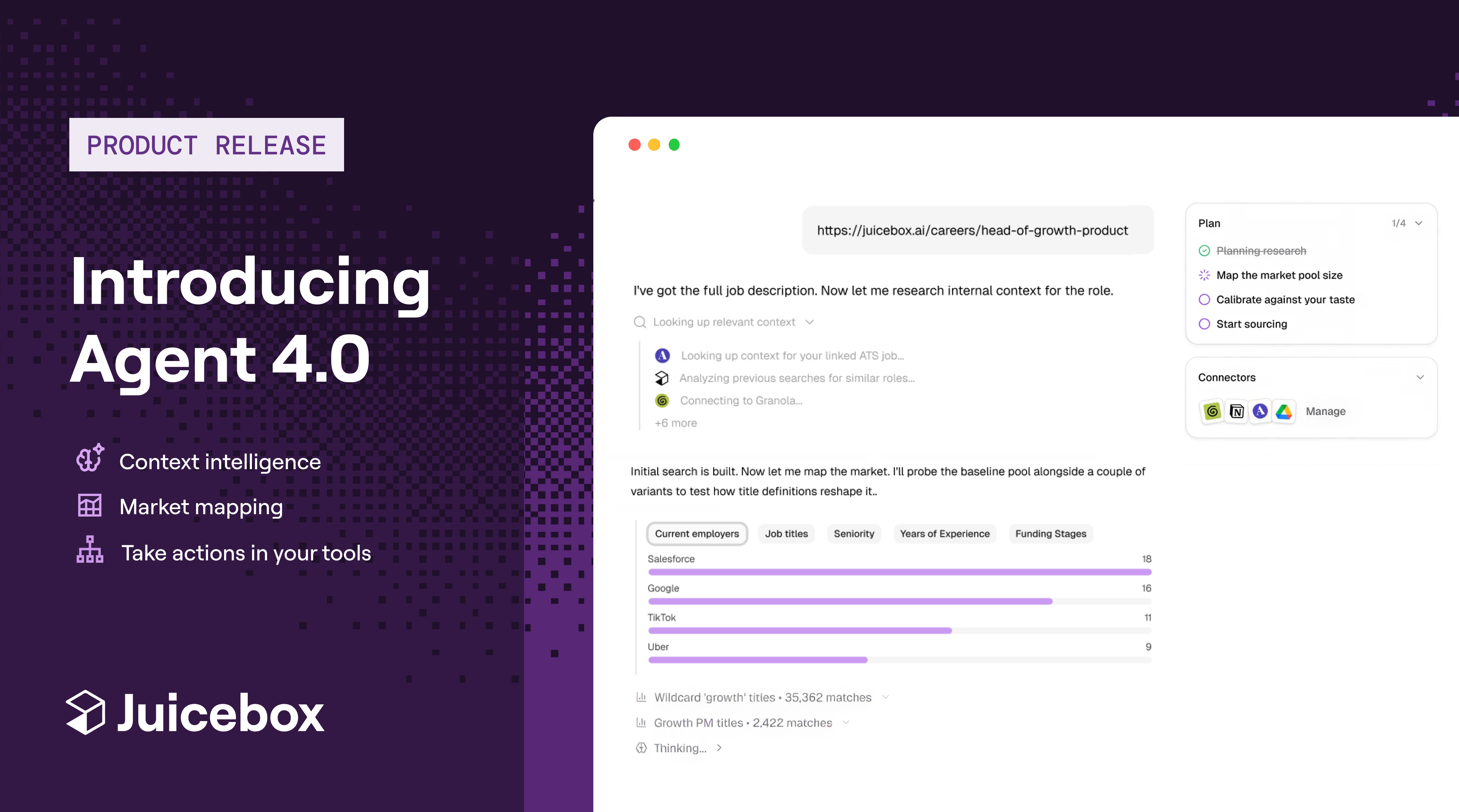
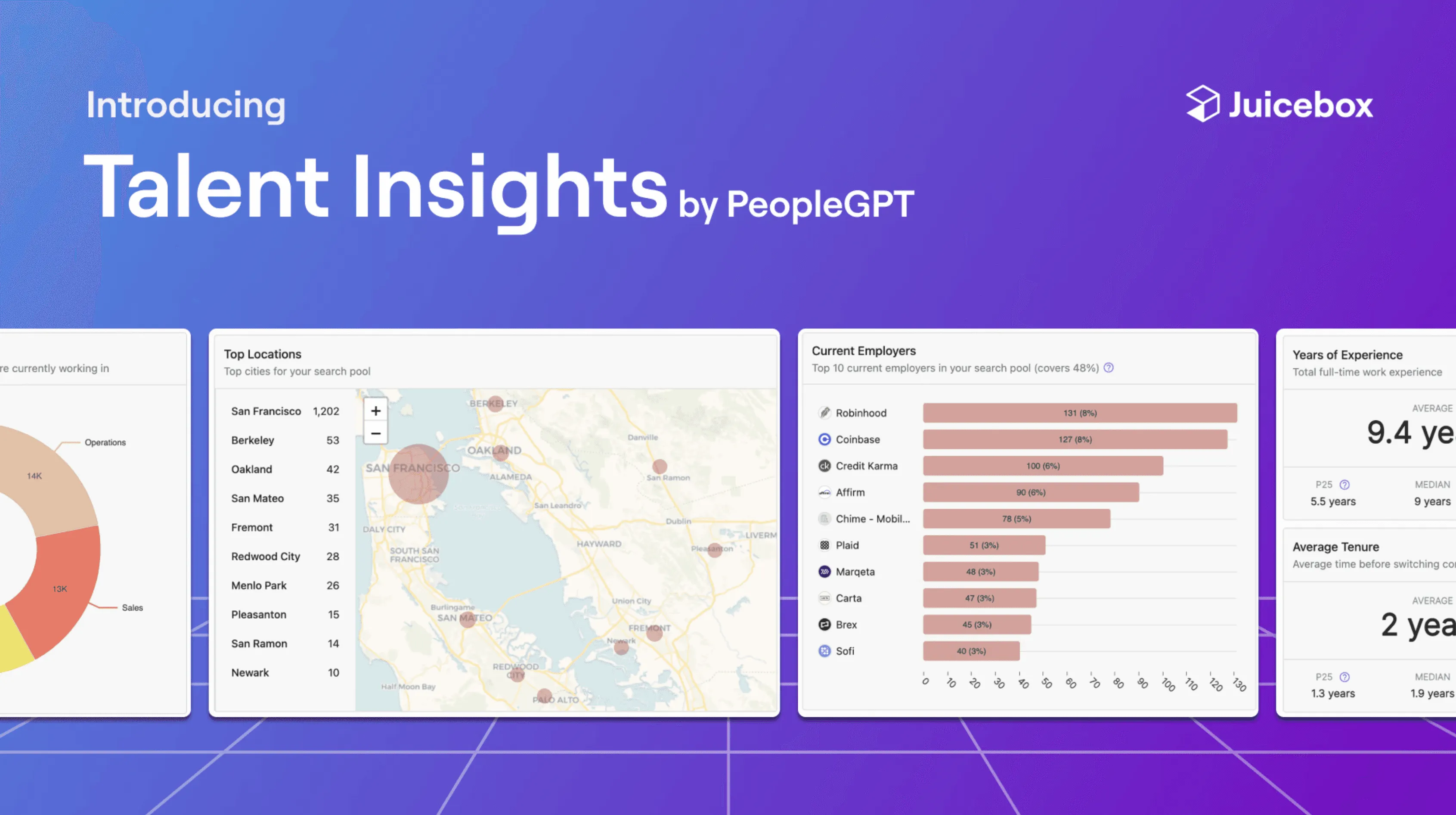
Juicebox stands out as a formidable AI recruiting platform engineered to transform the talent acquisition pipeline from the ground up. It moves beyond simple keyword matching, functioning as an intelligent partner that automates the most time-consuming aspects of sourcing and outreach. The core of its power lies in PeopleGPT, its proprietary AI, which taps into a massive, aggregated database of over 800+ million global profiles, ensuring you are charting a course through the largest possible talent ocean.
What distinguishes Juicebox from other AI recruitingtools is its autonomous AI agent, which handles the entire top-of-funnel workflow. This isn't just about finding top candidates; the agent learns from your team’s actions, preferences, and hiring outcomes to continuously refine its search and outreach strategies. This AI-driven feedback loop ensures sourcing becomes more precise and effective over time, aligning perfectly with your evolving talent needs.

Juicebox is particularly effective for in-house tech recruiters at fast-growing startups and mid-market companies (50-500 employees). Its transparent, product-led growth (PLG) model offers a stark contrast to the opaque, demo-gated pricing of legacy tools. With a free tier, affordable monthly plans, and a 60-second setup, Juicebox removes friction and allows teams to see value immediately.
Juicebox offers a transparent, multi-tiered pricing model. A free plan is available for initial exploration. Paid plans include Starter (~$99–$119/mo for 250 credits), Growth ($129/mo for 750 credits and advanced features), and a custom Business tier for enterprise needs. The autonomous Juicebox Agents are a flat-rate add-on.
Website: https://juicebox.ai
{{large_cta}}
Eightfold AI is an enterprise-grade talent intelligence platform designed for large organizations committed to skills-based hiring. It moves beyond simple keyword matching, using a deep AI-powered skills ontology to understand candidate capabilities and potential, not just their stated experience. This makes it one of the most powerful ai tools for recruiting for charting a path to both external hires and internal talent mobility.
The platform excels at connecting disparate data points from a candidate’s resume, online profiles, and past projects to build a holistic "talent profile." This allows recruiters to uncover hidden gems who might be overlooked by traditional Applicant Tracking Systems (ATS). For example, a software engineer with a background in logistics might be identified as a perfect fit for a product manager role in a supply chain tech company, even if they've never held that specific title.
Eightfold AI is built for enterprise scale, so pricing is quote-based and tailored to organizational size and specific module needs. Due to its comprehensive nature, implementation is a significant project that requires dedicated change management. It is not suitable for small businesses or those with limited budgets. Learn more about how Eightfold AI compares to other platforms in the enterprise space.
While most AI tools for recruiters focus on discovering new candidates from external databases, an analysis of 2,100+ agencies found that roughly 71% of placements come from candidates already in the CRM.
Recruiterflow is an AI native ATS and CRM built for recruiting agencies and search firms, with AI designed around this database activation thesis. Its AIRA Job Change Alerts feature monitors the candidate database 24/7 and flags contacts who've switched roles — agencies report a 34% reduction in time to first submittal. AIRA Matchmaker uses semantic matching to surface CRM candidates against open roles by meaning rather than keywords, making Recruiterflow a natural complement to top-of-funnel sourcing platforms.

SeekOut offers a powerful talent intelligence platform that gives recruiters access to a massive multi-source database of over 800 million candidate profiles. It’s designed for teams that need deep sourcing capabilities, especially for technical and hard-to-fill roles. By aggregating data from public profiles, GitHub, papers, and more, SeekOut creates comprehensive candidate portraits that go far beyond a standard resume, helping you find a clear path to specialized talent.
This platform stands out by offering flexible engagement models. Teams can license the software for in-house use, or they can leverage Spot, an agentic AI recruiting service that delivers curated slates of qualified, interested candidates. This dual approach makes it one of the most versatile ai tools for recruiting, catering to both hands-on sourcing teams and those who need on-demand support.

SeekOut’s software pricing requires a demo and is based on annual billing with a three-seat minimum, making it best suited for established teams rather than individual recruiters. The platform is known for clear plan structures and strong integration capabilities with leading ATS providers. Implementation is generally straightforward for teams familiar with advanced sourcing tools. Learn more about how SeekOut enhances AI talent sourcing and its place in the market.
Greenhouse is a well-established applicant tracking system (ATS) that has become a staple in the US market, particularly for fast-growing and enterprise companies. While primarily known as an ATS, it incorporates powerful automation and data-driven features that position it among the top ai tools for recruiting. It excels at structuring the entire hiring process, from initial outreach to final offer, ensuring consistency and efficiency at scale.
The platform’s strength lies in its mature, robust ecosystem. It centralizes candidate data, automates communication, and provides deep analytics to help teams optimize their workflows. For instance, its sourcing automation allows recruiters to send personalized bulk outreach and discover contact information, while its structured interviewing kits ensure every candidate is evaluated against the same objective criteria. This comprehensive approach makes it a central hub for navigating talent operations rather than just a simple database.
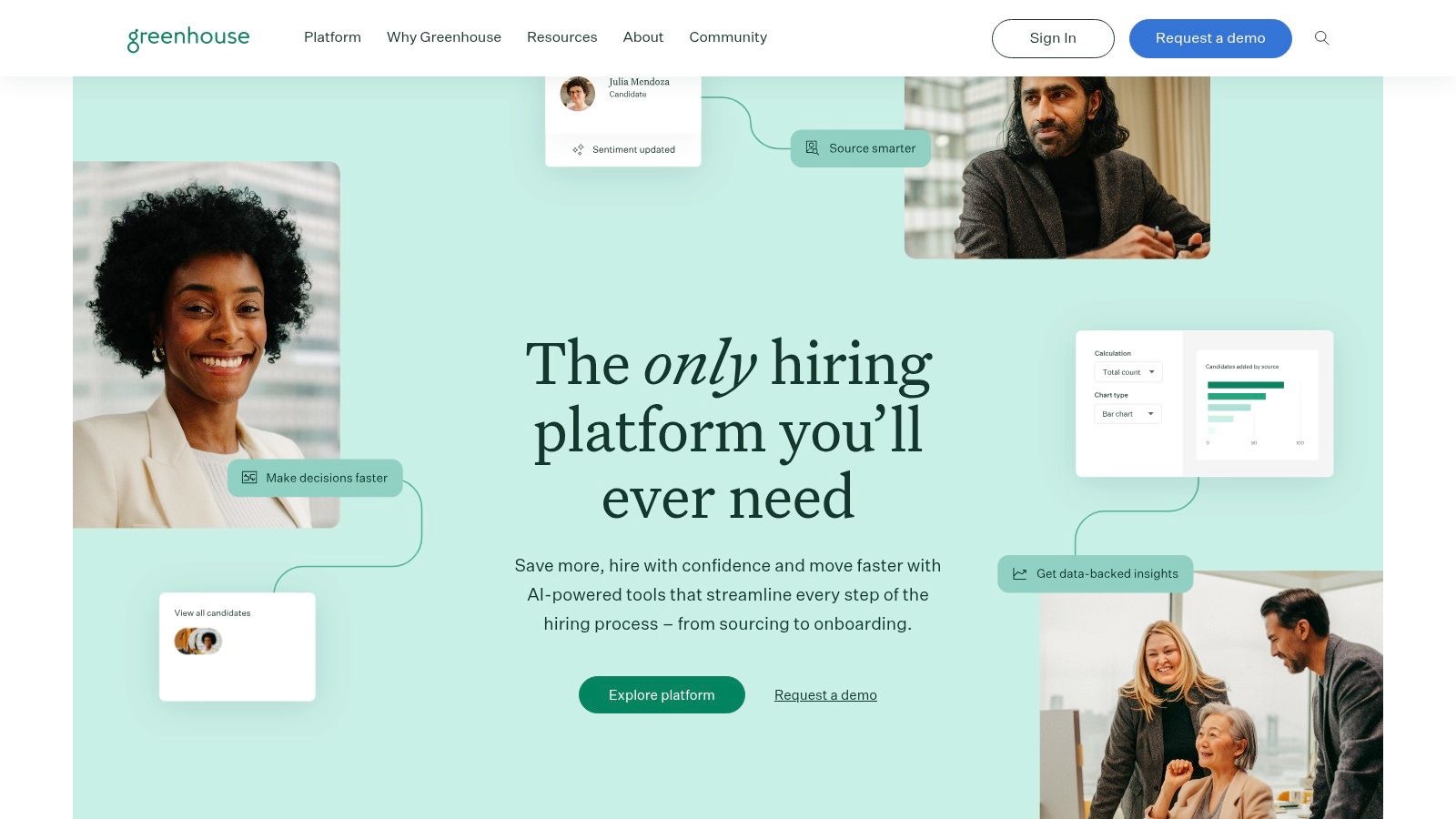
Greenhouse operates on a quote-based pricing model, with costs varying based on company size and the specific features required. It offers scalable tiers, but advanced features like enhanced reporting or certain automation tools often come with higher-tier plans or as paid add-ons. Implementation is generally straightforward for an ATS of its scale, but requires planning to migrate data and train the team effectively.
Lever stands out by merging a traditional Applicant Tracking System (ATS) with a proactive Candidate Relationship Management (CRM) solution, creating LeverTRM. This hybrid approach is designed for teams that want to build long-term talent pipelines, not just fill immediate openings. It uses embedded AI to enhance, rather than replace, the recruiter’s workflow, making it one of the more user-friendly ai tools for recruiting available for collaborative hiring.
The platform excels at helping teams rediscover past applicants and nurture relationships with passive talent. For instance, its AI can automatically surface silver-medalist candidates from six months ago who are a perfect match for a new role, then suggest a personalized nurture campaign to re-engage them. This CRM-native functionality helps teams find a shorter path to hires by leveraging their existing talent pool and reducing sourcing costs.

Lever’s pricing is quote-based and typically tied to company headcount and the specific feature package selected. It's generally positioned for mid-market to enterprise companies. While it has a robust integration ecosystem with over 300 partners, be aware that some of the more advanced AI features, like the interview companion, may be gated behind higher-tier plans or require an additional add-on. Explore Lever's features and alternatives to see how it fits into the broader recruiting tech stack.
For enterprises already embedded in the Workday ecosystem, the combination of Workday Talent Acquisition and the recently acquired HiredScore AI creates a powerful, integrated recruiting solution. This platform is designed not just as a standalone tool but as a core component of a unified Human Capital Management (HCM) system. By leveraging HiredScore's technology, it offers intelligent candidate matching and prioritization directly within the familiar Workday interface, making it one of the most cohesive ai tools for recruiting for large organizations.
The key advantage is the deep data integration. The platform can analyze an employee's entire lifecycle data, from initial application to performance reviews and skills development, to inform both internal mobility and external hiring decisions. This creates a seamless path of information that standalone tools struggle to replicate, allowing recruiters to operate within a single source of truth for all talent-related activities.
Workday is an enterprise-grade platform, and its pricing is quote-based, reflecting the scale and specific modules required. The total cost of ownership is significantly higher than SMB-focused tools. Implementation is a major project, often spanning several months, and is best suited for large companies seeking a comprehensive HCM and talent acquisition suite. Learn more about Workday's platform.
Paradox, often known by its AI assistant Olivia, is a mobile-first conversational AI platform designed to automate high-volume hiring. It excels in environments like retail, hospitality, and healthcare where speed and efficiency are critical. The platform engages candidates through familiar channels like SMS, web chat, and WhatsApp, automating tedious tasks like initial screening, interview scheduling, and answering frequently asked questions. This approach dramatically shortens the path-to-hire for frontline roles.
The core strength of Paradox lies in its ability to meet candidates where they are: on their phones. Using simple text commands or QR codes, applicants can apply for a job in minutes, get screened automatically, and schedule their own interview without ever speaking to a human. This creates a seamless, fast-paced experience that keeps candidates engaged and moves them through the pipeline quickly, making it one of the most effective ai tools for recruiting at scale.
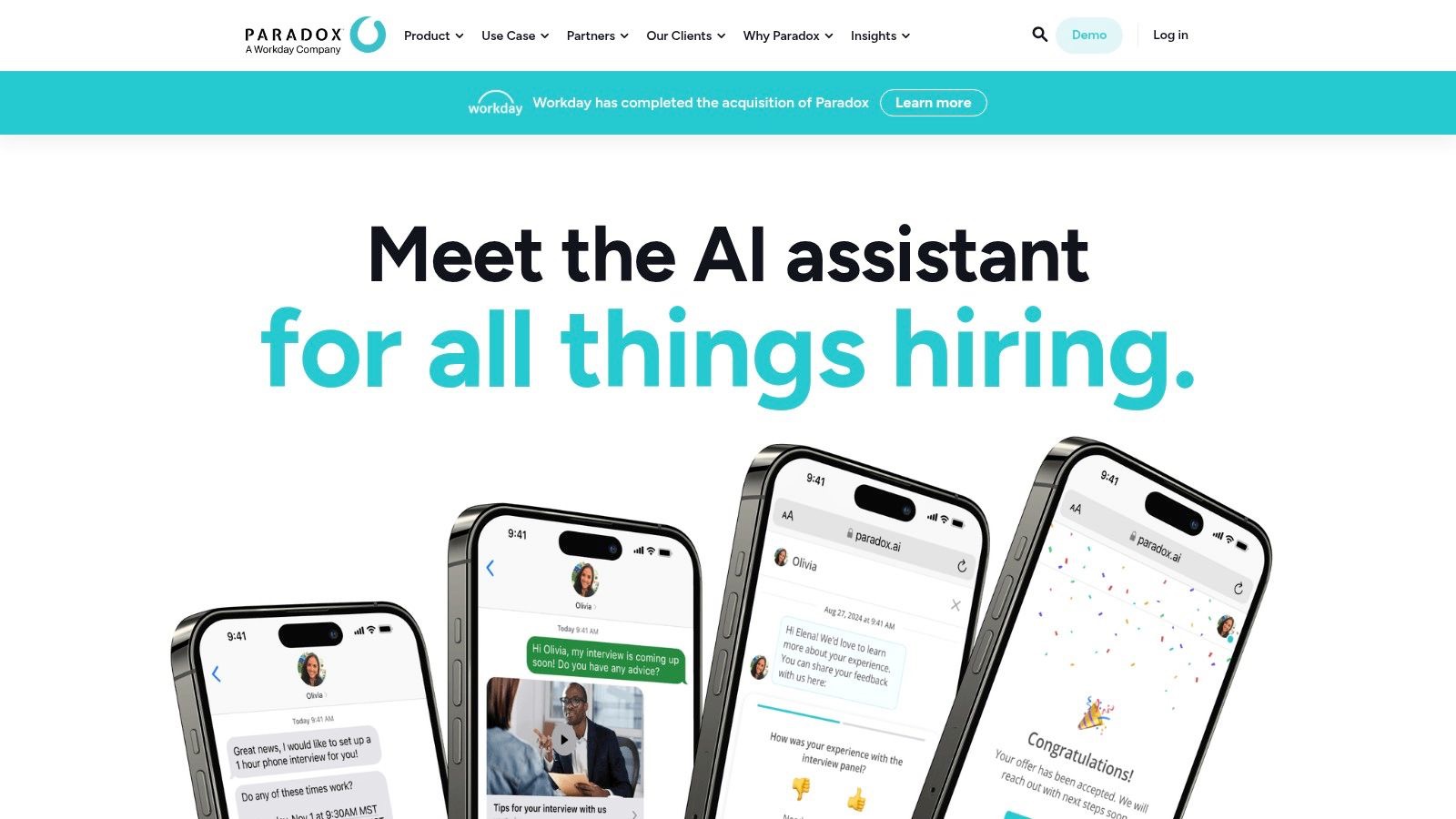
Paradox is an enterprise solution with pricing provided on a quote-only basis, tailored to the scale of the organization and the specific features required. It is not designed for small businesses. Implementation involves significant integration with existing Applicant Tracking Systems (ATS) and HRIS platforms to ensure a smooth flow of candidate data.
hireEZ positions itself as an AI-first outbound recruiting platform designed to supercharge sourcing and engagement. It excels at finding candidates across the open web, integrated job boards, and a company's own Applicant Tracking System (ATS). For teams focused on proactive talent acquisition, hireEZ is one of the more powerful ai tools for recruiting because it automates the laborious parts of finding and contacting passive candidates.
The platform's standout feature is its 'EZ Agent,' which functions like an automated sourcing assistant. Recruiters can give it a job description, and the agent will handle multi-step sourcing, identify qualified candidates, and initiate personalized outreach sequences. This moves beyond simple search and allows sourcers to build robust talent pipelines with significantly less manual effort, clearing the path to better talent.
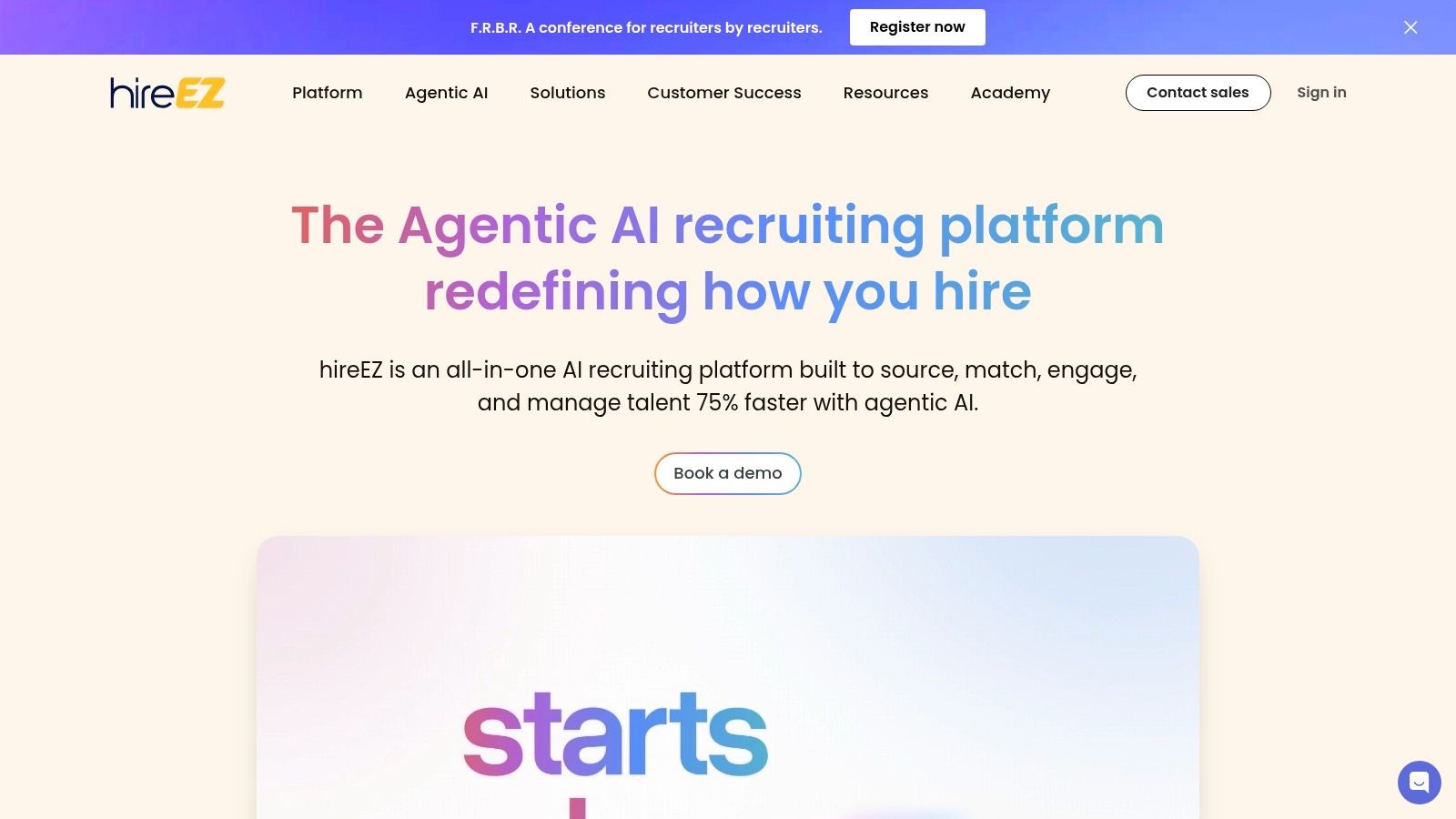
hireEZ does not list its pricing publicly; it is quote-based and varies depending on the package, number of seats, and specific features required. Integration is straightforward, with support for over 40 major ATS platforms. While powerful, some advanced features may be gated on higher-tier enterprise plans. Learn more about how hireEZ streamlines candidate outreach for modern recruiting teams.
Beamery is a comprehensive talent lifecycle management platform for enterprises that aim to unify every stage of the talent journey. It combines a powerful Talent CRM with skills intelligence and career site automation, making it one of the most holistic ai tools for recruiting available. The platform is designed not just for finding external candidates but also for nurturing and redeploying internal talent, treating both with a similar, data-driven marketing approach.
This end-to-end vision allows large organizations to break down silos between recruitment, talent management, and workforce planning. For example, Beamery’s AI can analyze internal skills data to proactively identify employees who are a strong fit for a future strategic role, then automatically add them to a development pipeline. This turns recruiting from a reactive function into a strategic talent engine that maps the path for long-term business goals.

Beamery is tailored for large-scale enterprise clients, and its pricing is provided on a quote-by-quote basis. The implementation is a significant undertaking, often requiring integration with core HRIS systems like SAP, where Beamery is an Endorsed App. It is not designed for small or medium-sized businesses due to its complexity and investment level.
SmartRecruiters offers a comprehensive, end-to-end talent acquisition suite that functions as an all-in-one hub for enterprise hiring. It combines a traditional Applicant Tracking System (ATS) with a robust Candidate Relationship Management (CRM) and onboarding tools, augmented with a layer of AI to streamline workflows. This makes it a powerful option for large organizations looking to consolidate their tech stack.
The platform's AI capabilities are designed to assist at multiple stages of the hiring funnel. Its AI screening helps surface qualified candidates automatically, while a conversational AI chatbot engages applicants and answers common questions, freeing up recruiter time.
For organizations managing hundreds or thousands of applicants, these are invaluable ai tools for recruiting that ensure a consistent and efficient candidate experience.

SmartRecruiters provides more pricing transparency than many enterprise competitors, with packages starting from a clear price point for their essential plan. Higher-tier "High Volume" and "Complete" packages are quote-based. Implementation is a typical enterprise project, requiring significant planning and resources, but their extensive integration library helps it connect with existing HR systems. To explore how different systems integrate, check out some expert insights on the Juicebox.ai blog.
iCIMS Talent Cloud is a well-established, enterprise-grade talent acquisition suite that embeds AI across the entire hiring lifecycle. Widely adopted by large organizations, it serves as a comprehensive system of record for recruiting, from initial candidate engagement through onboarding.
Unlike point solutions, iCIMS uses AI to unify disparate parts of the hiring process, making it one of the more integrated ai tools for recruiting for complex, high-volume environments.
The platform's strength lies in its breadth, offering an AI-powered digital assistant for career sites, intelligent candidate ranking, and robust talent discovery features within its CRM. This allows recruiting teams to manage a seamless candidate journey, such as using a GenAI chatbot to answer prospect questions and then automatically ranking that applicant against an open requisition. It is designed to be the central hub for enterprise talent operations.
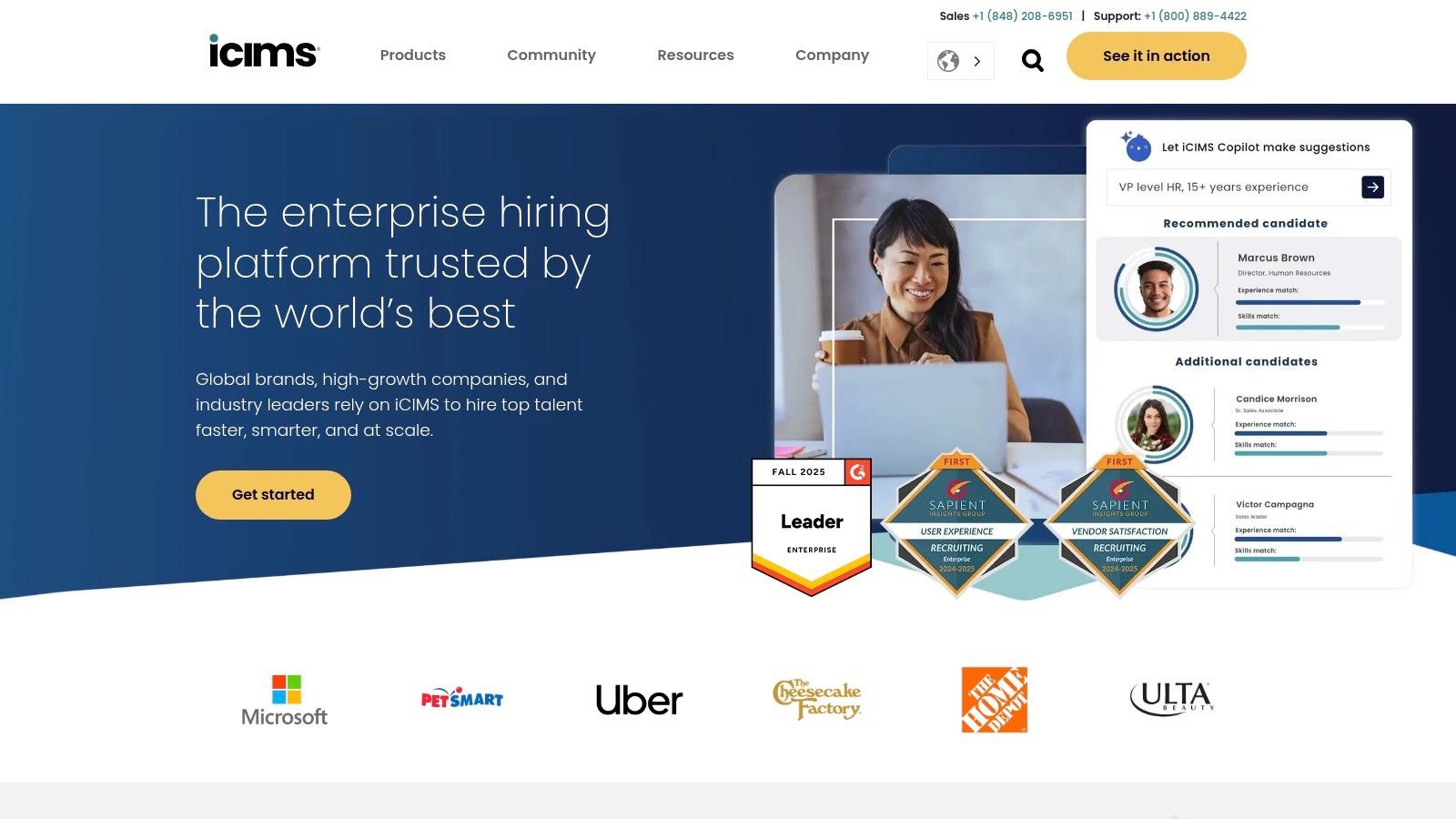
As an enterprise platform, iCIMS Talent Cloud utilizes a quote-based pricing model tailored to company size, user count, and selected modules. The pricing is not publicly available. Implementation is a structured project that requires significant administrative maturity and internal governance due to the system's complexity and extensive configuration options.
As the largest job marketplace in the US, Indeed for Employers serves as a massive top-of-funnel talent source. While not a pure-play AI platform, it leverages AI-powered matching and screening to connect millions of employers with active job seekers. It excels at high-volume sourcing and provides a flexible, pay-as-you-go model that makes it one of the most accessible ai tools for recruiting for immediate hiring needs.
The platform's strength lies in its scale and simplicity. Recruiters can post jobs and almost instantly gain access to a vast candidate pool. Its AI helps surface relevant candidates from resumes on file and new applicants, automating the initial screening process. This is particularly useful for finding a path to filling entry-level to mid-seniority roles quickly, where the volume of applications can be overwhelming without some form of automated filtering.
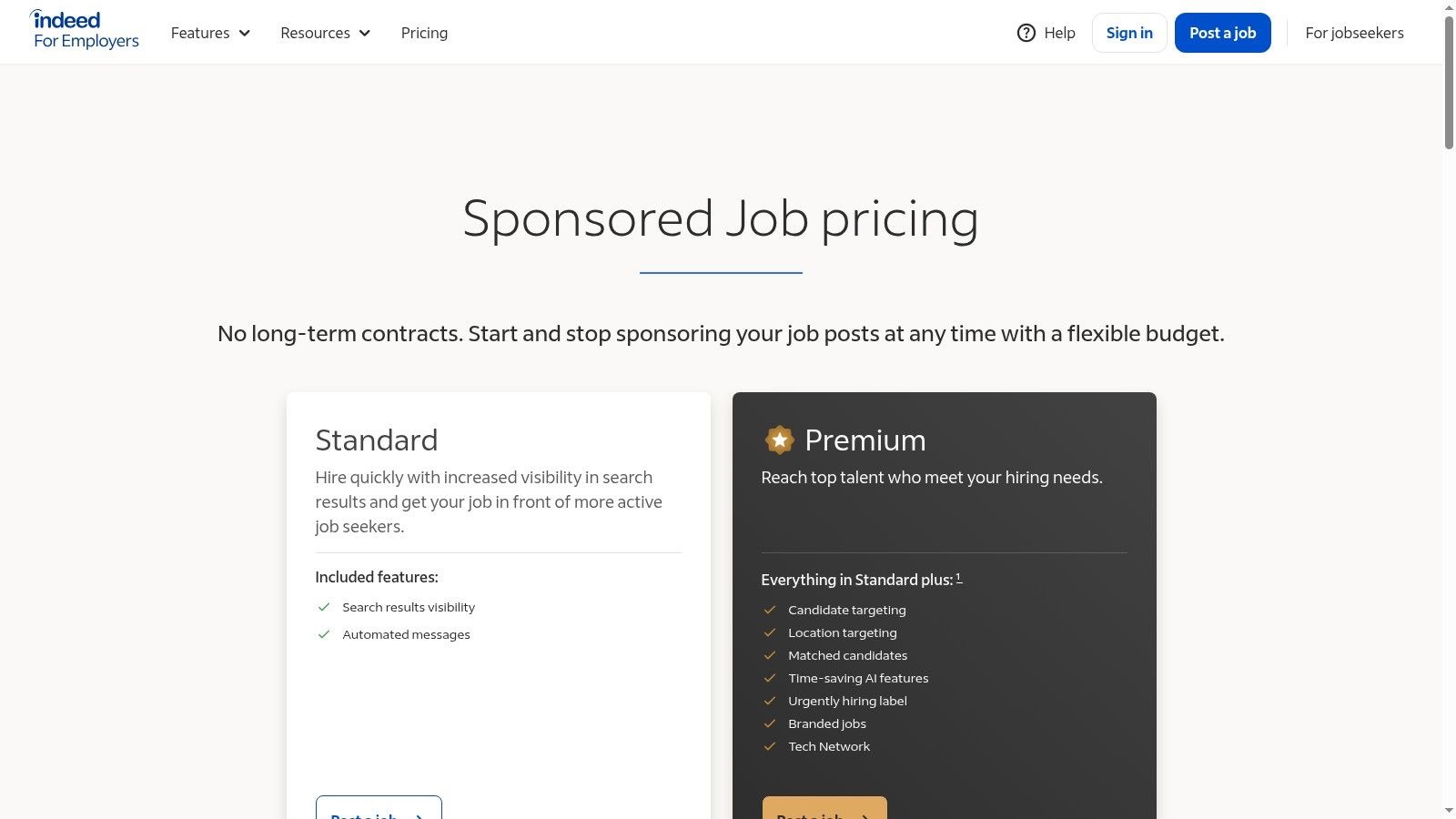
Indeed operates on a flexible pricing model. You can post some jobs for free, but for meaningful visibility, sponsored posts are necessary. Budgets can be set on a daily or monthly basis, with costs determined by market competition for specific roles. Implementation is immediate; you can sign up and post a job within minutes. It integrates with most major Applicant Tracking Systems.
Choosing the right platform can feel like standing at a crossroads with a dozen branching paths. This table provides a clear map to compare each tool's core function, ideal user, and unique strengths, helping you find the most direct route to your hiring goals.
AI recruiting tools are software platforms that use artificial intelligence, machine learning, and natural language processing to automate and enhance parts of the talent acquisition process. They help recruiters find the right path through the maze of hiring by automating tasks like sourcing candidates, screening resumes, scheduling interviews, and engaging with applicants. The goal is to make hiring more efficient, data-driven, and less prone to human bias.
AI sourcing tools, like Juicebox's PeopleGPT, navigate vast databases of public profiles, internal applicant tracking systems, and other sources to identify candidates who match specific job criteria. They go beyond simple keyword matching to understand skills, experience, and even potential fit. This allows them to uncover "hidden gem" candidates who might be overlooked in a manual search, providing a more direct path to qualified talent.
No, AI is a tool for augmentation, not replacement. It acts as a powerful compass, but the recruiter is still the navigator.
AI excels at automating repetitive, data-heavy tasks like finding profiles and sending initial outreach, which frees up recruiters to focus on high-value human interactions: building relationships, assessing cultural fit, and closing top candidates. A 2023 study by the Corporate Research Forum found that while 79% of TA leaders are using AI, the focus remains on enhancing recruiter capabilities.
Yes, potential bias is a significant concern. If an AI model is trained on historical hiring data that contains human biases, it can perpetuate those same biases at scale.
Reputable vendors address this by building fairness and transparency into their algorithms, undergoing third-party audits, and designing tools that focus on skills and capabilities rather than demographic proxies.
It's crucial for organizations to choose vendors committed to responsible AI and to maintain human oversight in the hiring process to ensure fair outcomes.
Navigating the modern talent landscape can feel like trying to solve an intricate maze. Each turn presents a new challenge: a flood of mismatched resumes, hidden gem candidates buried in forgotten databases, and the constant pressure to fill roles faster.
The AI tools for recruiting we’ve explored each offer a unique thread to help you find your way, but the ultimate goal isn't just to find an exit—it's to find the most direct path to the best talent.
This journey reveals a clear trend: the shift from single-task automation to integrated, intelligent systems. While some tools clear a single corridor of the maze, a comprehensive platform acts as your map and compass for the entire expedition.
As a 2023 report from Aptitude Research highlights, recruiters using integrated systems are 60% more likely to report high-quality hires. The most powerful AI doesn't replace a recruiter's intuition; it enhances it, charting the course so you can focus on what humans do best: building relationships and closing top candidates.
Ready to stop guessing and start sourcing with certainty? Juicebox provides the map and compass you need to navigate the talent maze, using AI agents to find and engage perfect-fit candidates in minutes, not weeks.
{{small_cta}}
Run your first search for free. Find and engage top talent across 800M+ profiles. Trusted by 5,000+ customers.
.png)

.png)