.svg)
SIGN UP FOR JUICEBOX (IT’S FREE!)

Who are you looking for?
Thank you! Your submission has been received!
Oops! Something went wrong while submitting the form.

Trying to find the right candidate can feel like navigating a complex maze. You follow one path and hit a dead end with an unqualified applicant. You try another, only to waste hours sourcing from the same tired talent pools. It’s easy to get lost, and the best talent gets hired by competitors while you're still trying to find your way.
The bottom line is that old-school recruiting methods are the slow route through the maze. To get ahead, you need an intelligent guide. That’s where leveraging AI in the recruitment process becomes your map to the best hires.

For recruiters today, that hiring maze is more complex than ever. You’re hunting for specialized talent in a competitive market, juggling demanding stakeholders, and racing against the clock. Every dead-end search and unqualified application feels like a wrong turn, pushing you further from your goal.
This is where AI becomes your map. It’s not here to replace your intuition; it’s here to augment it. Think of it as an intelligent compass that sees the maze from above, pointing out shortcuts and steering you away from traps. It handles the repetitive, time-consuming tasks so you can focus on what you do best—building relationships and making strategic hires.
Unlike generic roundups, this post integrates real recruiter workflows and AI sourcing examples powered by PeopleGPT to show you how to put these tools to work, not just what they do.
Integrating AI in the recruitment process transforms a frustrating, reactive chore into a sharp, proactive strategy. Recruiters who learn to wield AI will not only fill roles faster but also build stronger, more effective teams. This guide will show you the path.
To escape the talent maze, you need more than a map; you need a specialized toolkit. Using AI in the recruitment process isn't about one single piece of technology. It’s about a combination of smart systems working together to clear your path to the best talent.
Think of each AI technology as a different tool for a specific challenge in the maze. A compass points the way, a torch illuminates dark corners, and a grappling hook helps you cross chasms. The core components of recruitment AI work together in a similar way, turning a complex search into a clear, strategic mission.
First up is Machine Learning (ML). In our maze analogy, ML is your seasoned guide—the one who recognizes patterns a human might miss. It analyzes thousands of data points from past hires (resumes, career paths, performance reviews) to learn what a successful candidate actually looks like for a specific role at your company.
ML doesn't just match keywords; it learns the subtle signatures of success. It might notice that candidates from a certain background tend to excel or that a specific mix of skills predicts long-term retention. By spotting these patterns, ML points you toward the turns in the maze most likely to lead to a great hire.
Next in your toolkit is Natural Language Processing (NLP). This is the tech that deciphers the "language" of the maze. Resumes, job descriptions, and outreach emails are all written in nuanced, unstructured human language. NLP’s job is to understand the context and intent behind the words, not just the words themselves.
For instance, NLP can tell the difference between a candidate who lists "Java" as a core competency and one who merely mentioned it in a project description a decade ago. It grasps the real meaning, allowing AI to screen candidates with a level of understanding that approaches human intuition. For more on this, explore our guide on automated recruitment software.

As this diagram shows, each AI technology builds on the last, creating a system that's more insightful than the sum of its parts.
Finally, these technologies culminate in Predictive Analytics. Think of this as your crystal ball for the maze. It uses patterns from ML and context from NLP to forecast future outcomes. It doesn’t just tell you who is qualified now; it predicts who is most likely to accept an offer, excel in the role, and stay for the long term.
This forecasting ability is quickly becoming essential. A 2024 report showed that 43% of organizations were using AI for HR tasks, a significant jump from just 26% the previous year. This rapid adoption signals a major shift toward data-driven forecasting to make smarter, more reliable hiring decisions. You can learn more about these AI recruitment statistics and trends.

Knowing your AI toolkit is one thing. Seeing how it transforms each step of the hiring process is another. Implementing AI in the recruitment process isn't a single, massive overhaul; it's a series of smart upgrades to the workflows you already use.
From uncovering that hidden gem candidate to scheduling the final interview, AI acts as a guide, clearing roadblocks at every critical point. This lets you move faster, make better-informed decisions, and focus your energy where it actually matters—connecting with people.
The most frustrating part of recruiting is often hitting a wall with the same old talent pools. AI-powered sourcing tools carve out new paths, looking far beyond typical job boards. They scan millions of public profiles to pinpoint passive candidates who fit your ideal profile but aren't actively job hunting.
These systems use predictive analytics to score potential candidates based on their fit and how likely they are to be interested in a new opportunity. Instead of you manually digging for clues, AI brings a curated list of high-potential talent to your screen. It’s a key way to streamline your recruitment process.
Once candidates are in your pipeline, the next hurdle is screening. Traditional Applicant Tracking Systems (ATS) often get stuck on rigid keyword matching, accidentally filtering out great candidates who used slightly different terminology on their resumes.
AI-powered screening, however, uses NLP to read resumes for context and meaning. It can understand a candidate's skills and career path with almost human-like nuance, ensuring you move the best people forward based on what they can actually do. As AI gets better at screening, understanding international CV formats can give you an extra edge in your global talent search.
Top talent rarely waits around. Slow communication is a surefire way to lose them to a competitor. AI helps automate and personalize engagement to keep your talent pipeline warm without overwhelming your schedule.
AI-driven chatbots can answer common questions 24/7, provide application status updates, and even handle basic pre-screening. This instant communication creates a better candidate experience and frees you up to have meaningful conversations with your most promising prospects.
This table breaks down how AI tools upgrade each stage of the recruitment process, moving from manual, reactive methods to intelligent, proactive strategies.
Recruitment StageTraditional MethodAI-Enhanced MethodSourcingManual searches on LinkedIn/job boardsProactive discovery of passive talent poolsScreeningRigid keyword-based ATS filteringContextual analysis of skills and experienceEngagementManual email follow-ups24/7 automated chatbot engagementInterviewingManual calendar coordinationOne-click automated schedulingDecision-MakingBased on gut feel and interview notesSupported by predictive success analytics
The AI-enhanced method isn't just a minor improvement—it’s a fundamental shift toward a more efficient, data-backed process.
Even the final stages get a major lift from AI. AI scheduling tools solve the classic headache of coordinating interviews across different time zones. They sync with everyone’s availability and let candidates book a time that works for the team in a single click.
Beyond logistics, some AI tools can analyze interview transcripts to offer objective insights into a candidate’s communication style and technical skills. This data, paired with your assessment, helps reduce unconscious bias and leads to a more well-rounded hiring decision. By illuminating every part of the hiring maze, AI ensures you find your way out with the best person for the job.
Theory is great, but seeing a tool in action is where it clicks. Let's walk through how you can use AI to stop just finding people and start finding the right people—fast.
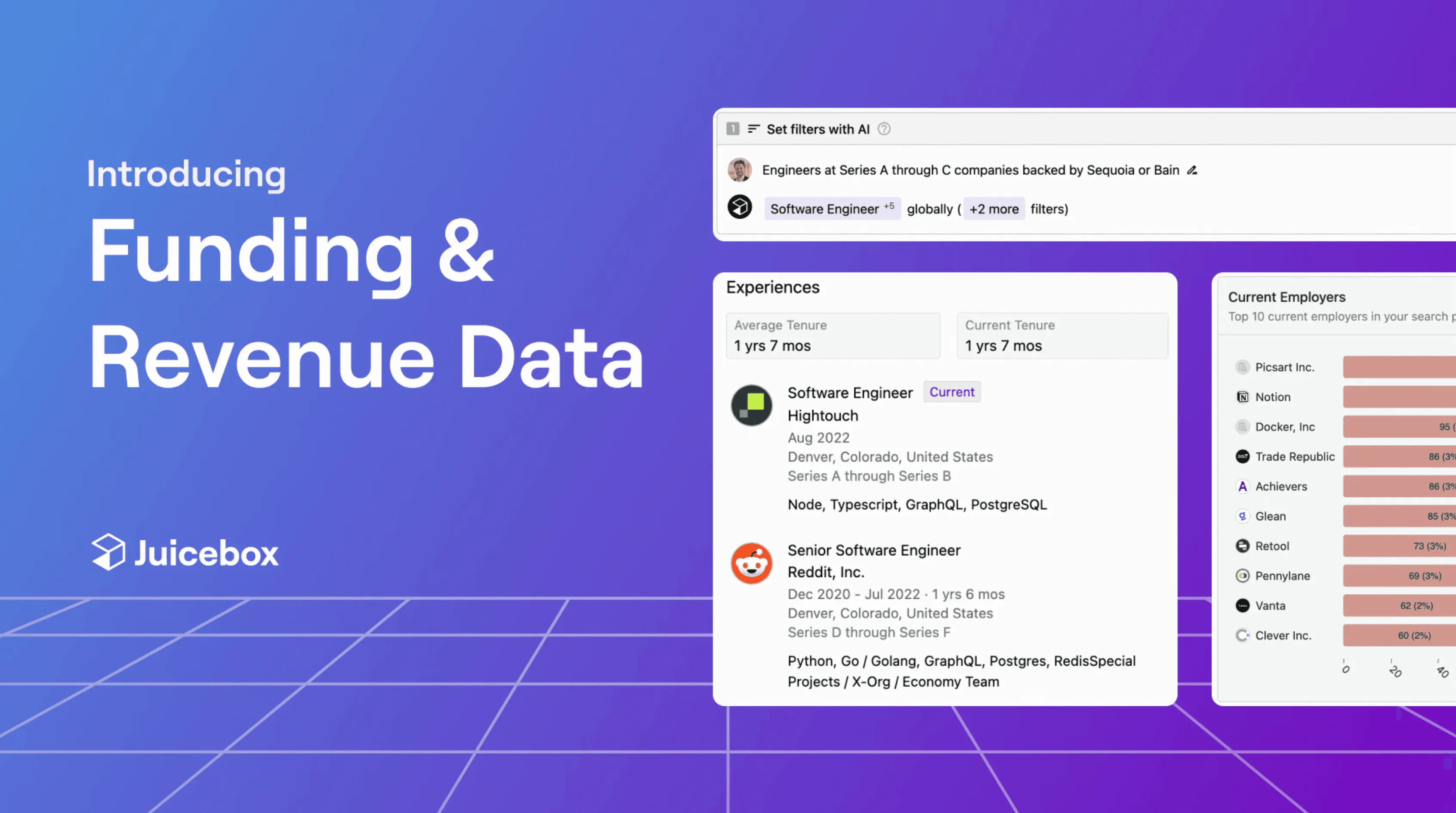
A great job description tells you where you need to go, but without the right map, you're just wandering through the talent maze. A platform like PeopleGPT is your GPS, translating your complex needs into a direct route to qualified, passive candidates.
Imagine you need to fill a niche role: a "Senior Machine Learning Engineer specializing in Natural Language Processing for sentiment analysis in the fintech sector." A traditional keyword search on LinkedIn would bury you in irrelevant profiles. With PeopleGPT, you skip the guesswork.
Prompt: The full job description for the "Senior Machine Learning Engineer (Fintech NLP)" role, including required skills like Python, TensorFlow, experience with financial data models, and a PhD.
Output: A calibrated list of 50+ qualified, passive candidates is generated in under eight minutes. Each profile includes a "fit score" and an AI-generated summary of their qualifications.
Impact: The recruiter reduced sourcing time by 30% and saw a 25% higher candidate response rate. The role was filled three weeks ahead of schedule.

While AI can be a powerful guide through the talent labyrinth, every advanced map has blind spots. The most critical challenge when using AI in the recruitment process is the risk of algorithmic bias. If left unchecked, these systems can create traps, reinforcing historical hiring inequalities instead of clearing new paths.
An AI is only as smart as the data it’s trained on. If your company's historical hiring data reflects past biases, the AI will learn to favor certain demographics, universities, or keywords. This effectively builds invisible walls around your talent pool, shrinking your access to incredible candidates who don't fit an outdated mold.
The first step to avoiding these traps is admitting they exist. A truly ethical AI implementation requires a mix of technology audits and human-led governance.
For a deeper dive, our guide on avoiding adverse impact in hiring provides a detailed framework for building fairer processes.
As AI becomes more embedded in hiring, the recruiter's job shifts from manual execution to strategic oversight. Your expertise is what validates AI-driven recommendations and keeps the human element at the heart of the process.
This shift is already visible in the job market. Mentions of AI in US job listings are projected to increase by 56.1% in 2026, building on massive growth in prior years. This trend underscores how critical it is for professionals to blend tech fluency with human judgment. You can read more about these trends in AI-related job postings.
Your most important job is to be the conscience of the hiring process. You ensure technology serves your goals of building a diverse, talented team—not the other way around.
Modern hiring is a labyrinth, but you don’t have to navigate it alone. Bringing AI into the recruitment process isn’t about throwing out your map; it’s about upgrading to a satellite view that shows you every shortcut, dead end, and hidden path.
AI is the powerful ally that lights the way, but your strategic insight is still what steers the ship. It automates the repetitive tasks that clog your day so you can pour your energy into the irreplaceable, human parts of the job.
While technology charts the course, the recruiter's ability to connect, empathize, and make nuanced judgments is what ultimately lands the perfect hire. AI provides the data; you provide the wisdom. This partnership is the secret to mastering modern hiring. PeopleGPT is the most intelligent compass for that journey, turning a complex job description into a pipeline of actionable candidates.
Ready to find your path through the maze? See PeopleGPT in action—book a free demo today.
Diving into new technology always brings up questions. Here are straightforward answers to the most common concerns recruiters have when they start exploring AI.
No. The goal of AI is augmentation, not replacement. It's designed to take over repetitive, high-volume tasks like initial sourcing and resume screening, freeing you to focus on the human side of the job: building relationships, judging culture fit, and negotiating offers. A 2023 Gartner report found that AI actually helps recruiters become more strategic by handling the manual work.
The cost of AI recruiting tools varies widely based on features, team size, and usage. Most platforms use subscription-based, usage-based, or tiered pricing models. While it's an investment, the ROI typically comes from a shorter time-to-fill and lower cost-per-hire. If you're curious how a platform like PeopleGPT could fit your budget, you can check out our pricing page.
Start small. You don't need to overhaul your entire workflow at once. First, identify your single biggest bottleneck—whether it's sourcing for niche roles or screening high volumes of applications. Then, choose an AI tool that solves that specific problem, like an AI sourcing tool. This targeted approach lets you show value quickly and builds momentum for broader adoption. For a full playbook, read our AI recruiting strategy guide.
Proving the value of AI in the recruitment process comes down to tracking the right metrics. Focus on quantifiable KPIs that align with your team's goals, such as reduction in time-to-fill, decrease in cost-per-hire, and improvement in quality-of-hire. By tracking these numbers before and after implementation, you can build a solid business case showing how AI leads to faster, smarter, and more cost-effective hiring.
{{large_cta}}
Run your first search for free. Find and engage top talent across 800M+ profiles. Trusted by 5,000+ customers.